The Complete Guide to Wedding Guest Attire: What to Wear to Mayun, Mehndi, Baraat, and Walima
A practical Pakistani wedding style guide for every celebration
NAYYAB COLLECTION | WEDDING STYLE JOURNAL
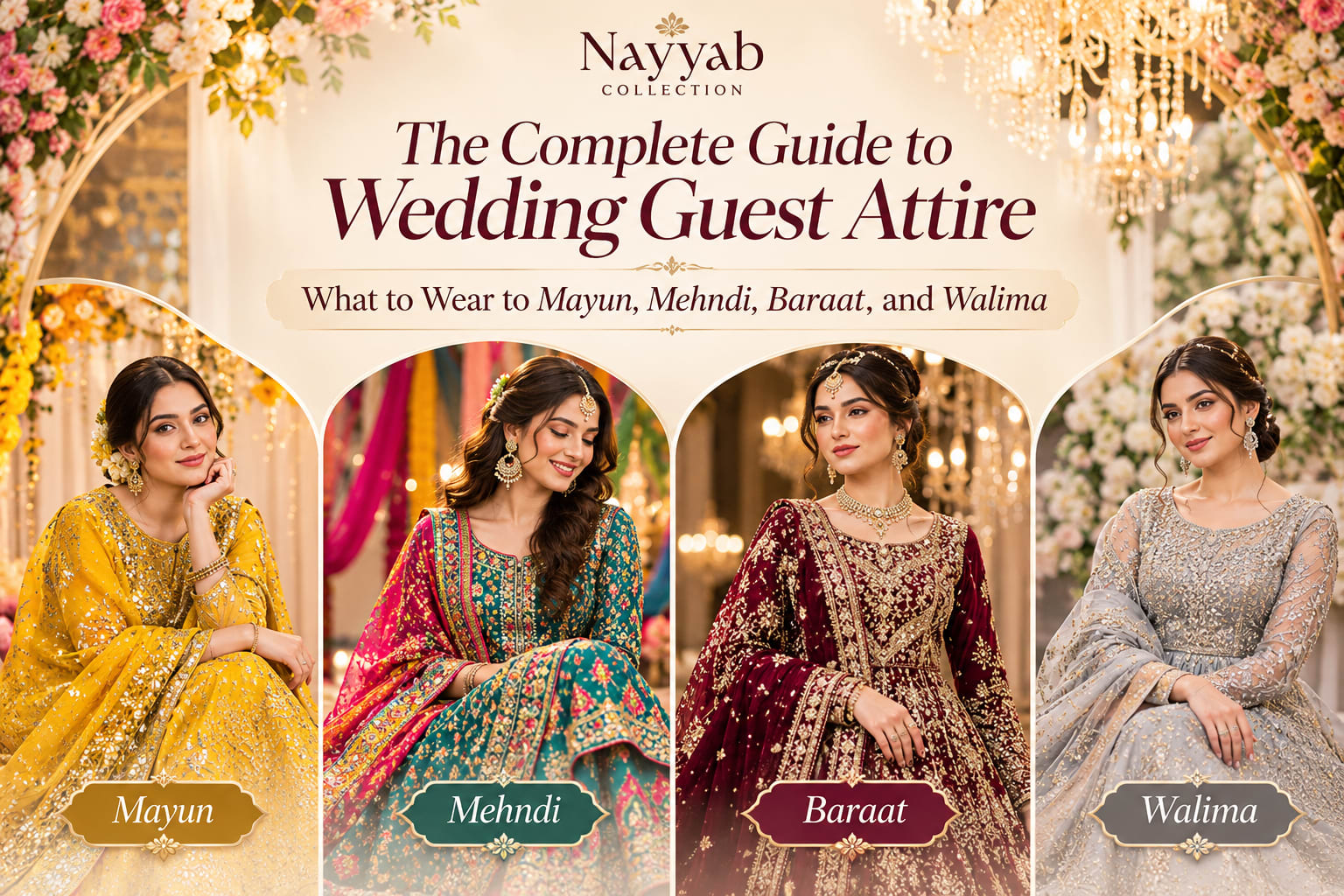
Pakistani weddings are a celebration of colour, family and beautiful clothing—but each event has a different mood. The easiest way to dress well is to match the occasion without sacrificing comfort or competing with the couple. This practical guide will help you choose colours, silhouettes, fabrics and accessories for every function.
At a glance: what works for each event
| Event | Best guest look | Colour direction |
|---|---|---|
| Mayun | Light kurta, simple sharara | Yellow, mustard, soft orange |
| Mehndi | Colourful gharara, sharara, anarkali | Green, fuchsia, orange, turquoise |
| Baraat | Formal suit, lehenga, sari | Emerald, navy, plum, antique gold |
| Walima | Elegant gown, formal three-piece | Blush, powder blue, mauve, champagne |
Mayun: simple, sunny and comfortable
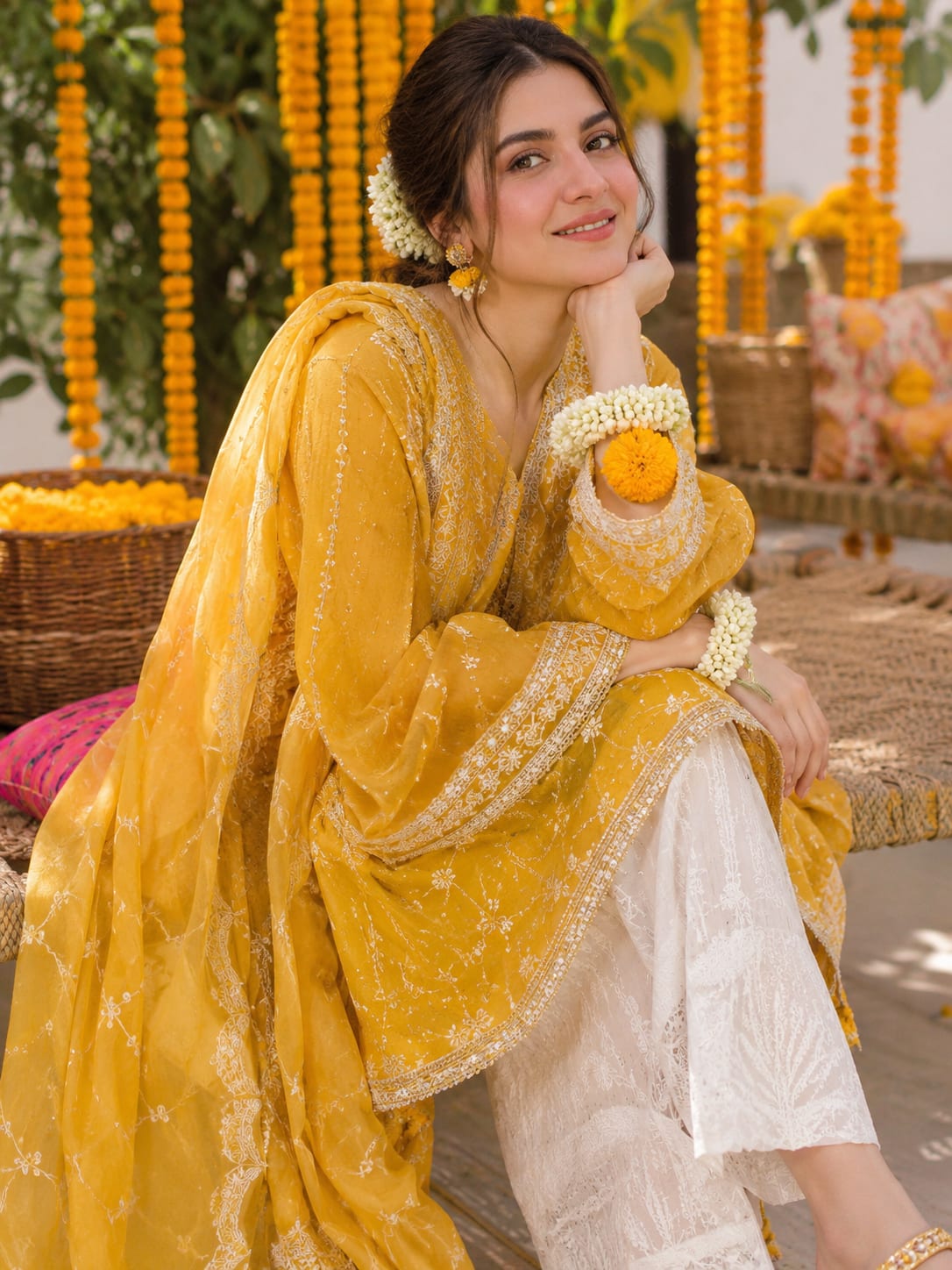
What to wear as a guest: a lightly embroidered straight-cut kameez, cotton-silk suit or modest sharara works well for intimate gatherings. A simple outfit also makes sense when guests help with rituals or move between indoor and outdoor spaces.
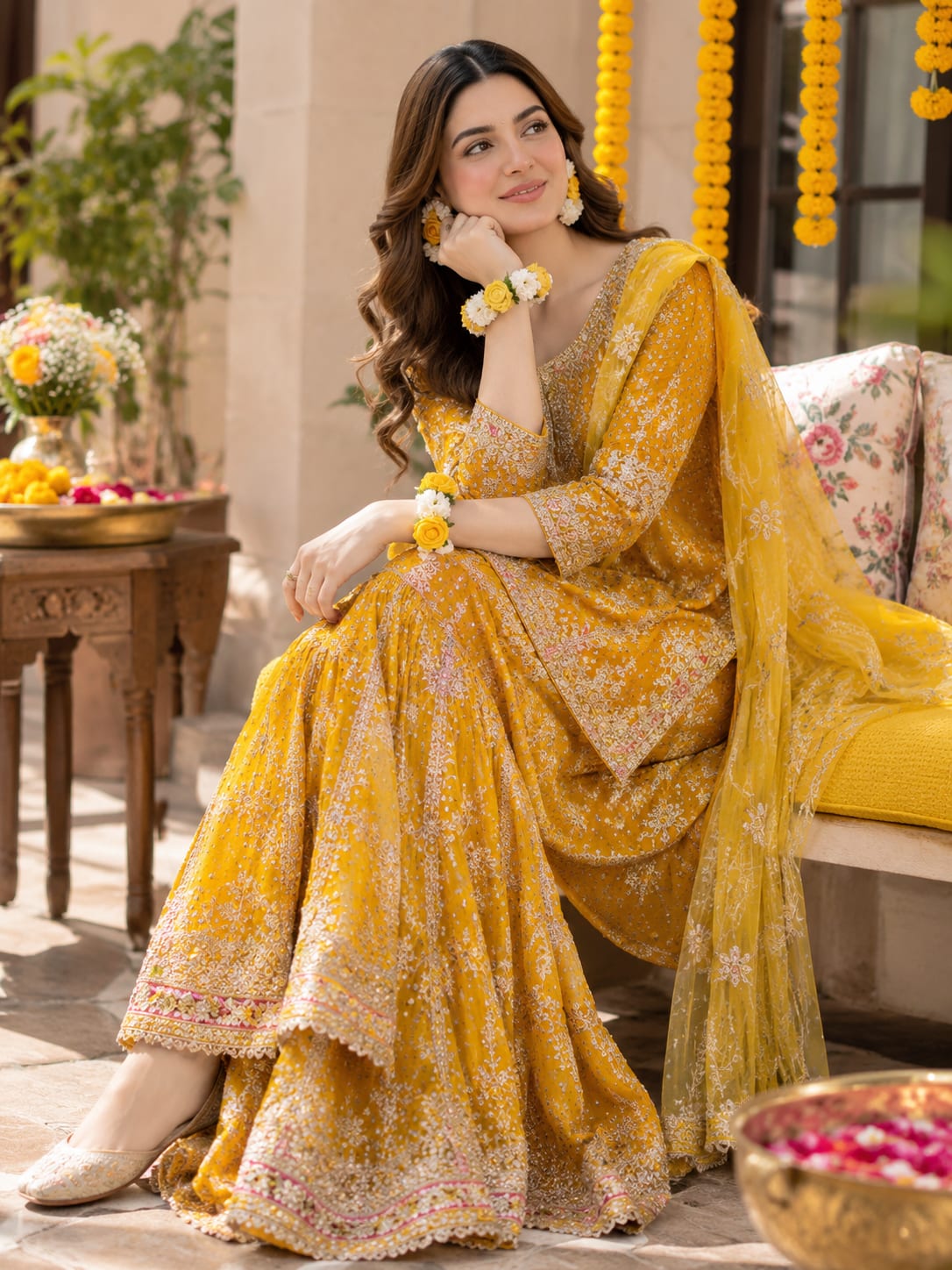
Mayun: mustard kurta and comfortable separates · AI-generated fashion inspiration
Colour combinations to try: mustard with ivory, turmeric yellow with rose pink, or marigold with a soft green dupatta. If the hosts have specified a yellow dress code, follow it; otherwise there is room for personal interpretation.
Mayun: a yellow embroidered sharara · AI-generated fashion inspiration
Mayun is usually an intimate pre-wedding gathering, often featuring ubtan, flowers and family rituals. Yellow and mustard are traditional favourites, but soft peach and orange can work beautifully too. Guests can choose a breathable embroidered kurta with trousers, a light sharara or a simple three-piece suit. Keep jewellery delicate and footwear easy to walk in; avoid anything that might be damaged by turmeric or flowers.
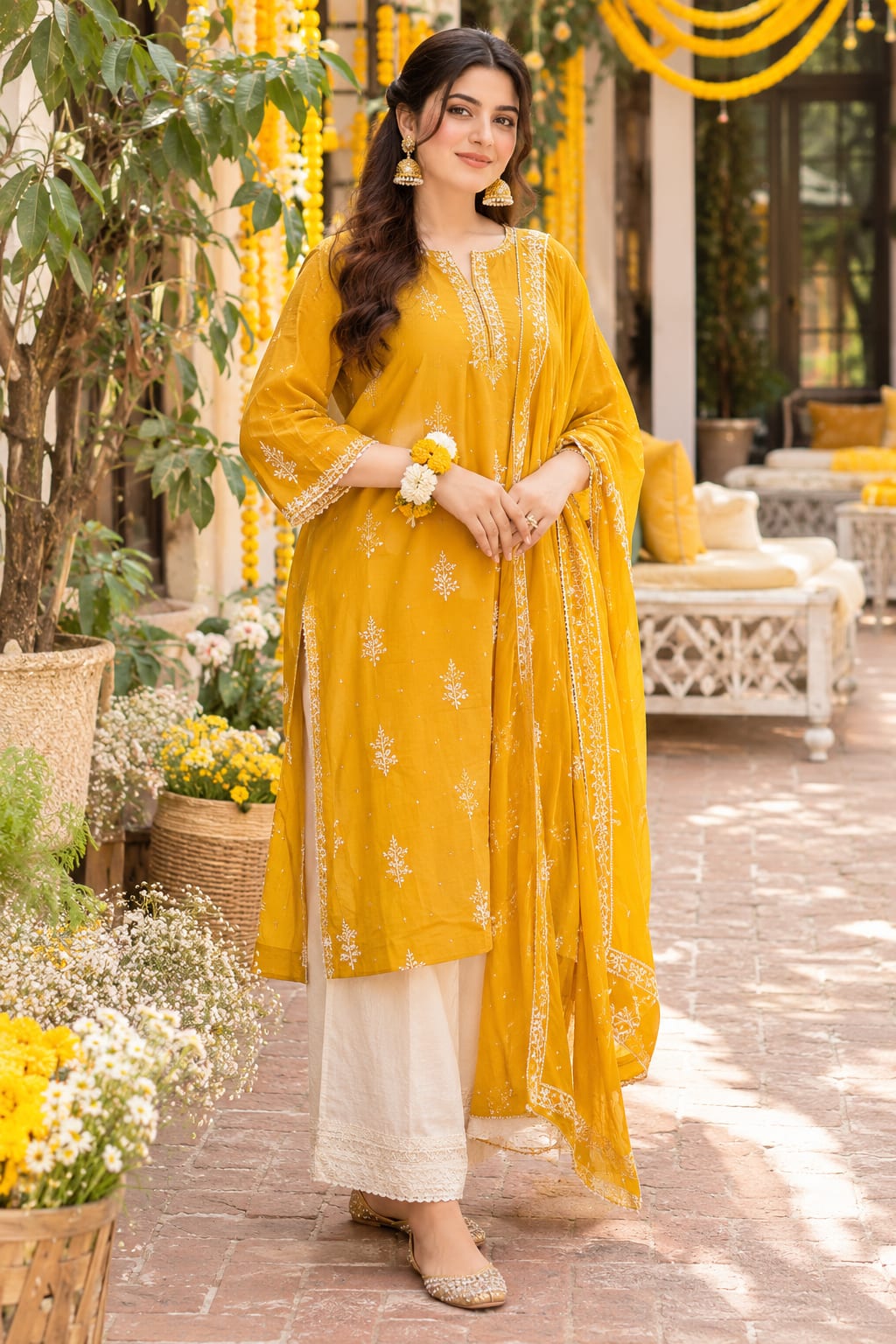
Mayun: an understated yellow kurta set · AI-generated fashion inspiration
Styling idea: a mustard kurta, ivory trousers, a light dupatta, small jhumkas and embroidered khussas. If the gathering is outdoors, favour breathable cotton blends over heavy embellishment.
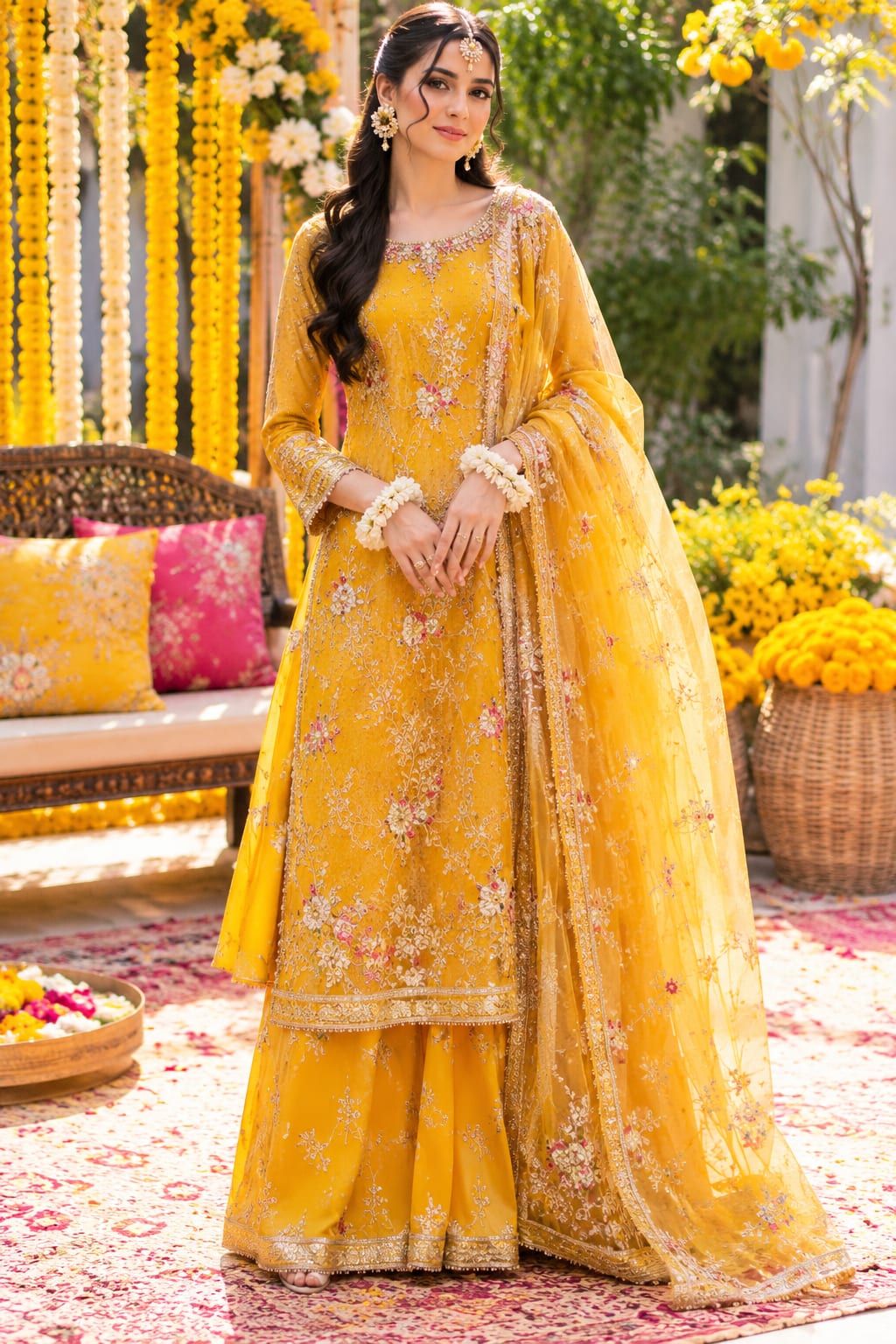
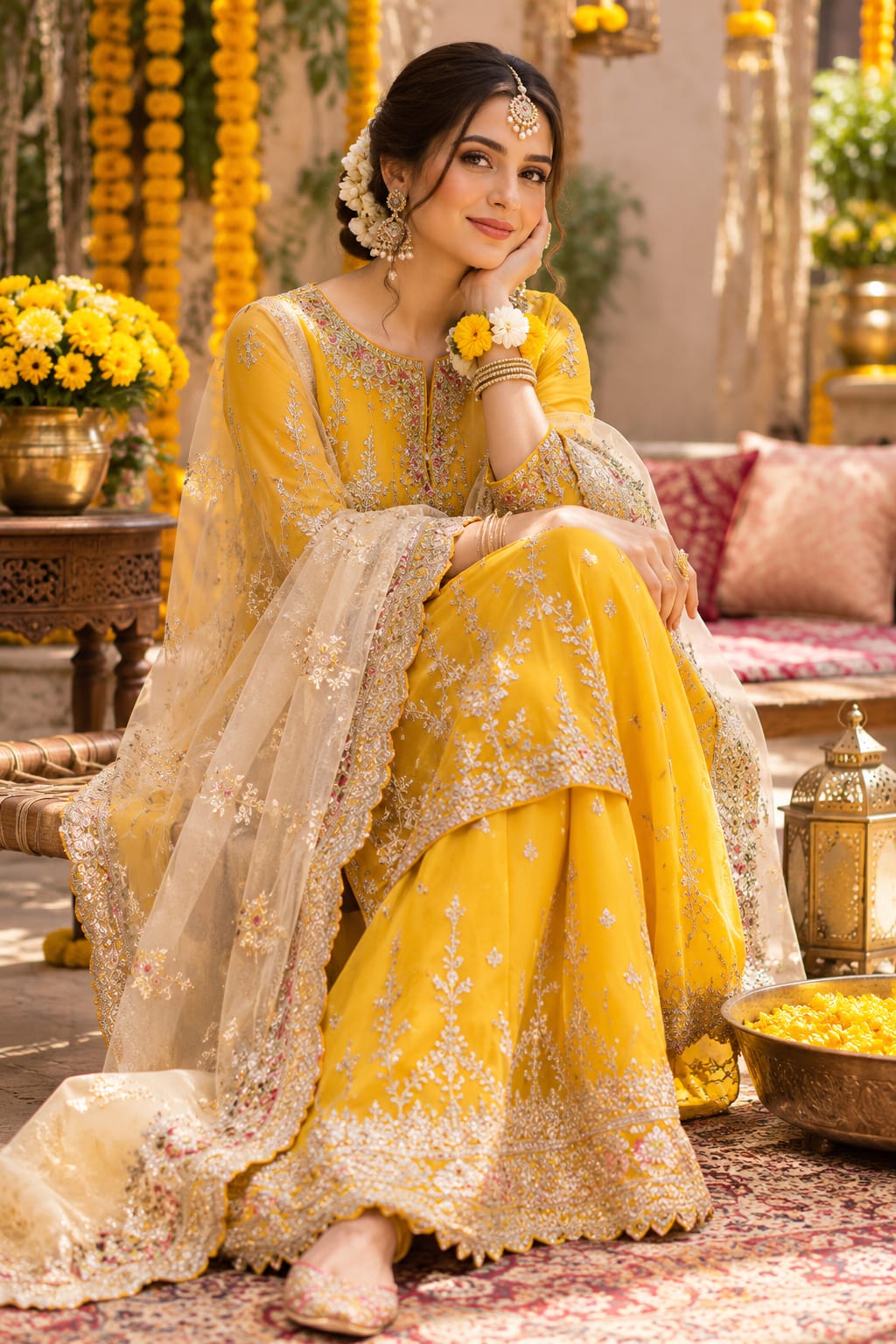
Mayun: mustard and ivory festive outfit · AI-generated fashion inspiration
For a slightly dressier Mayun, embroidered yellow separates with a lightweight dupatta keep the look festive without sacrificing ease of movement.
Mayun guest styling: golden-yellow embroidered separates and a light dupatta · AI-generated fashion inspiration
Mehndi: vibrant colours and movement
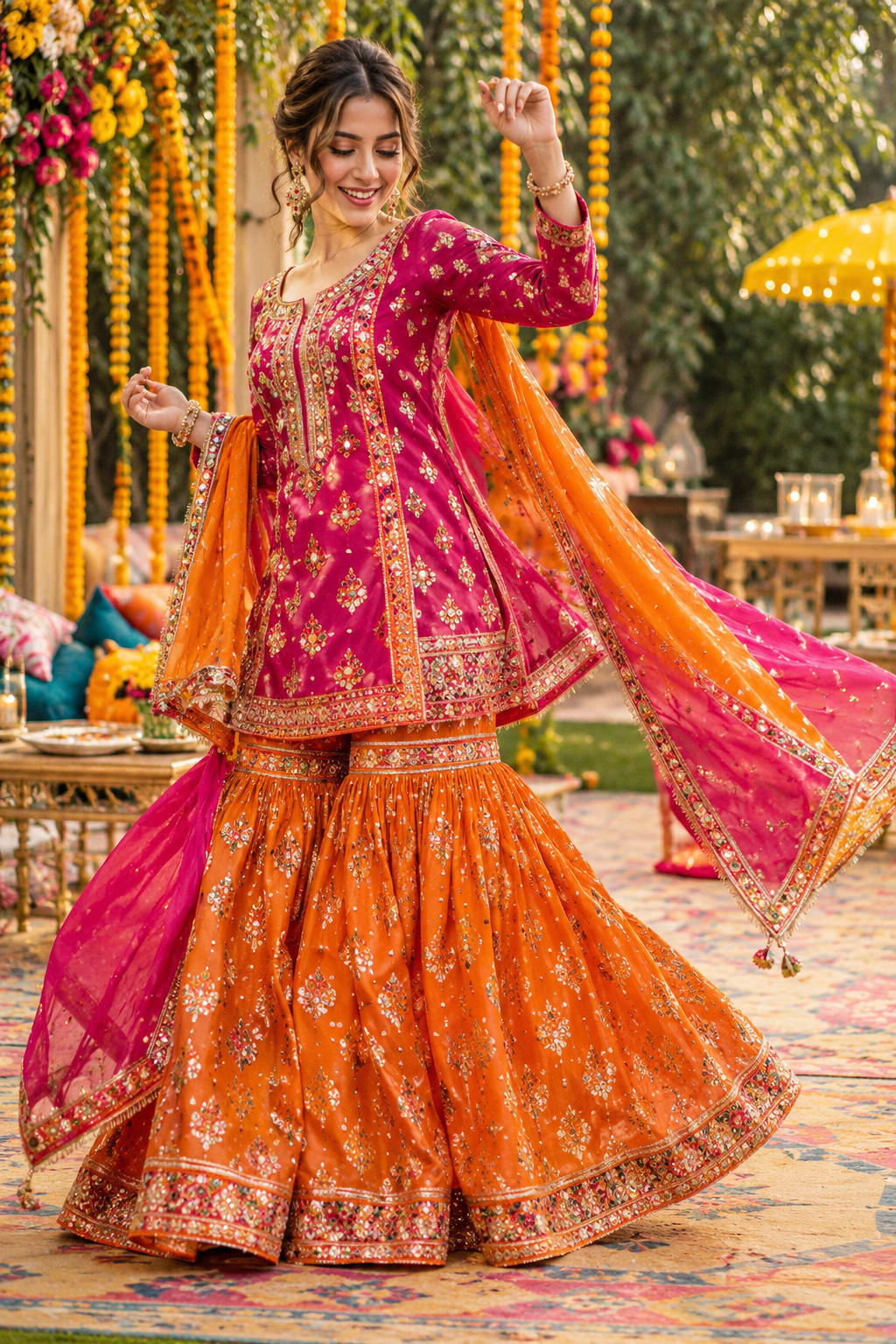
A mehndi outfit should move beautifully. Ghararas, flared shararas and anarkalis offer a festive silhouette, while a well-fitted short shirt and wide-leg trousers can be equally stylish. Gota patti, mirror accents and colourful thread embroidery work particularly well under evening lights.
Mehndi: vibrant pink and orange sharara · AI-generated fashion inspiration
For styling, balance vivid colours with comfort: secure the dupatta at one shoulder, choose low block heels or embroidered flats, and use a compact crossbody or potli rather than a large handbag.
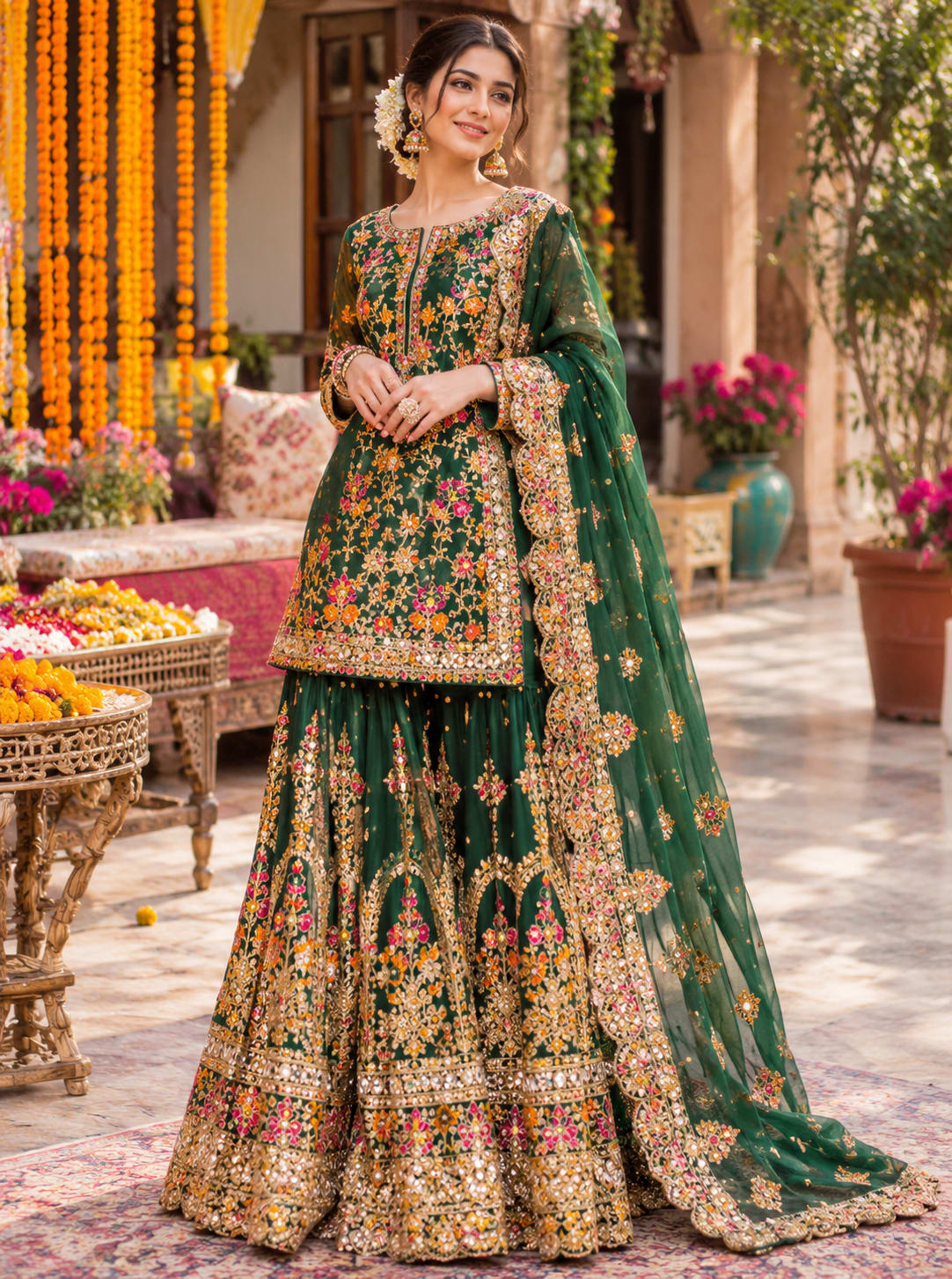
Mehndi: emerald-green festive outfit · AI-generated fashion inspiration
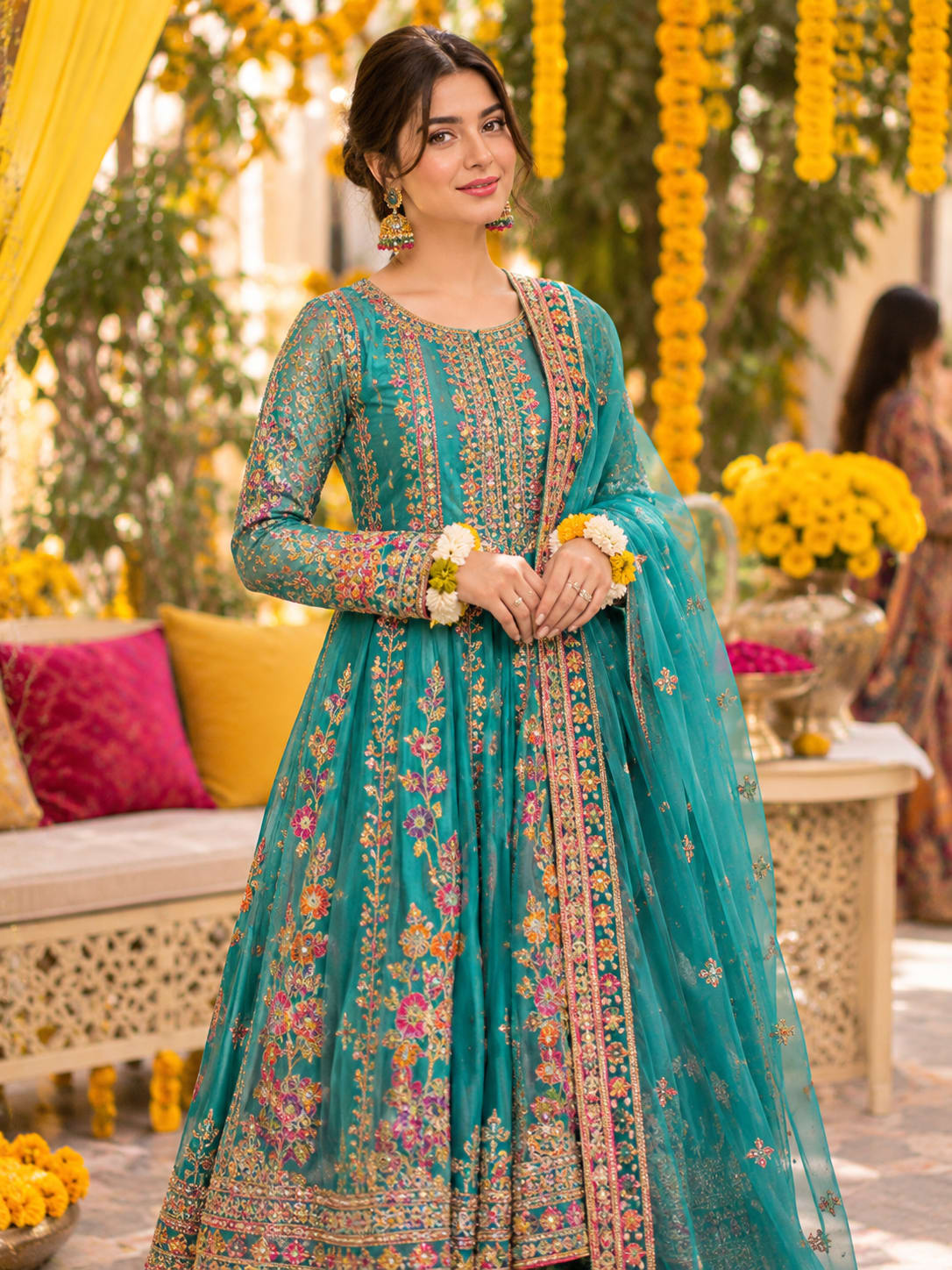
Mehndi is the perfect moment for lively colours, mirror work, gota details and playful silhouettes. A fuchsia-and-orange sharara, emerald gharara or turquoise anarkali feels festive without needing a bridal-level outfit. Choose a comfortable waistband and manageable dupatta if you plan to dance. Bright bangles, jhumkas and a small potli complete the look.
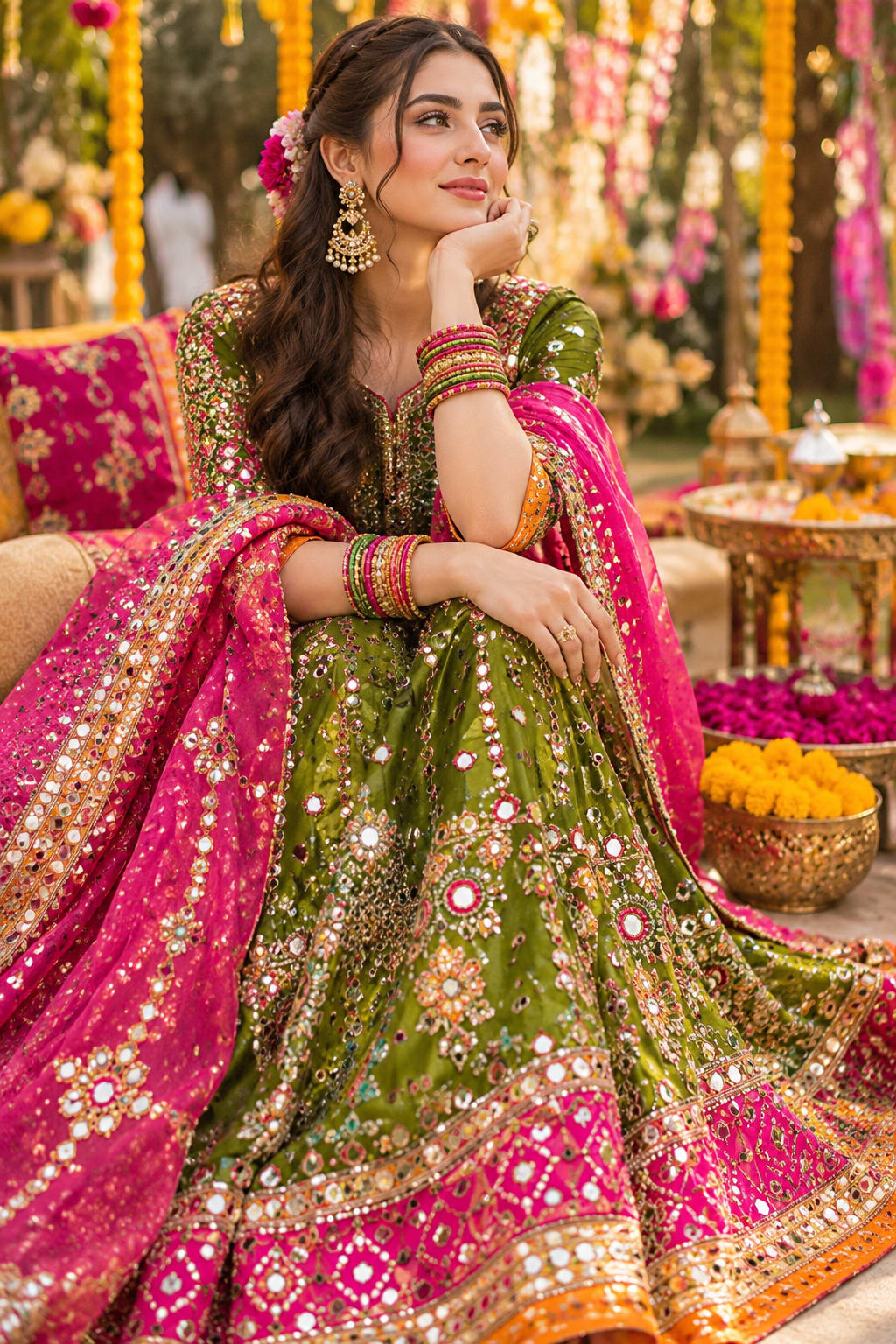
Mehndi: turquoise embroidered anarkali · AI-generated fashion inspiration
Styling idea: pair a richly coloured outfit with one statement accessory rather than wearing heavy jewellery everywhere. Avoid very long trains, slippery heels and stiff fabrics that make dancing difficult.
Mehndi: green and fuchsia festive embroidery · AI-generated fashion inspiration
Baraat: dressy, refined and celebratory
Guest-friendly Baraat dressing is about occasion-level polish, not trying to look like the bride. A deep teal raw-silk ensemble with delicate gold embroidery, a plum sari with a refined border, or a jewel-toned formal pishwas all look suitably dressed up.
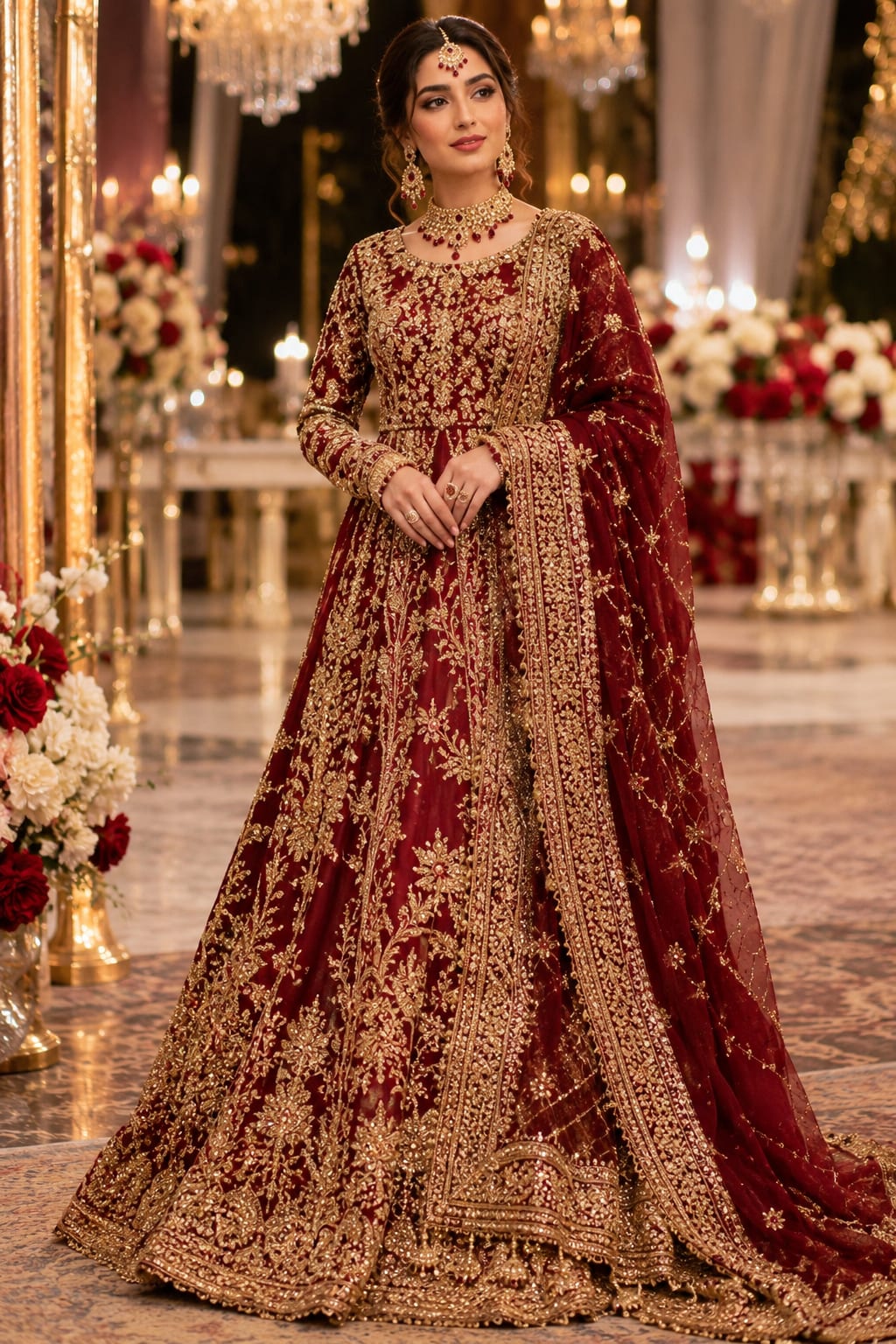
Baraat: richly embellished maroon formalwear (bridal-level styling) · AI-generated fashion inspiration
If you love red, choose a different shade or a lighter design when the bride is wearing a traditional red bridal look. When in doubt, ask a family member about the colour palette. Keep the heaviest necklaces, veils and bridal headpieces for the bride.
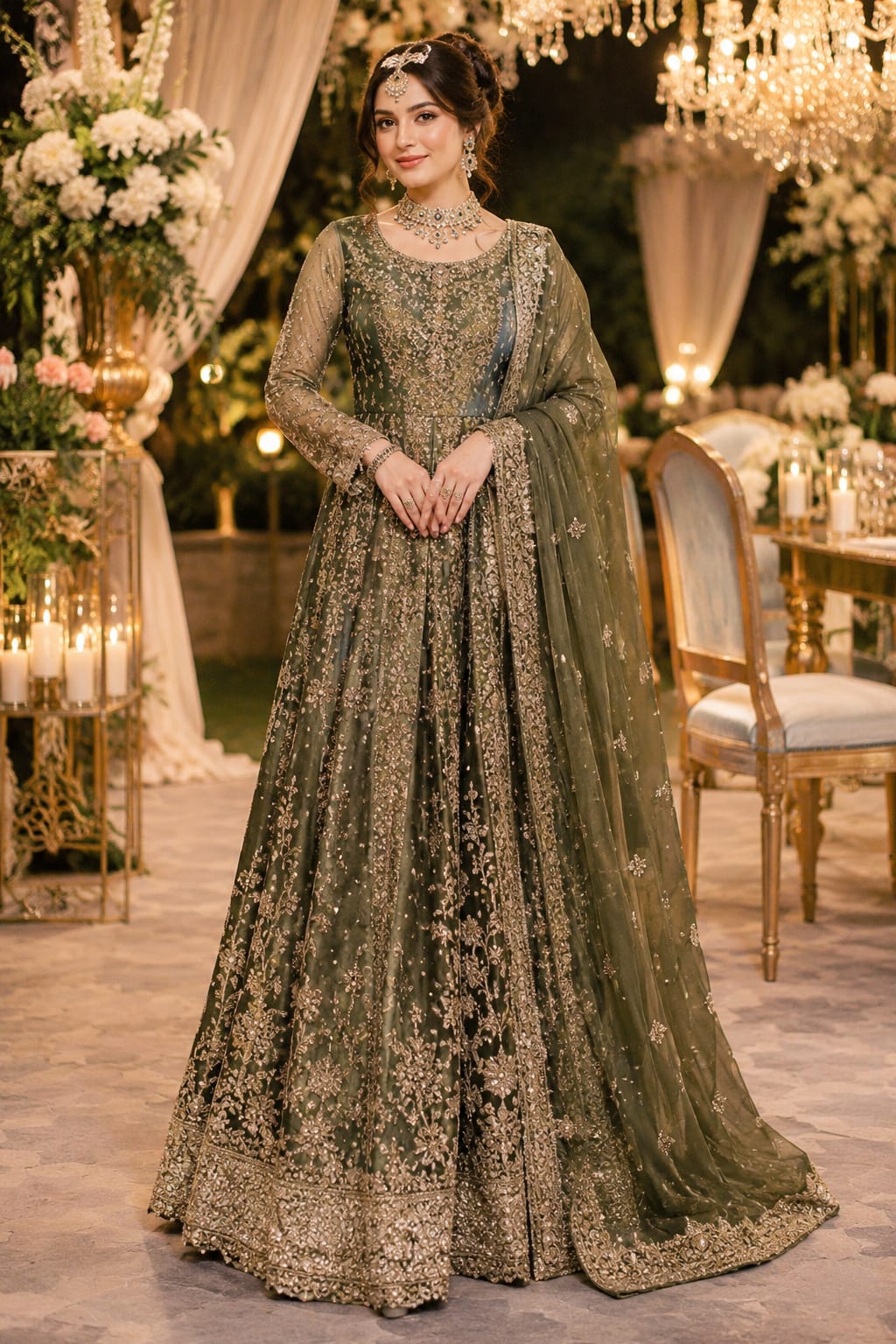
Baraat is commonly the most formal event. This is the time for a beautifully embroidered raw-silk suit, a graceful lehenga, a formal gharara or a classic sari. Deep emerald, sapphire, plum, charcoal and antique gold are elegant options. Rich fabrics and intricate details look lovely, but guests should avoid copying the bride’s exact colour, jewellery or heavily embellished bridal silhouette.
Formal evening guest styling: olive-gold embellished gown · AI-generated fashion inspiration
A maroon-and-gold look can be striking, but the example below is intentionally very ornate—choose lighter jewellery and less embroidery for a guest-friendly interpretation.
Walima: soft glamour and polished elegance
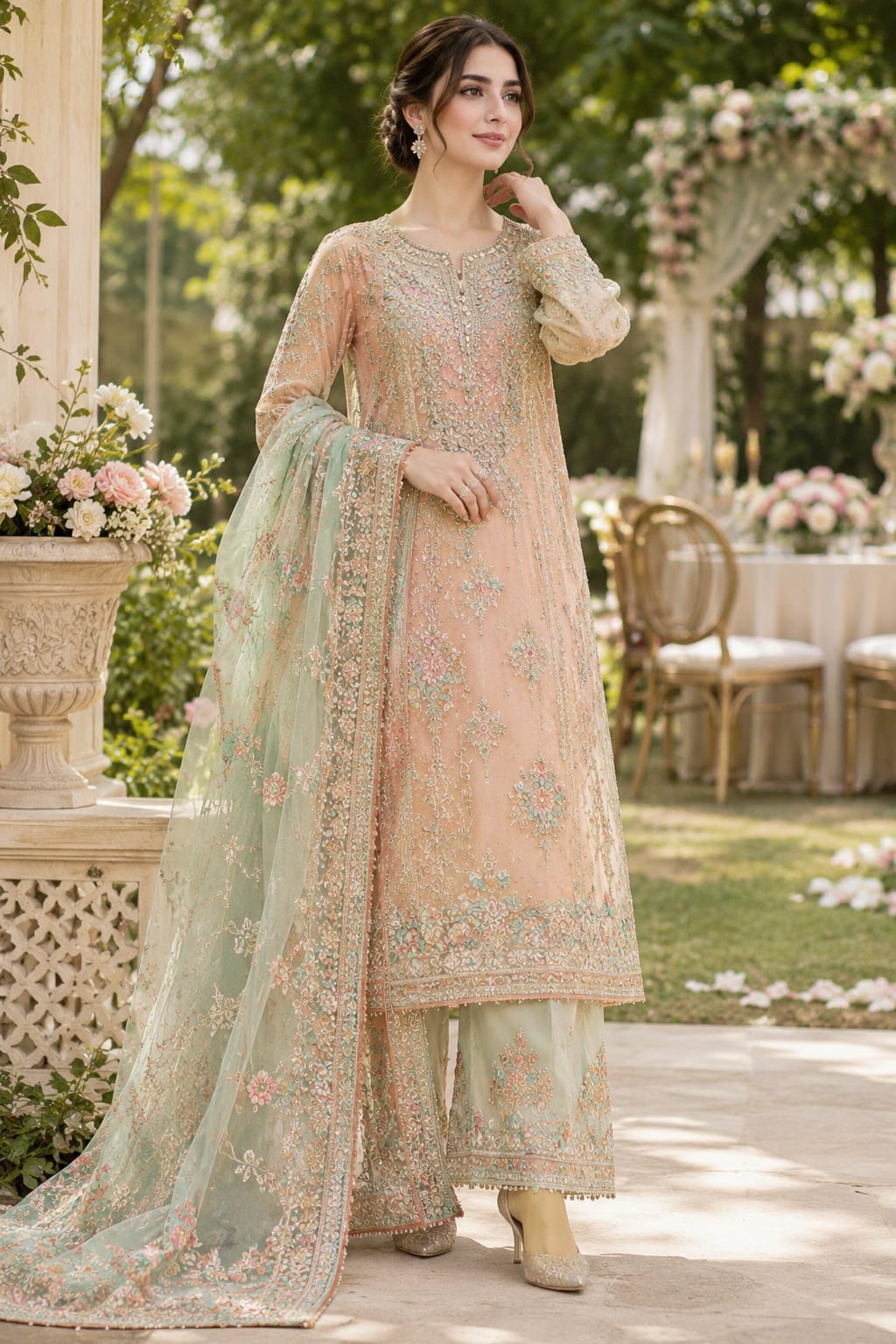
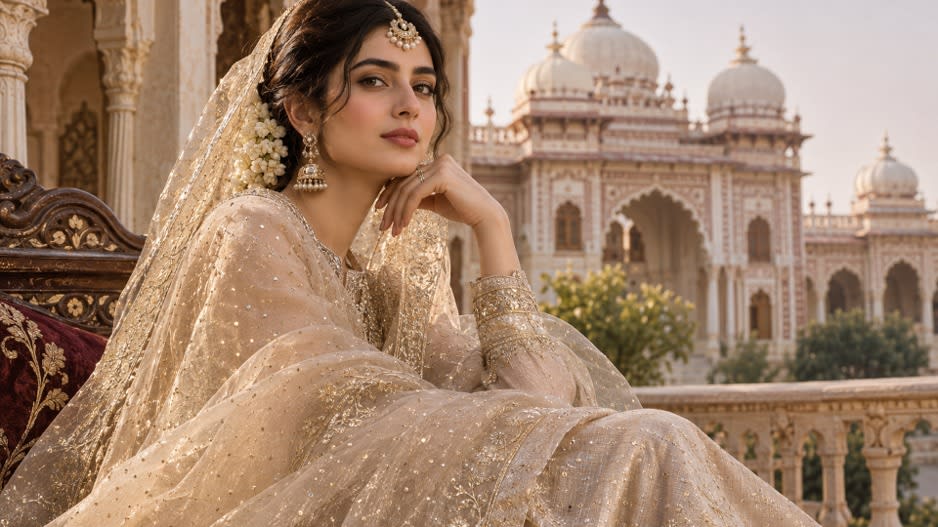
Walima outfits often favour graceful silhouettes, luminous fabrics and quieter embellishment. A powder-blue maxi, blush embroidered shirt with straight trousers, or champagne-toned sari can look polished without being overpowering.
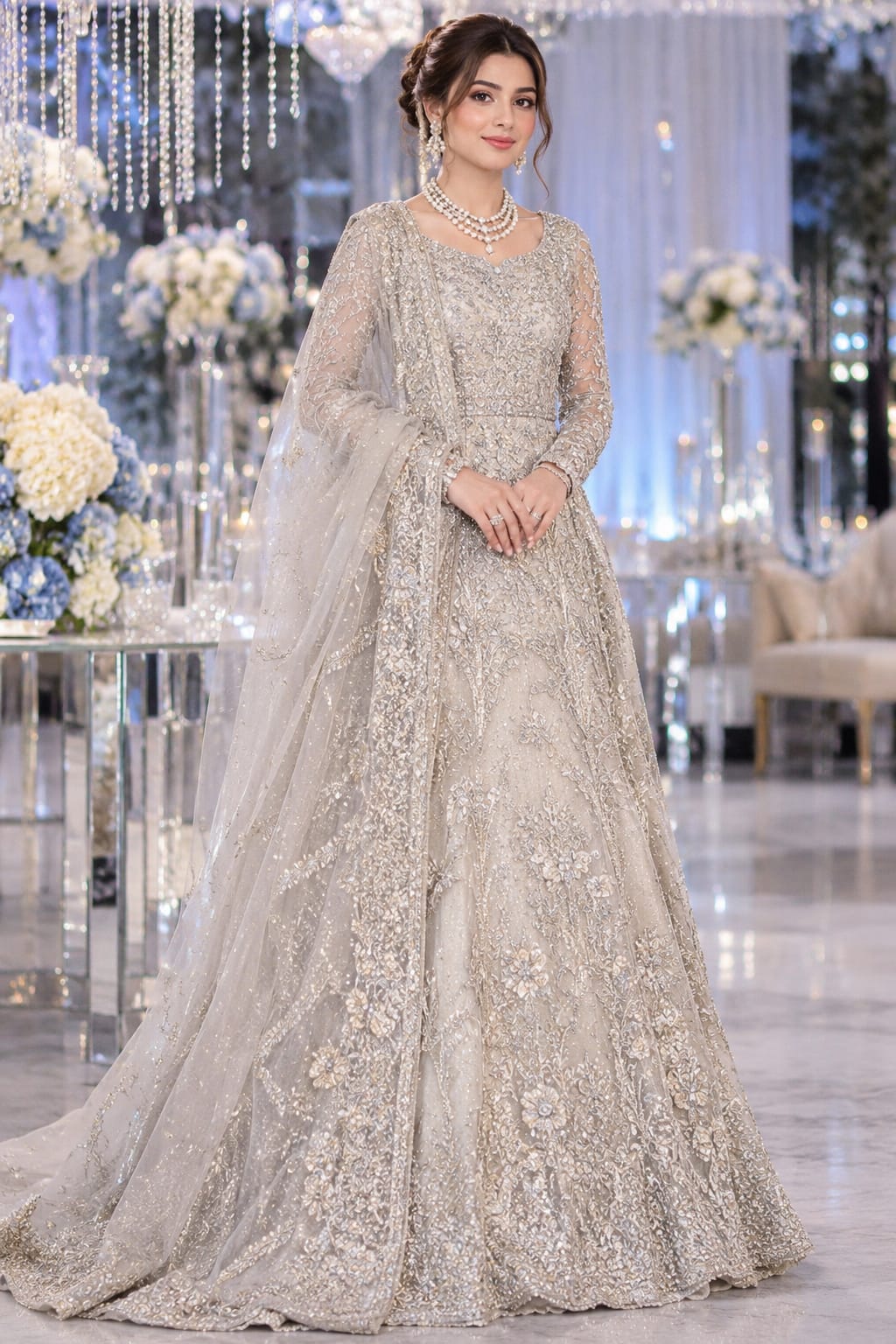
Walima: peach and mint formalwear · AI-generated fashion inspiration
A simple styling formula is one elegant fabric, one focal accessory and a clean silhouette. For example, pair a muted formal outfit with pearl earrings and a metallic clutch, or let an embellished neckline replace a heavy necklace.
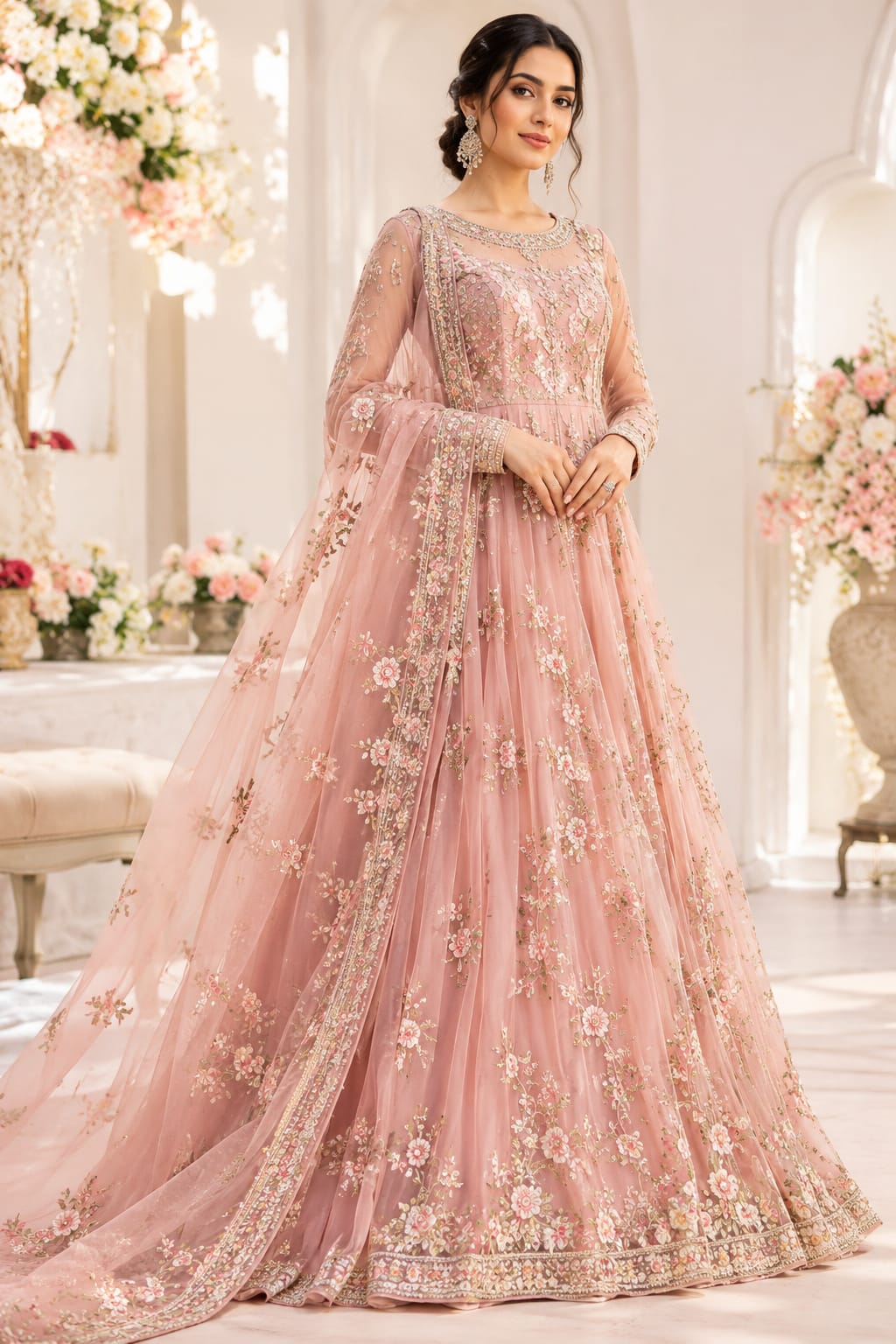
Walima: silver evening gown · AI-generated fashion inspiration
Walima dressing often feels calmer and more contemporary than Baraat styling. Consider a pastel embroidered maxi, a straight shirt with wide-leg trousers, a refined sari or a flowing gown. Champagne, dusty rose, powder blue, lilac and muted silver are timeless choices. Let fabric drape, tailored fit and thoughtful accessories create the impact.
Formal outfit styling inspiration · AI-generated fashion inspiration
Styling idea: a peach formal suit with pearl earrings and neutral heels, or a silver-grey gown with minimal jewellery. If the bride is wearing pale colours, avoid an outfit that reads unmistakably bridal.
Fabric, season and venue matter
In summer, lightweight fabrics help with comfort, but sheer organza and chiffon may require a breathable lining. Raw silk can hold a structured shape, while velvet is often better reserved for cooler evenings. The actual comfort depends on weight, weave, lining and ventilation—not just the fabric name.
Venue checklist: for lawn events, avoid thin stiletto heels that sink into grass; for winter outdoor ceremonies, bring a coordinating shawl; for indoor receptions, keep your outfit manageable when sitting at tables and moving through crowds.
For warm daytime events, consider lightweight chiffon, breathable cotton blends and softly lined organza. For winter evenings, raw silk, heavier silk blends and velvet can feel more suitable. Outdoor lawns call for practical footwear and a shawl when needed; air-conditioned halls may be chilly even in summer. Always check the invitation for a stated dress code or colour theme.
Five guest-style rules worth remembering
- Let the couple be the centre of attention: avoid an exact copy of the bride’s outfit or excessive bridal jewellery.
- Choose a silhouette you can sit, eat, walk and dance in comfortably.
- Wear your shoes and dupatta together during a trial fitting.
- Keep a few essentials handy: safety pins, tissues, a compact and comfortable flats.
- Restyle outfits with a new dupatta, jewellery or bag instead of buying four entirely new looks.
How much embellishment is appropriate?
Think of a sliding scale: minimal for a casual Mayun, colourful medium embellishment for Mehndi, refined formal detailing for Baraat, and sophisticated sparkle for Walima. The couple’s invitation always takes priority over general conventions.
Accessories, makeup and hair
At Mayun, try floral accents or small jhumkas. Mehndi pairs well with colourful bangles and an easy updo. Baraat can support statement earrings and a polished hairstyle; Walima often suits soft waves, pearls and understated makeup. Choose one statement feature rather than several competing ones.
A four-event wardrobe without overspending
You do not need four completely new outfits. Restyle a plain silk suit with a festive dupatta for Mehndi, wear a formal outfit you already own for Baraat, and change accessories for Walima. Tailoring, pressing and shoe comfort often make more difference than buying another dress.
Common mistakes to avoid
Do not ignore the dress code, leave alterations until the last day, wear untested shoes, or choose a heavy outfit for an event involving lots of dancing. If the invitation includes a specific cultural or religious expectation, follow it respectfully.
Frequently asked questions
Can guests wear red? Yes, depending on the family and event, but bright bridal red at Baraat is often best avoided. Check the couple’s chosen colours when unsure.
Can I wear black or white? Neither is universally forbidden. Customs vary, so follow the invitation and ask the hosts if you are uncertain.
What if I am attending only one event? Choose a versatile formal three-piece suit or anarkali in a colour that fits the function, then style it with appropriate accessories.
A final note from Nayyab Collection
The best wedding guest outfit is one that celebrates the occasion and still feels like you. Choose the right level of formality, invest in comfortable tailoring and let your personal style shine. Explore elegant Pakistani formalwear and custom styling inspiration at nayyab.shop.
Editorial note: The accompanying images are AI-generated outfit inspiration, not photographs of Nayyab Collection inventory. Some examples show more embellishment than we recommend for wedding guests.
Plan your bridal look with our designers
Book an online consultation, wherever you live. Share your wedding date, inspiration and budget; we confirm your outfit details with you before dispatch.