Dupatta: Borders, Draping Styles, and Double Dupatta Trends
A complete guide to the finishing touch that shapes a Pakistani bridal look.
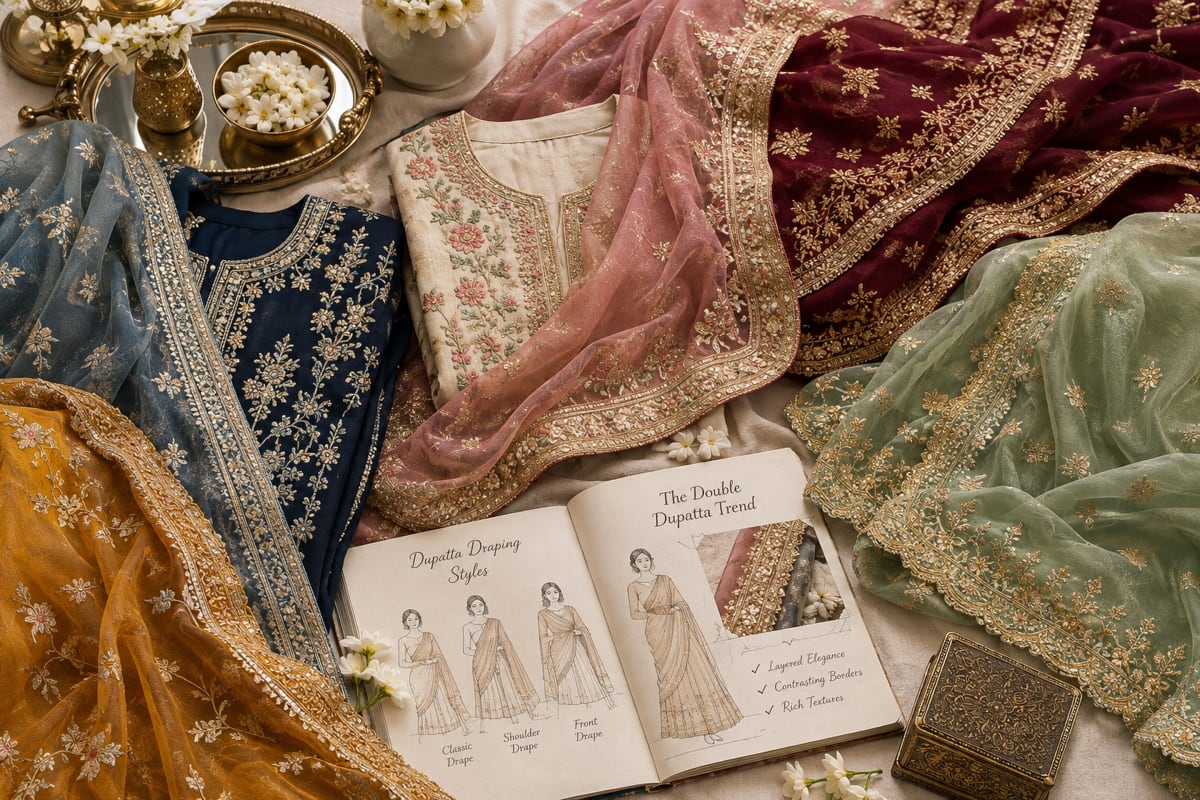
The dupatta edit: a study in fabric, embroidery, borders, and expressive draping.
A beautiful dupatta can change the entire mood of an outfit. Draped over the head, it becomes a delicate bridal veil. Flowing from one shoulder, it adds movement and elegance. Finished with intricate handwork, it becomes a statement piece in its own right. For Pakistani brides, the dupatta is not an afterthought—it is part of the silhouette, the tradition, and the moment.
From richly embroidered borders to feather-light organza and the growing interest in double-dupatta styling, today’s options combine heritage craftsmanship with thoughtful modern design. The secret is not simply choosing the most elaborate piece; it is balancing the border, fabric, weight, colour, and drape so everything feels beautifully intentional.
The Border: A Small Detail With a Big Impact
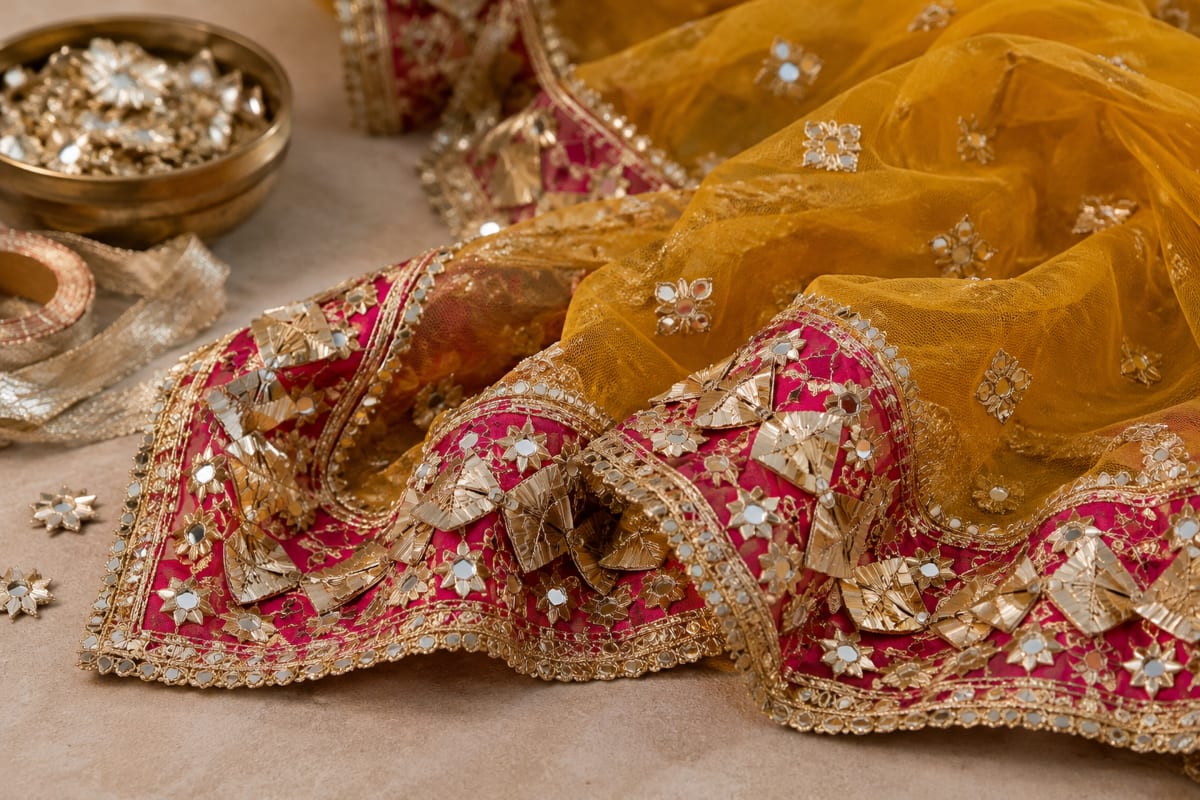
A dupatta border acts like a frame. It draws the eye toward the face, defines the line of the shoulders, and brings the embroidery of a shirt or lehenga together. A narrow border can make an already detailed outfit feel refined, while an ornate four-sided border can transform a simple base fabric into a bridal statement.
A bright gota-inspired border adds energy and definition to a sheer dupatta.
1. Zardozi, Dabka, and Naqshi: The Regal Border
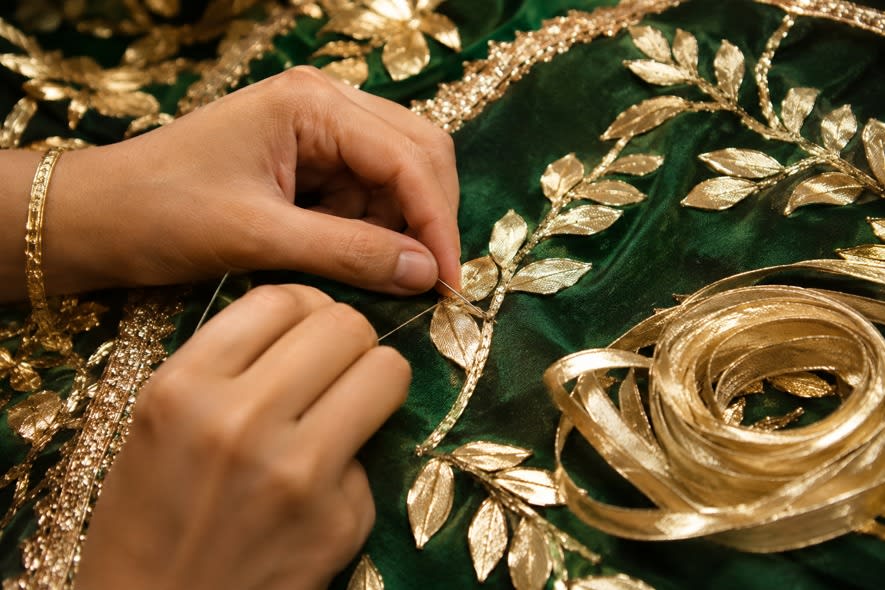
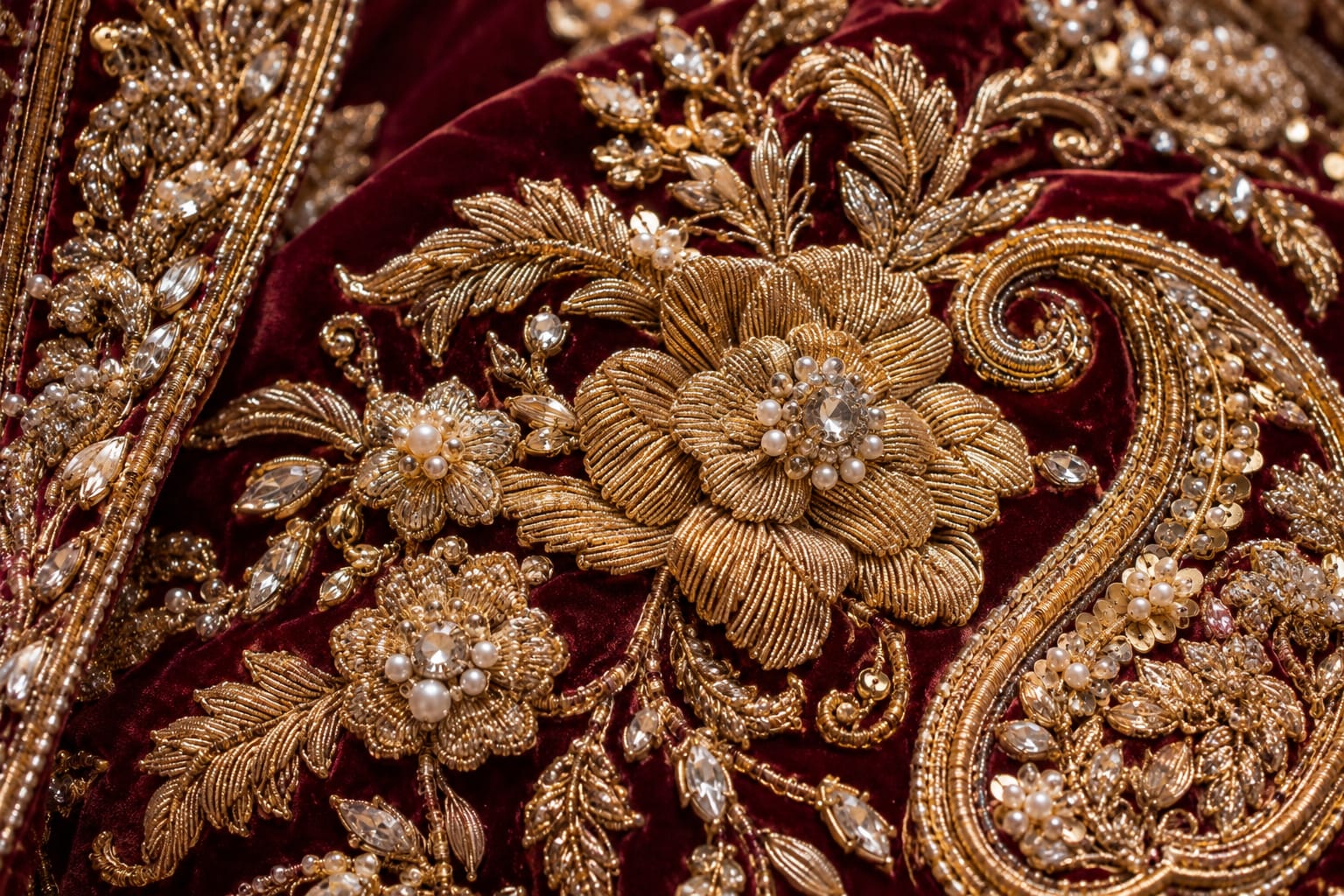
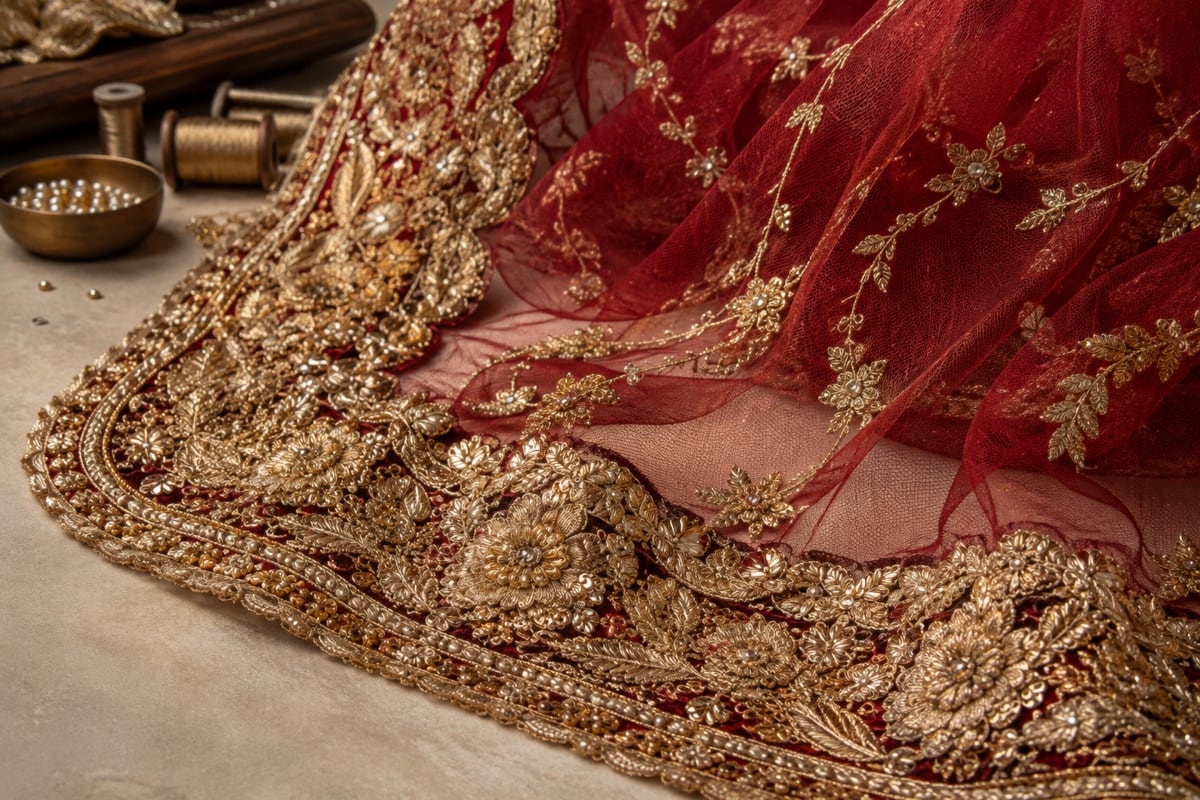
For a traditional Baraat outfit, metallic handwork remains an enduring choice. Zardozi is a broad term for decorative metallic embroidery, often combined with coiled dabka, textured naqshi, pearls, sequins, and stones. On a border, these details create rich light and shadow that appear especially beautiful in close-up photographs.
This style pairs naturally with deep red, maroon, rust, emerald, navy, and antique-gold palettes. If the outfit is already heavily embellished, consider concentrating the densest handwork on the shoulder drape rather than along the edge resting on the head.
Raised gold-toned detailing creates a traditional, dimensional embroidered finish.
2. Gota Patti and Kinari: Festive, Luminous, and Playful
Gota patti uses metallic ribbon or appliqué to form flowers, leaves, and geometric shapes. It looks especially festive on bright dupattas for Mehndi and Mayun celebrations. A finishing edge of kinari or decorative fringe brings extra texture, while tiny mirrors or sequins catch the light when the fabric moves.
For a lighter look, choose a slimmer gota border with scattered motifs instead of continuous dense decoration. This keeps the dupatta easy to carry without losing its celebratory sparkle.
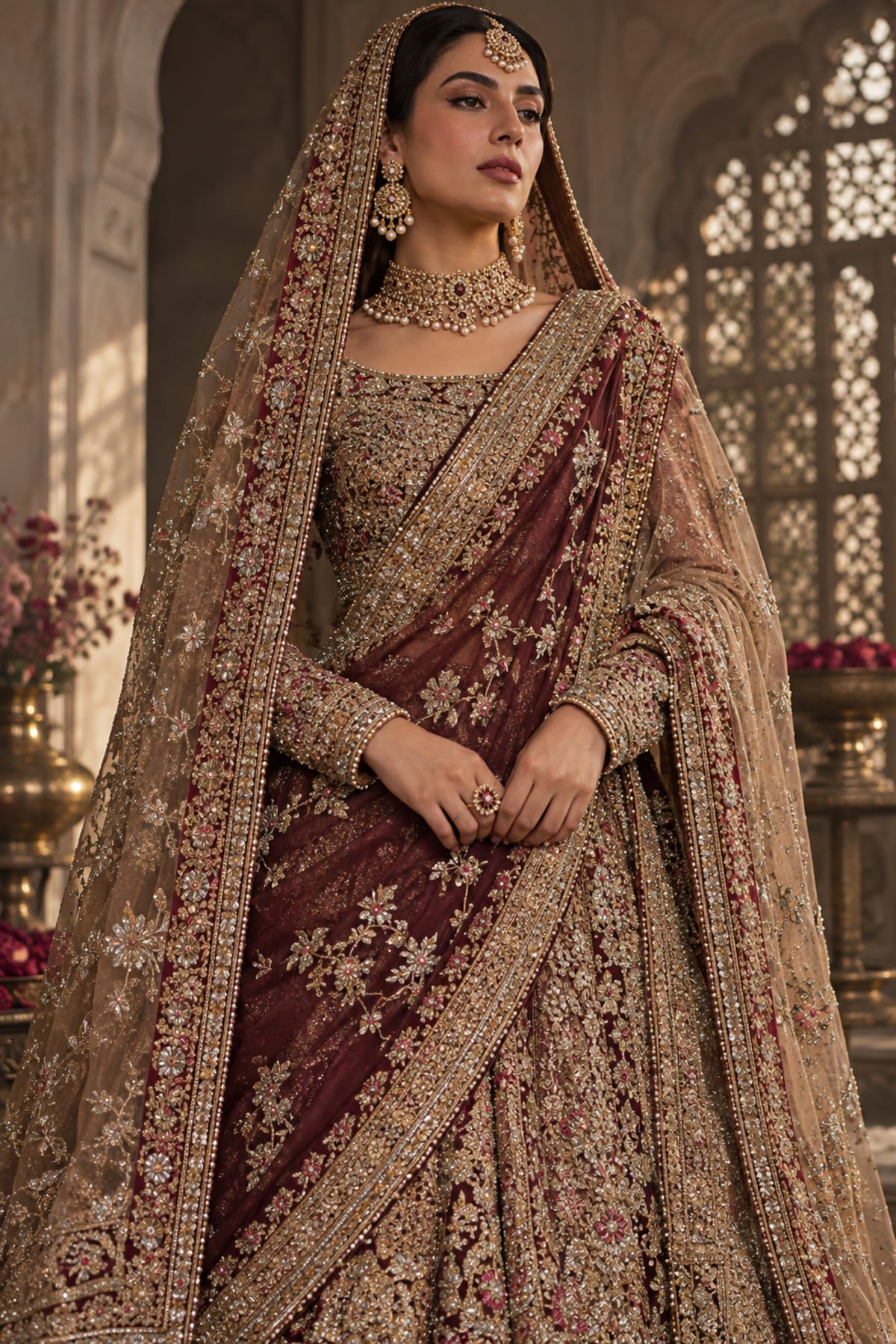
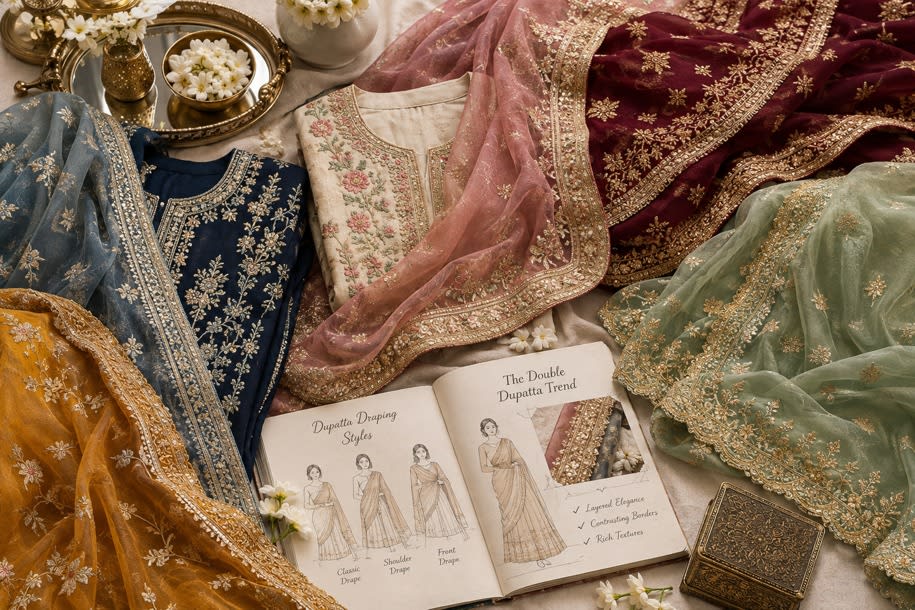
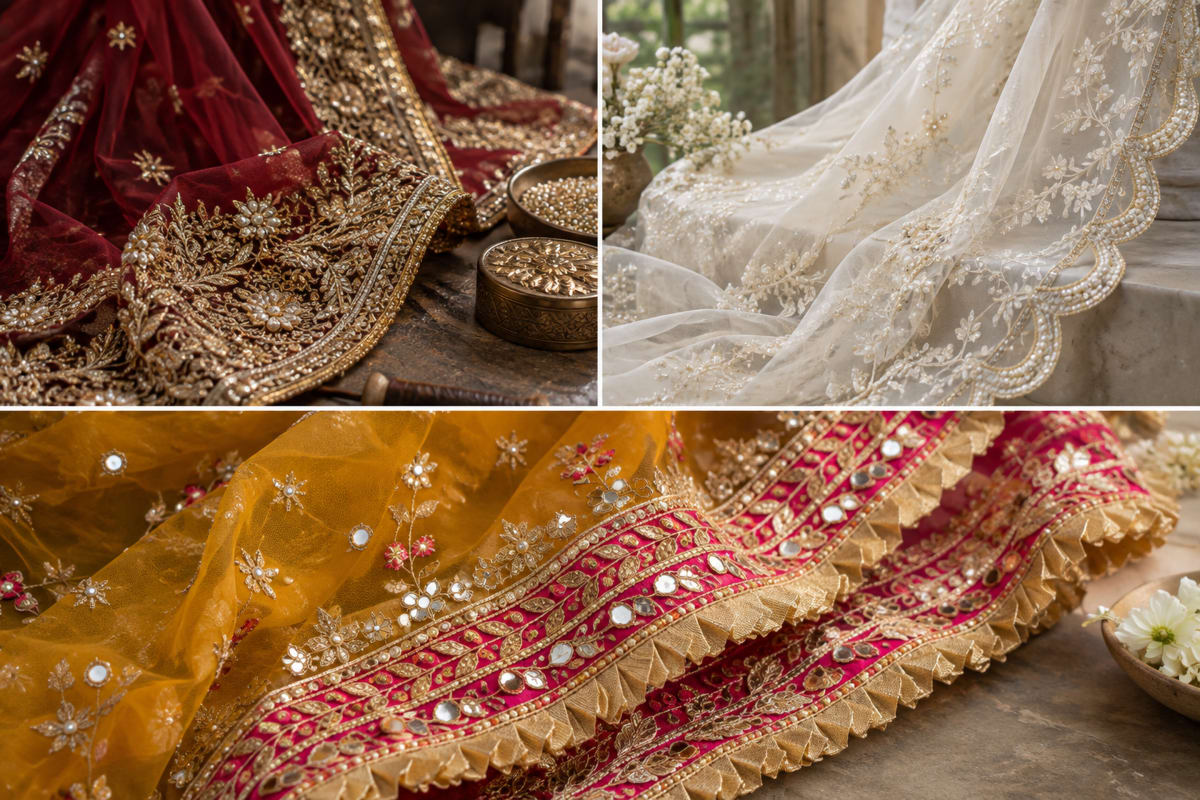
Embroidery mood board: intricate borders can range from bold metallic work to light scallops.
3. Scalloped, Pearl, and Floral Borders: Soft Romance
A scalloped edge feels graceful because its curved line softens the silhouette. Pearls, miniature floral motifs, and tonal embroidery suit ivory, blush, champagne, powder blue, and muted sage outfits. This is particularly appealing for a Nikkah look where the face, jewellery, and overall softness should remain the focus.
Styling thought: If your necklace or matha patti is intricate, a narrow pearl-trimmed face border often photographs more cleanly than a wide, heavily beaded one.
4. Minimal Borders: When Less Creates More
Not every bridal dupatta needs elaborate work on all four sides. A slim tilla line, fine lace trim, or delicately finished organza edge can look sophisticated with a richly decorated shirt. The quieter border also helps the veil fall naturally, instead of pulling awkwardly around the face.
The border framing the face should complement, not compete with, bridal jewellery.
Choose the Fabric Before You Choose the Drape
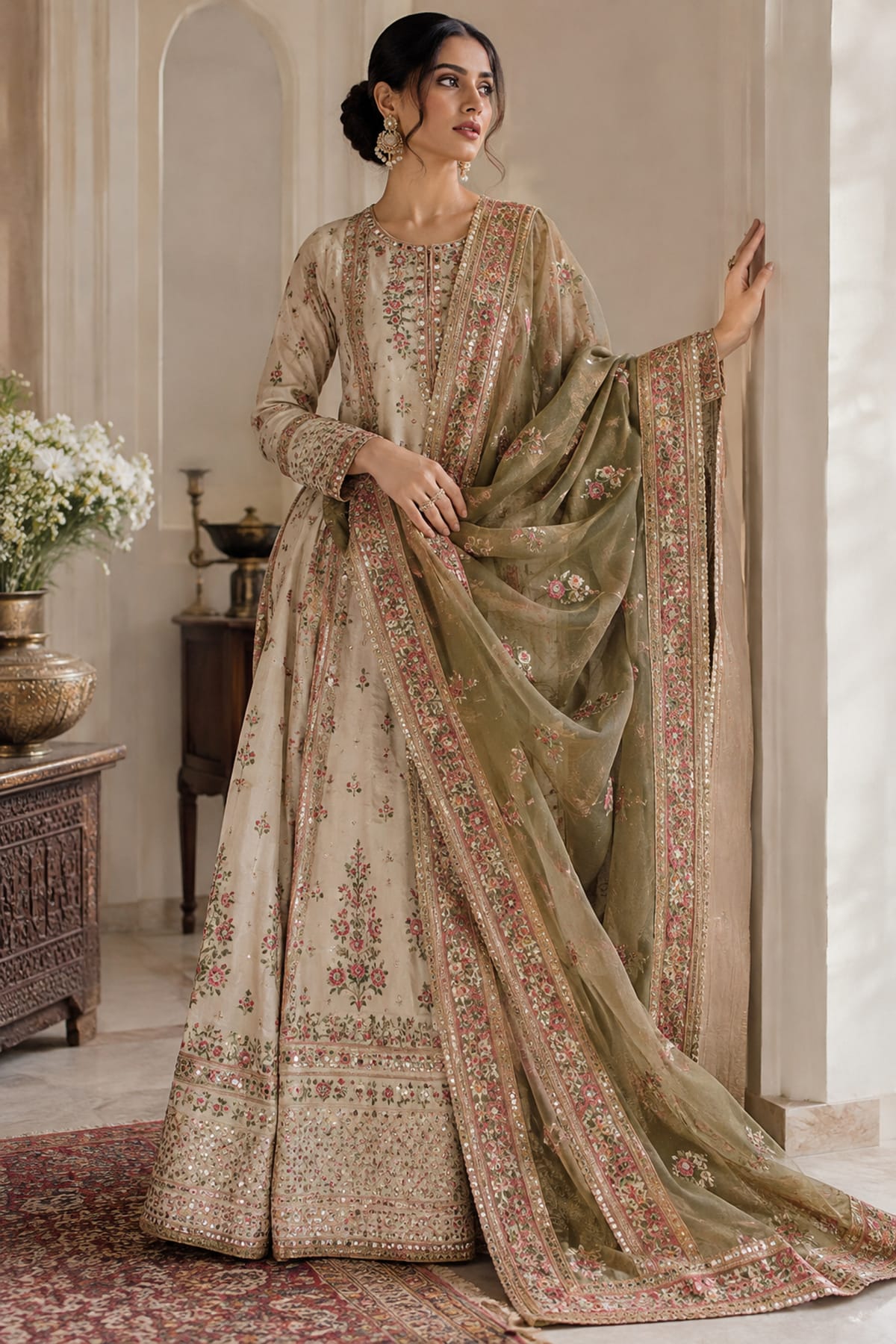
The same draping style can look entirely different in two fabrics. That is why border design and fabric choice should always be discussed together, especially for a made-to-order outfit.
Net: Sheer and flexible; often chosen for head veils, scattered sequins, and lightly embellished bridal dupattas. Its softness depends on the specific net quality.
Organza: Crisp and airy with a little structure. Excellent for holding a sculpted shoulder drape or displaying a clean border, though it can appear puffier than chiffon.
Chiffon: Soft and fluid. It creates elegant, falling folds but may need discreet securing so it does not slip.
Tissue and zari fabrics: Beautifully luminous and festive. Some versions are more delicate or structured, so test how they sit at the shoulder and around the face.
Velvet and jamawar: Rich, statement-making choices for a winter shawl or second dupatta. Their heavier feel is generally better across the arms and shoulders than placed over the hairstyle.
An airy muted-green dupatta shows how a flowing border can soften an ivory outfit.
Six Beautiful Dupatta Draping Styles to Consider
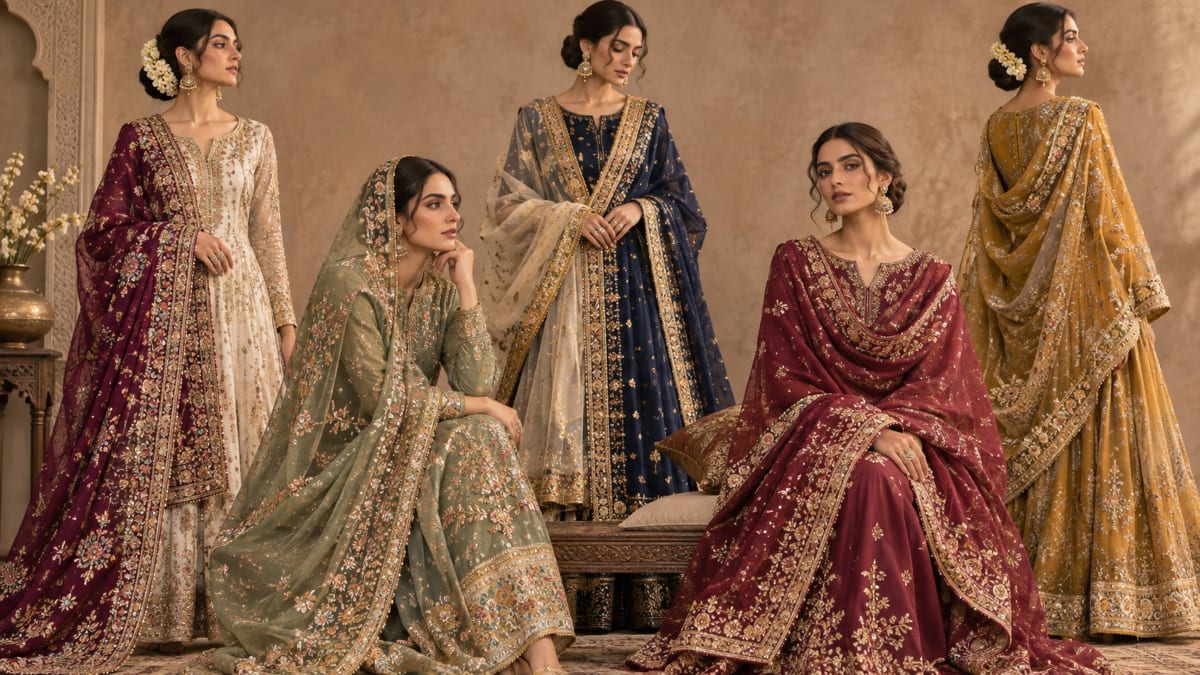
A successful drape does three things: it shows the embroidery, flatters the outfit’s proportions, and lets you move comfortably. Here are six ways to style one dupatta—plus the moments in which each one shines.
Draping inspiration: head, shoulder, front, and trailing styles create different silhouettes.
1. The Classic Head Veil
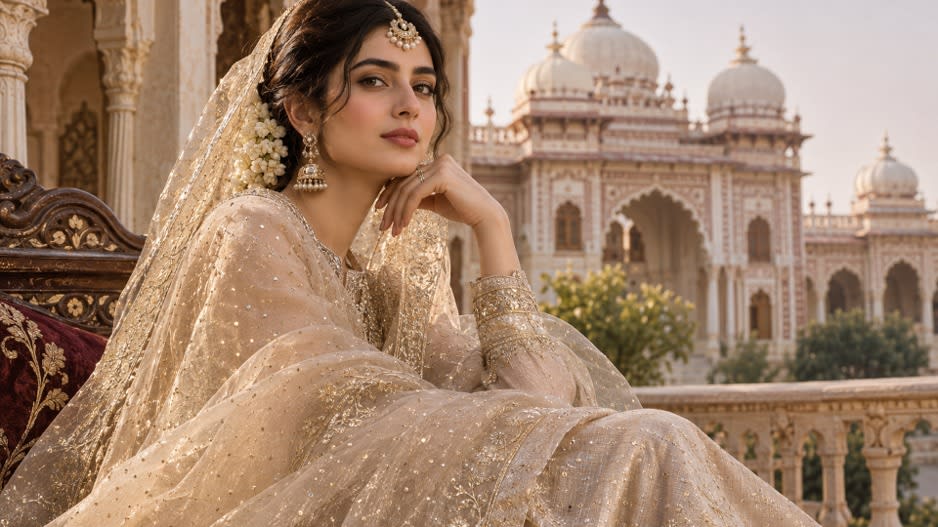
The most timeless bridal drape rests lightly over the head, with the border gently framing the face before falling over the shoulders. It is especially popular for Nikkah and Baraat ceremonies because it creates a formal, graceful outline.
Choose a fine, soft fabric and test the exact head placement with your jewellery and hairstyle. The front border should feel secure but not tight, and it should never pull uncomfortably at the crown.
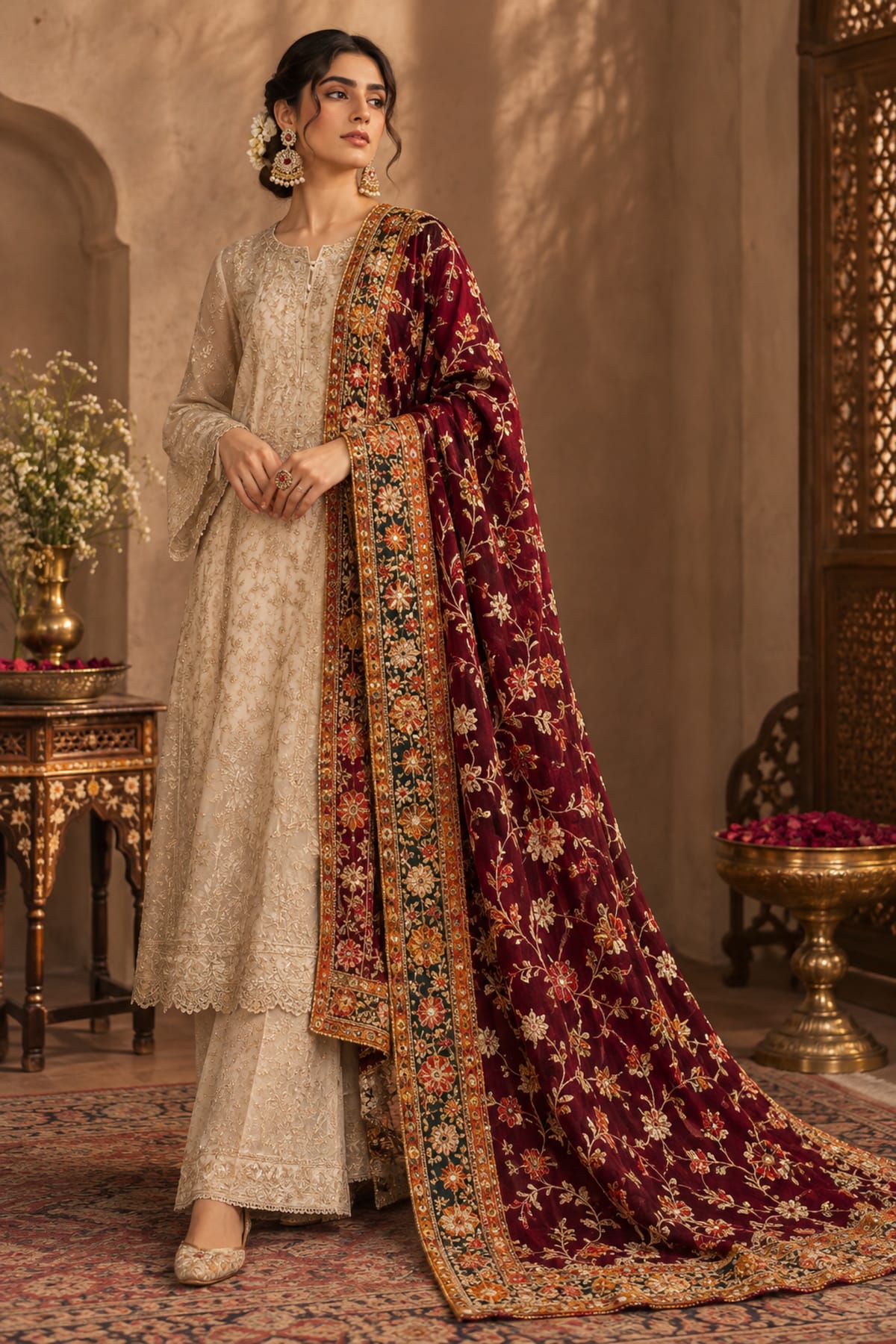
A soft head veil with a contrasting shoulder layer offers traditional bridal elegance.
2. The One-Shoulder Waterfall
Place the dupatta over one shoulder and allow the remaining length to fall in a long, uninterrupted line. This reveals the neckline and front embroidery while highlighting the dupatta border from shoulder to hem. It works beautifully with straight shirts, long frocks, and anarkalis.
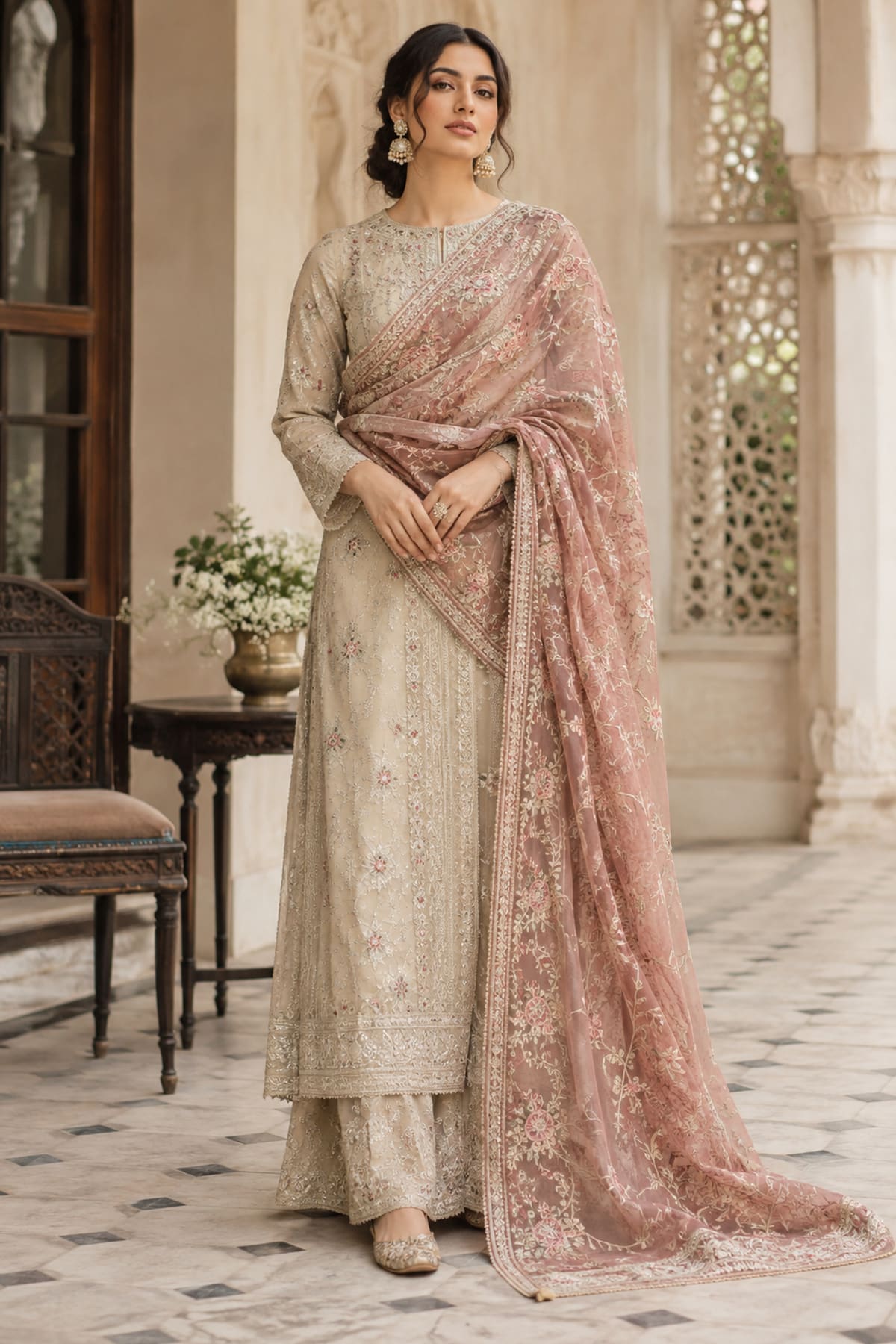
A single, richly bordered shoulder drape adds movement without hiding the dress.
3. The Front Diagonal Drape
Carry the dupatta from one shoulder across the torso and let it gather at the opposite arm. The diagonal line lends shape and gives photographs a tailored, editorial feel. With a long shirt, position the border so it does not cover the most important handwork at the front.
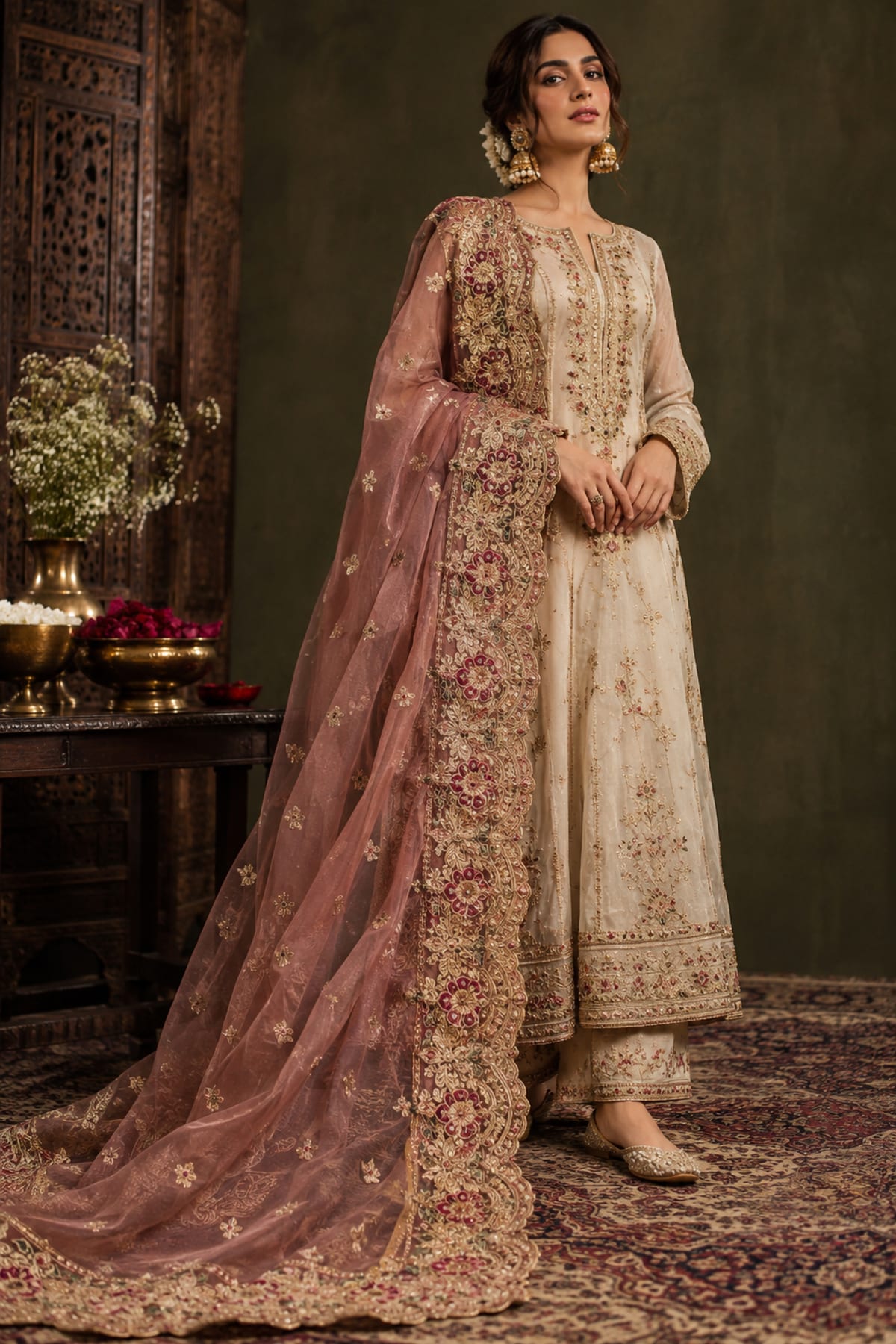
A diagonal drape lets the border become part of the outfit’s central design.
4. The Cape or Back-Draped Style
For a modern, almost architectural effect, attach the dupatta lightly at the shoulders or let it fall behind both arms like a cape. This preserves an open view of the bodice and works particularly well with an elegant, structured fabric. Before choosing this style, check whether the cape catches on sleeves, jewellery, or chair backs.
5. The Royal Forearm Drape
A wider, more heavily bordered dupatta can be arranged across the forearms in an elegant U-shape. The long visible border gives a dramatic finish during an entrance or portrait session. It is particularly effective when the lehenga has a wide flare, though it may be less practical while eating or greeting guests.
6. The Long Trailing Drape
Allow an extended section of the dupatta to fall behind the shoulder for a graceful train-like effect. This can look stunning in formal portraits, provided the fabric length is planned in advance and the floor is clean and dry. For crowded celebrations, arrange to lift or shorten the trail while moving around.
An extended dupatta trail brings a regal, flowing finish to bridal portraits.
Why the Double Dupatta Look Continues to Appeal
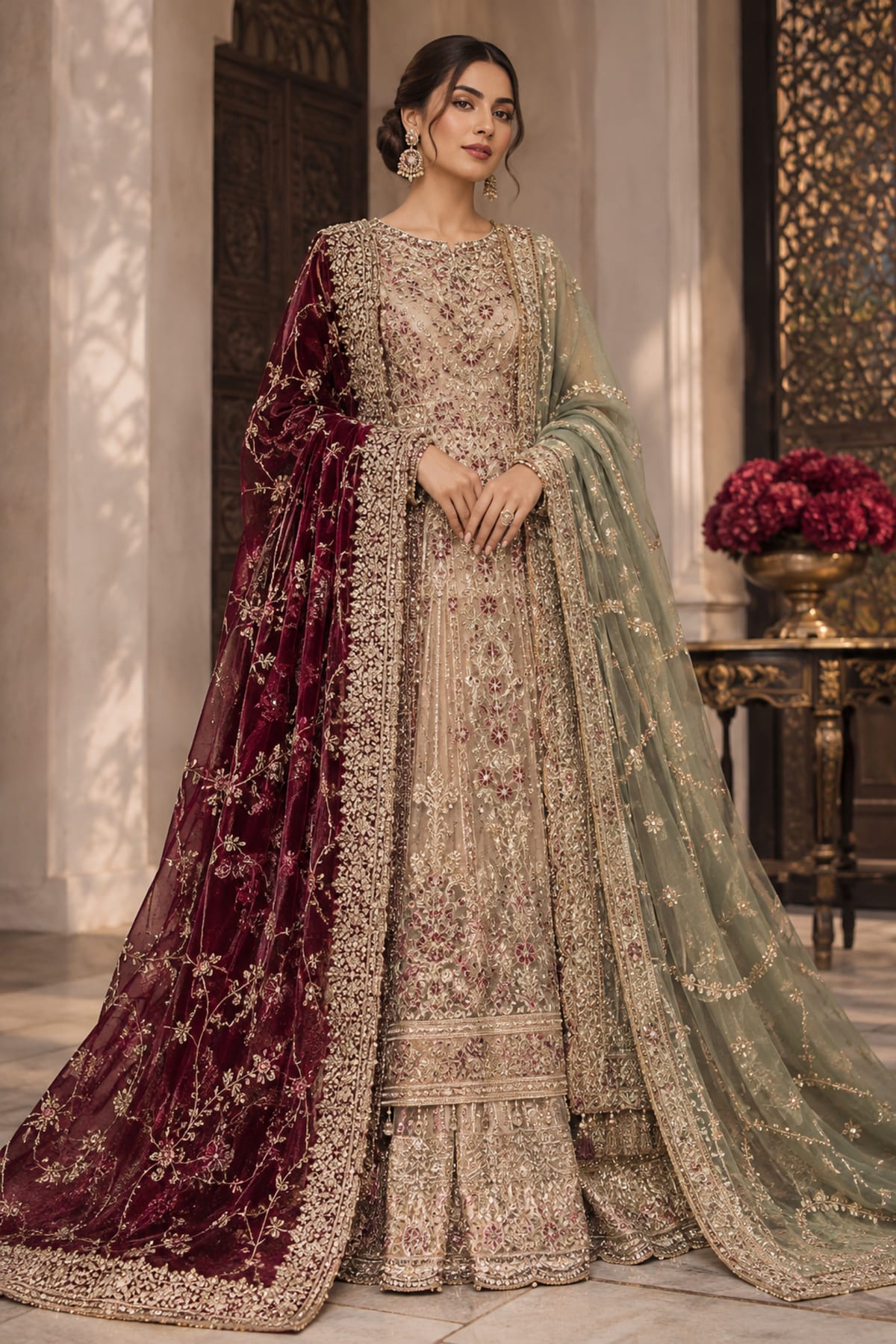
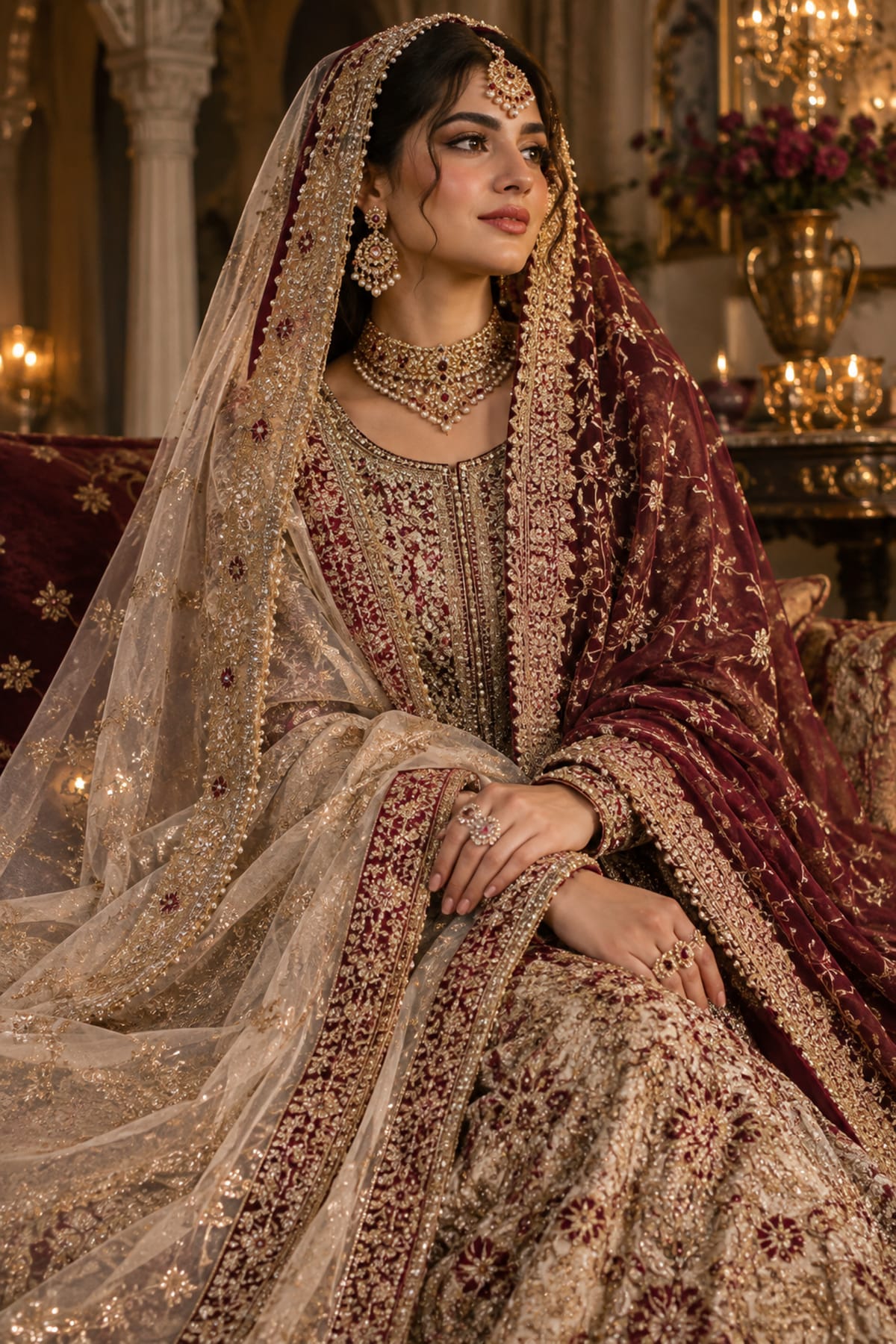
Double-dupatta styling combines two complementary pieces rather than asking one fabric to do everything. In a typical bridal arrangement, the first dupatta is a lighter veil over the head, while the second—often richer in colour, texture, or embroidery—is arranged over the shoulder, arm, or back. The result is layered without sacrificing the structure of the dress.
This layered approach is a noticeable direction in contemporary Pakistani bridal styling, particularly for grand Baraat looks. It is also a practical choice when a heavy border would be uncomfortable on the head for several hours.
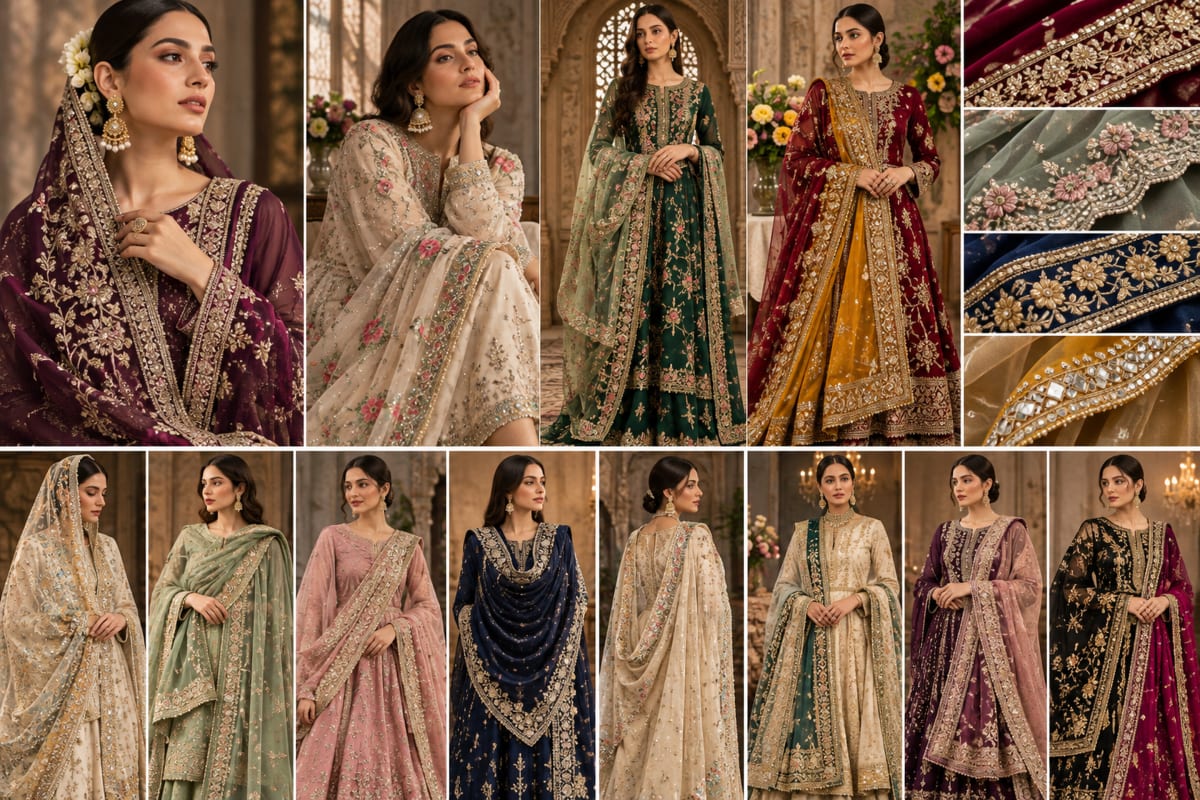
Two contrasting dupattas can create volume, depth, and a distinctly bridal silhouette.
How to Pair Two Dupattas Without Looking Overdone
Same-colour layering: Choose a sheer veil and a slightly deeper, more richly worked second dupatta in the same colour family. Red on red and champagne on champagne feel classic and cohesive.
Soft contrast: Combine ivory with dusty rose, muted sage with warm gold, or peach with maroon. A shared metallic embroidery tone helps the two pieces feel connected.
Statement contrast: A deep jewel-toned shawl over a pale base can create a dramatic look. When you choose this approach, allow one dupatta to be the focal point and keep the other quieter.
Different jobs for different borders: The head veil needs a smooth, refined edge around the forehead. The shoulder dupatta can carry broader zardozi, tassels, or more substantial handwork.
Colour and border combinations—from soft pastel harmony to bold jewel-toned contrast.
Single Dupatta or Double Dupatta: Which Is Right for You?
A single dupatta is not a compromise. It can feel cleaner, lighter, and easier to manage, especially for destination weddings, warmer climates, intimate Nikkah ceremonies, and brides who want their embroidery to remain fully visible. With the right border and drape, one piece can look every bit as refined as two.
Choose two dupattas when you want both a delicate head covering and a statement shawl, or when your bridal outfit is designed around a richly layered silhouette. The best choice is the one that matches your personal style, ceremony, comfort, and budget—not simply the number of layers seen in photographs.
Dupatta Styling by Wedding Occasion
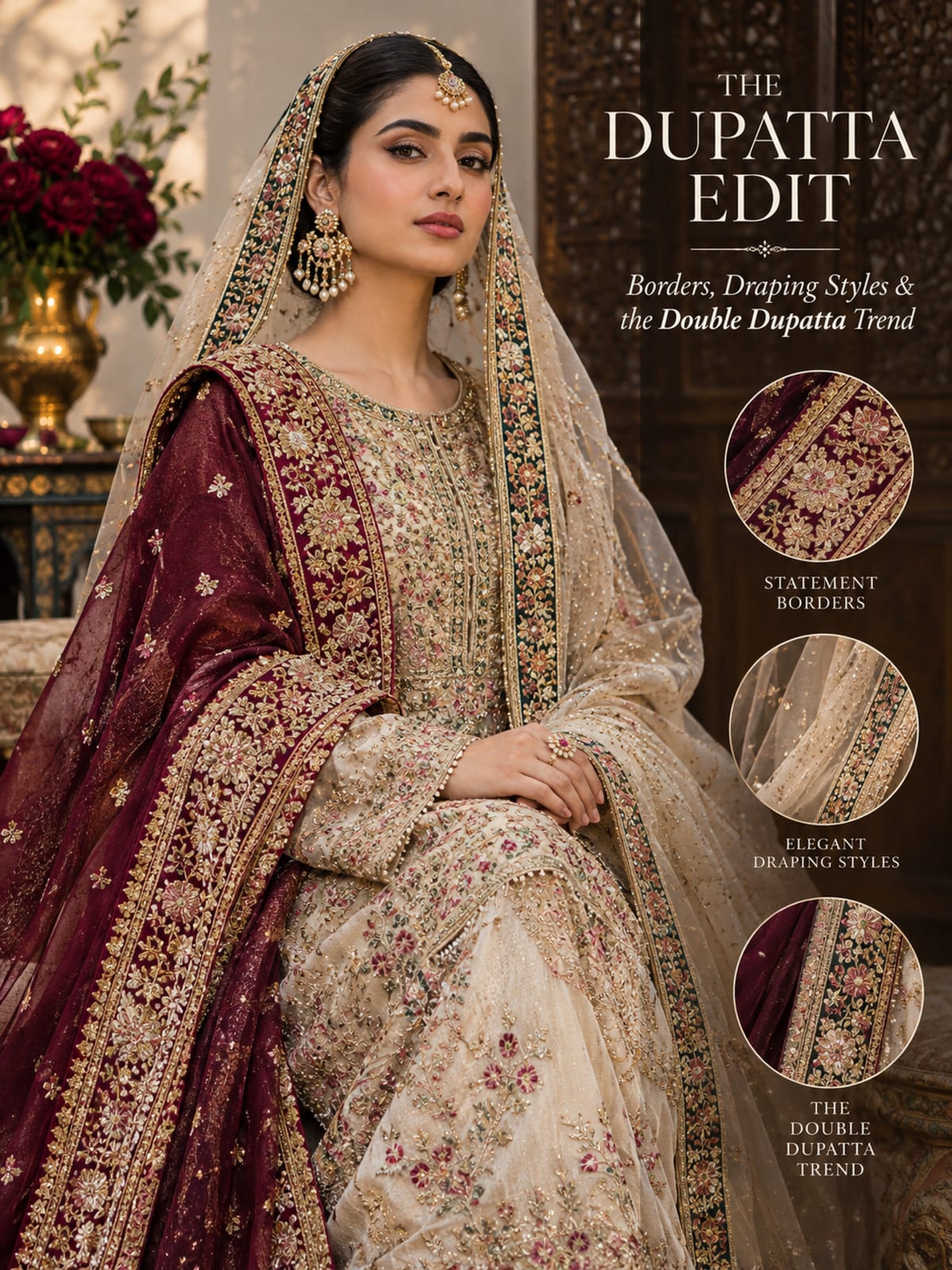
Nikkah: Ivory, pearl, blush, champagne, or muted pastel tones; a sheer head veil; delicate scallops, light pearls, or tonal floral handwork. Comfort and soft face framing usually matter most.
Mehndi and Mayun: Marigold, lime, pink, orange, and festive contrasts; gota patti, mirror accents, and playful movement. A one-shoulder or tucked drape leaves your hands free.
Baraat: Deep red, maroon, emerald, rust, and gold palettes; classic head veils, royal shoulder drapes, or two beautifully balanced dupattas. A defined border can be the strongest finishing detail.
Walima: Soft silver, blush, powder blue, champagne, and understated metallics; fluid silhouettes and light, elegant draping. Minimal or tonal borders often create a polished look.
An editorial take on the current preference for thoughtful borders and layered dupattas.
Five Practical Details Brides Should Check Before Finalising
1. Test the full look together. Try the dupatta with the exact neckline, jewellery, hairstyle, and footwear. A border that looks perfect laid flat may sit very differently when worn.
2. Discuss the weight. Ask how the embroidery will be distributed. Heavy trims at the forehead or repeated pins in one spot can become uncomfortable during a long event.
3. Confirm dimensions, not just “standard size.” Measure the length and width needed for the intended drape, the bride’s height, and any train. Do not assume every dupatta is the same size.
4. Plan secure fastening. Use hidden, fabric-appropriate pins or other suitable styling fasteners with professional help. Avoid piercing fragile handwork or delicate net wherever possible.
5. Take photographs in natural and warm light. Metallic threads, organza sheen, and sheer layers can look different under daylight, flash, and indoor wedding lighting. A trial photograph can prevent surprises.
A Dupatta Designed Around You
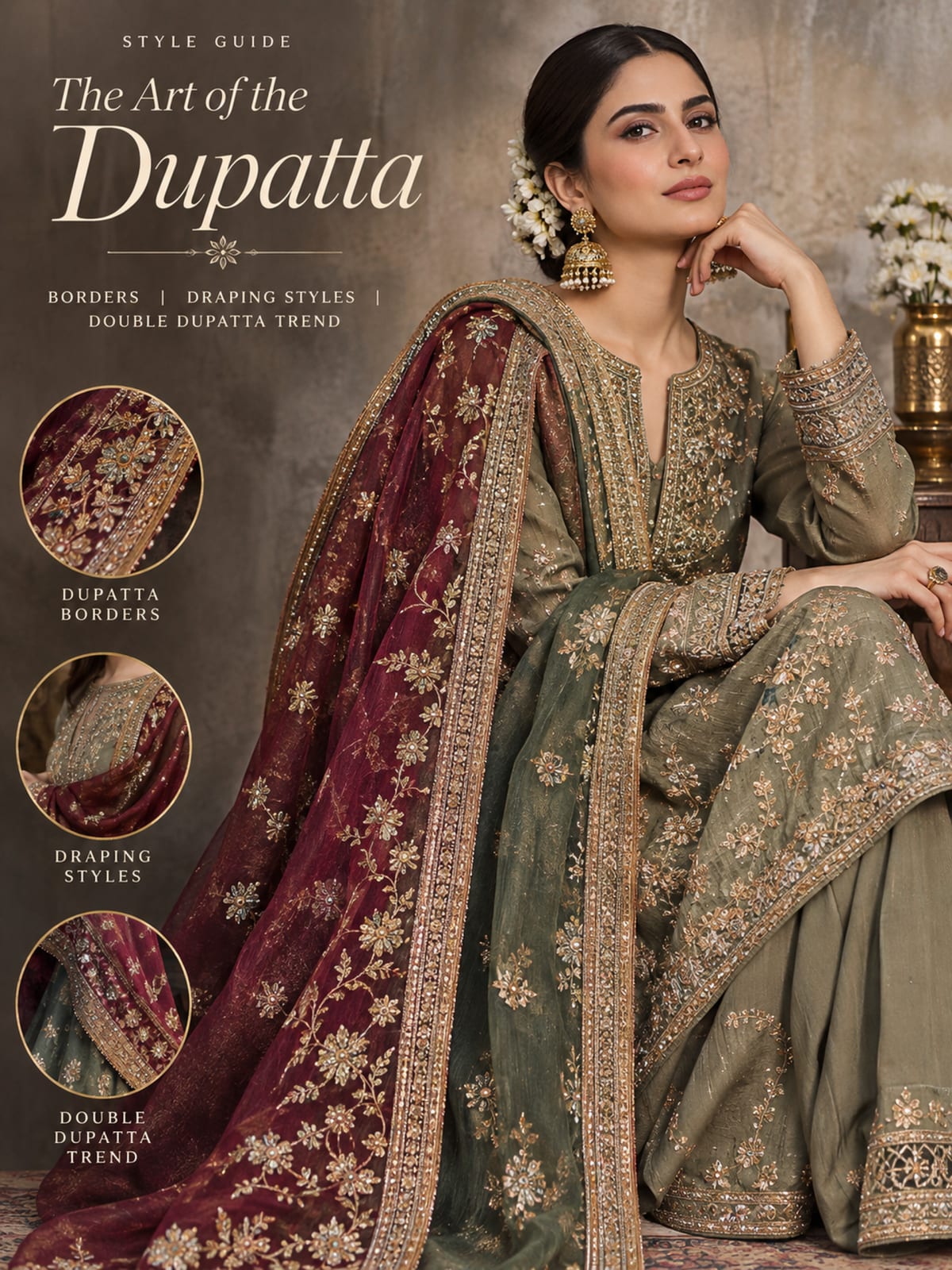
The most memorable bridal outfits are not necessarily the heaviest ones. They are the ones where every element feels connected: the blouse and lehenga, the embroidery and border, the veil and jewellery, the colour palette and the bride herself.
At Nayyab, bridal and occasionwear is approached as a made-to-order design process. Whether you imagine an ivory Nikkah veil, a richly worked maroon shoulder dupatta, a modern single-dupatta look, or a carefully paired double-dupatta ensemble, colour, fabric, border and drape can be discussed around your preferences before the design is finalised.
The finishing detail: a dupatta can bring the entire custom bridal vision together.
Frequently Asked Questions
Is a double dupatta necessary for a Pakistani bride?
Not at all. A single, beautifully finished dupatta is a complete bridal choice. Two dupattas add layers and styling options, but they are not required for an elegant look.
Which fabric is best for a bridal head dupatta?
A soft, relatively lightweight sheer fabric is usually easier to arrange over a hairstyle. Fine net, soft organza, and selected chiffons can work well depending on how they are finished and secured.
Can the dupatta colour be different from the bridal dress?
Yes. A well-chosen contrast can highlight the outfit beautifully. Repeating one element—such as metallic embroidery tone, floral thread colour, or border shape—helps create visual balance.
Can a dupatta be customised for overseas brides?
Yes. For a bespoke order, discuss the fabric, dimensions, border placement, colour and intended draping style in advance. Sharing reference images and reviewing a design before production can help avoid misunderstandings.
Explore custom bridal and occasionwear at nayyab.shop.
Editorial image note: Illustrations in this document are AI-generated styling concepts inspired by publicly available bridal textile references; they are not photographs of Nayyab products.
Choose your fabric with us
Not sure between raw silk, organza or tissue? Message us and we'll recommend the right base for your design, season and budget.