Inside the Dress Work Details: Understanding Zardozi, Dabka, and Naqshi Handwork
A closer look at the extraordinary craftsmanship behind Pakistani bridal couture—and how to choose the right embroidery for your dream outfit.
NAYYAB COLLECTION | THE BRIDAL CRAFT JOURNAL
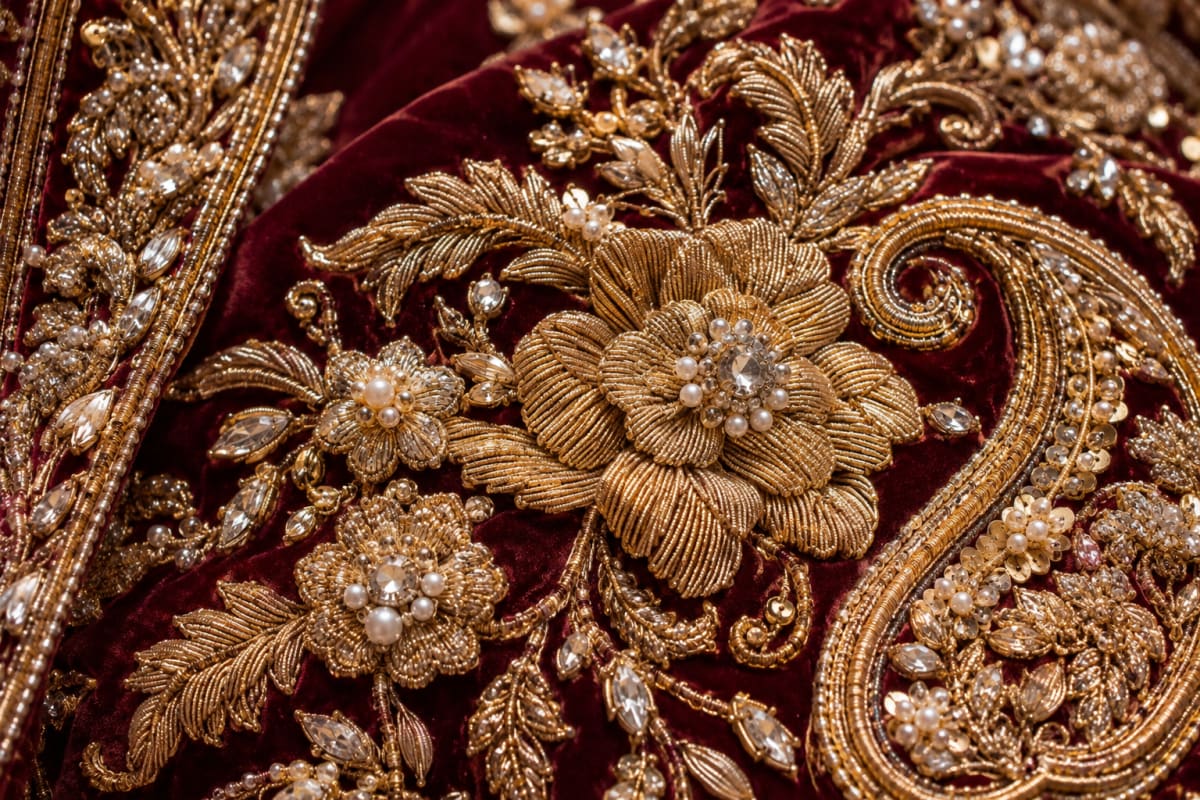
A closer look at the extraordinary craftsmanship behind Pakistani bridal couture—and how to choose the right embroidery for your dream outfit.
The beauty you can see—and the artistry you cannot
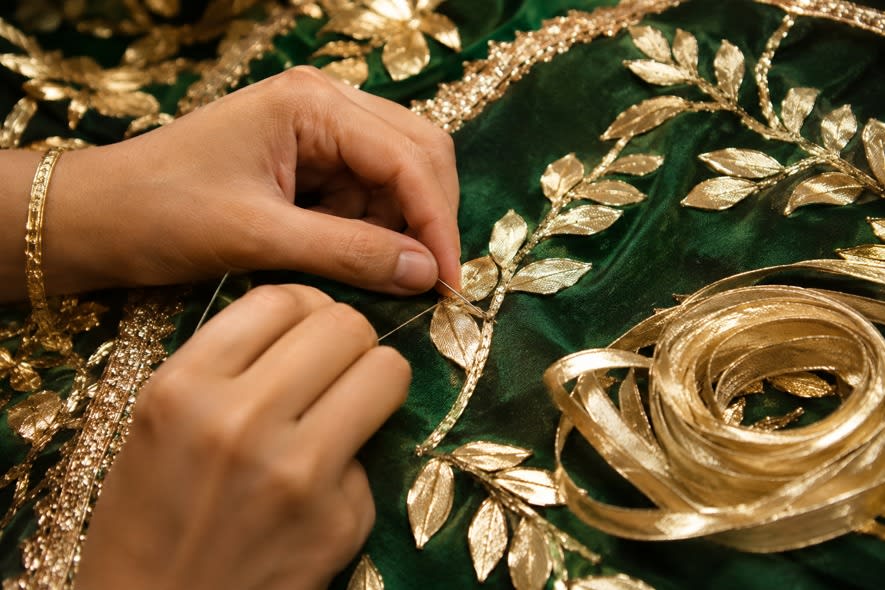
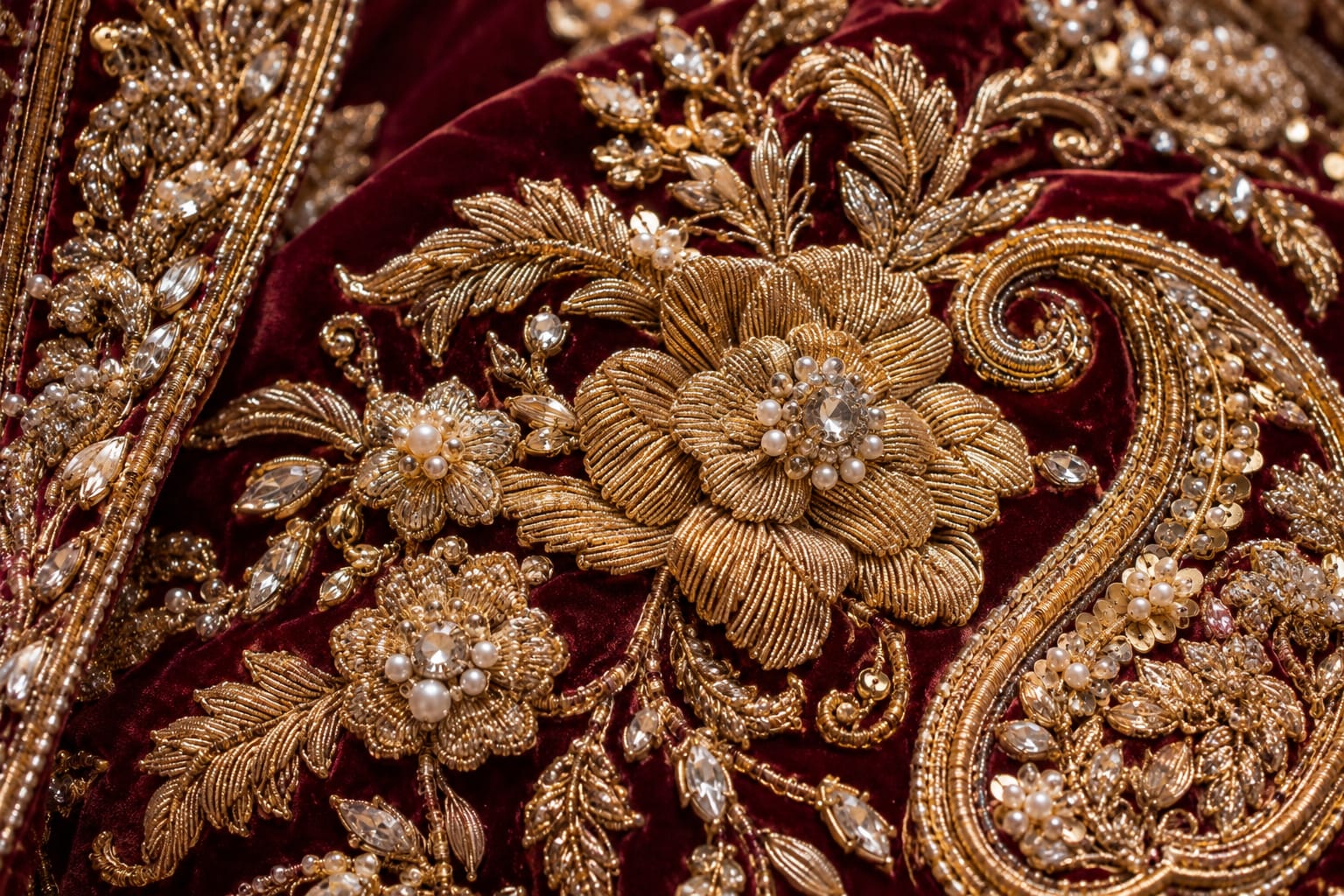
A bridal outfit can look breathtaking from across a room. But its real character often appears when you look closely: tiny metallic coils tracing a flower, pearls secured one by one, and raised goldwork catching the light. These are the details that give Pakistani bridal couture its depth, texture, and heirloom appeal.
Three names you will often hear during bridal consultations are zardozi, dabka, and naqshi. They are related, but they are not three completely separate embroidery traditions. Zardozi describes a broad family of ornate metallic embroidery; dabka and naqshi are specific metallic components frequently used within it.
1. Where the design begins: sketch, fabric, and placement
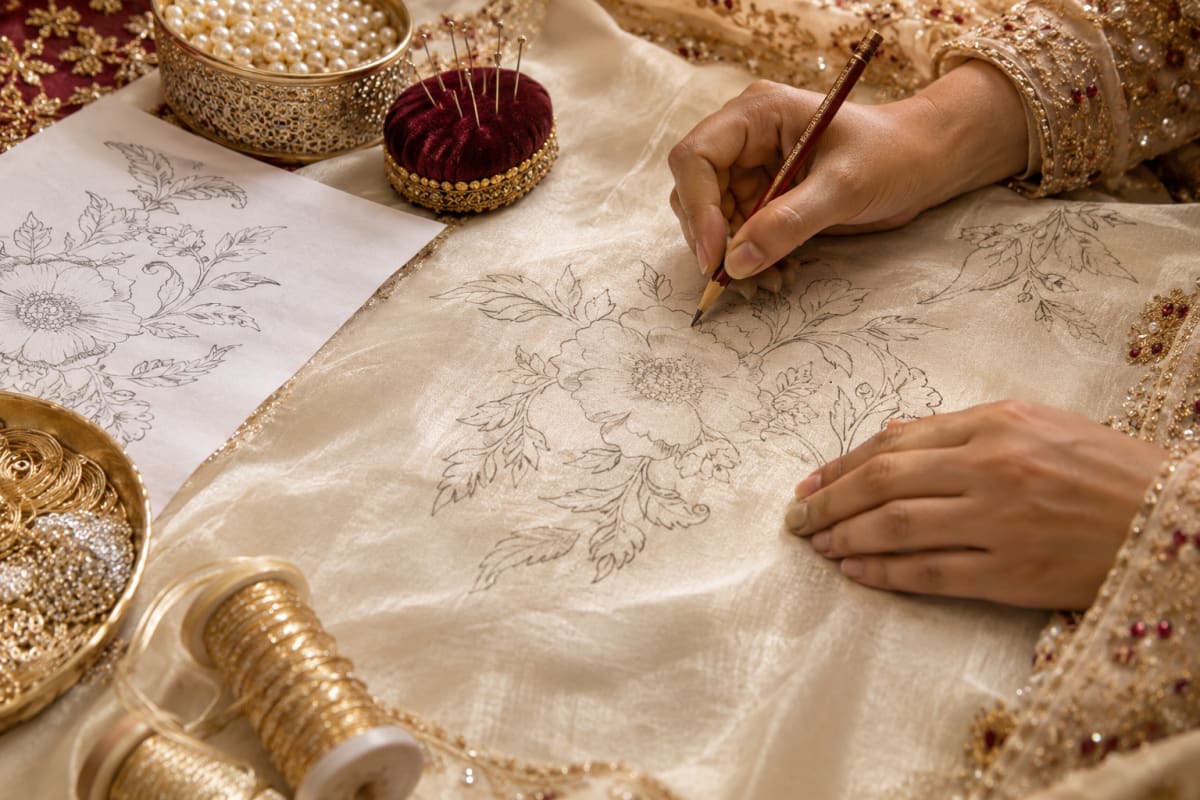
Before an artisan begins stitching, the design is planned around the outfit’s silhouette. A motif that looks delicate on paper can feel very different once it is placed across a neckline, sleeve, lehenga panel, or dupatta border. Designers consider the density of the work, the fabric’s strength, how the outfit will drape, and how much weight the bride can comfortably carry.
A thoughtful layout might place richer motifs around the neckline and hem while allowing lighter spaces across the body. This balance helps the embroidery look luxurious without overwhelming the wearer.
2. Zardozi: the grand tradition of metallic embroidery
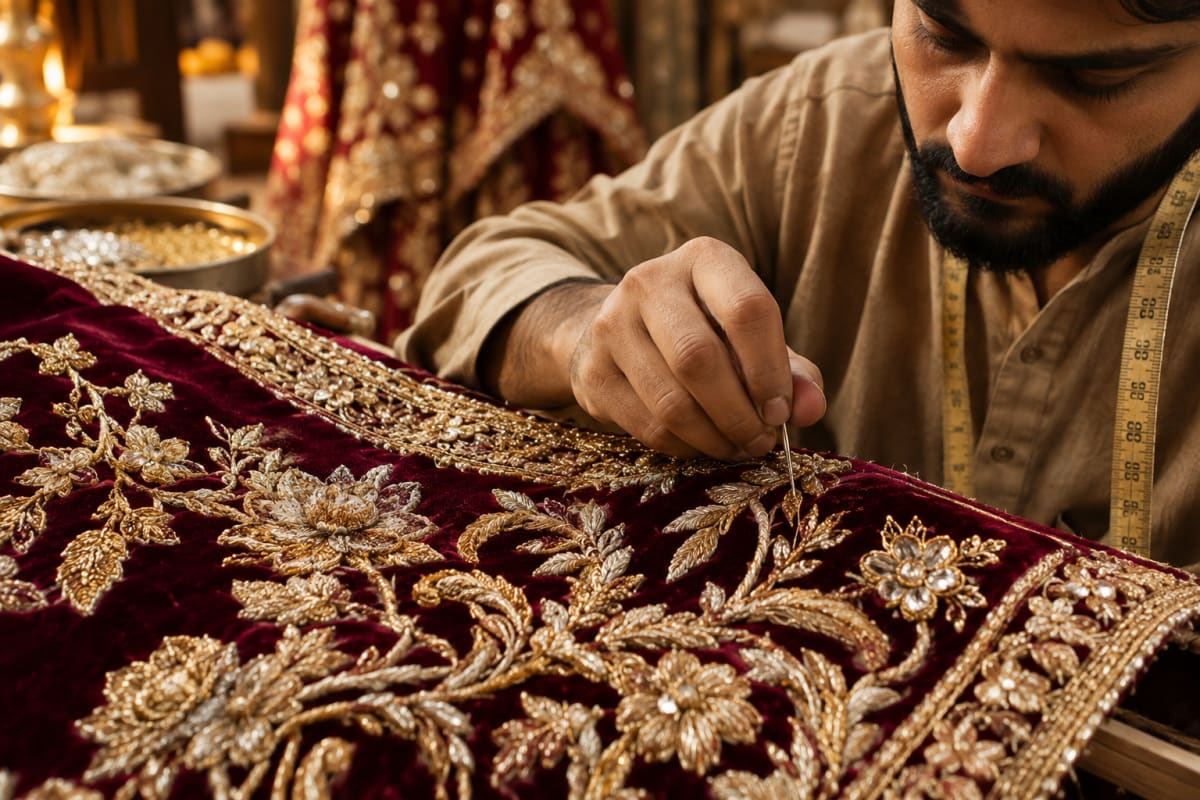
Zardozi is traditionally associated with gold and silver embroidery. In contemporary bridal fashion, artisans commonly use gold- or silver-toned metallic wires and threads alongside sequins, beads, stones, and pearls. The result can range from delicate highlights to richly raised, architectural designs.
Think of zardozi as the overall craft vocabulary rather than one single stitch. It can include different coils, wires, couching methods, and decorative elements. A statement bridal bodice, regal sleeve cuff, or intricate lehenga border may all feature zardozi-style work.
Best for: statement bridal outfits, traditional Baraat ensembles, heritage-inspired motifs, dramatic borders, and rich necklines. Consider: dense metalwork can add weight, so placement and lining matter as much as sparkle.
3. Dabka: the coil that creates dimension
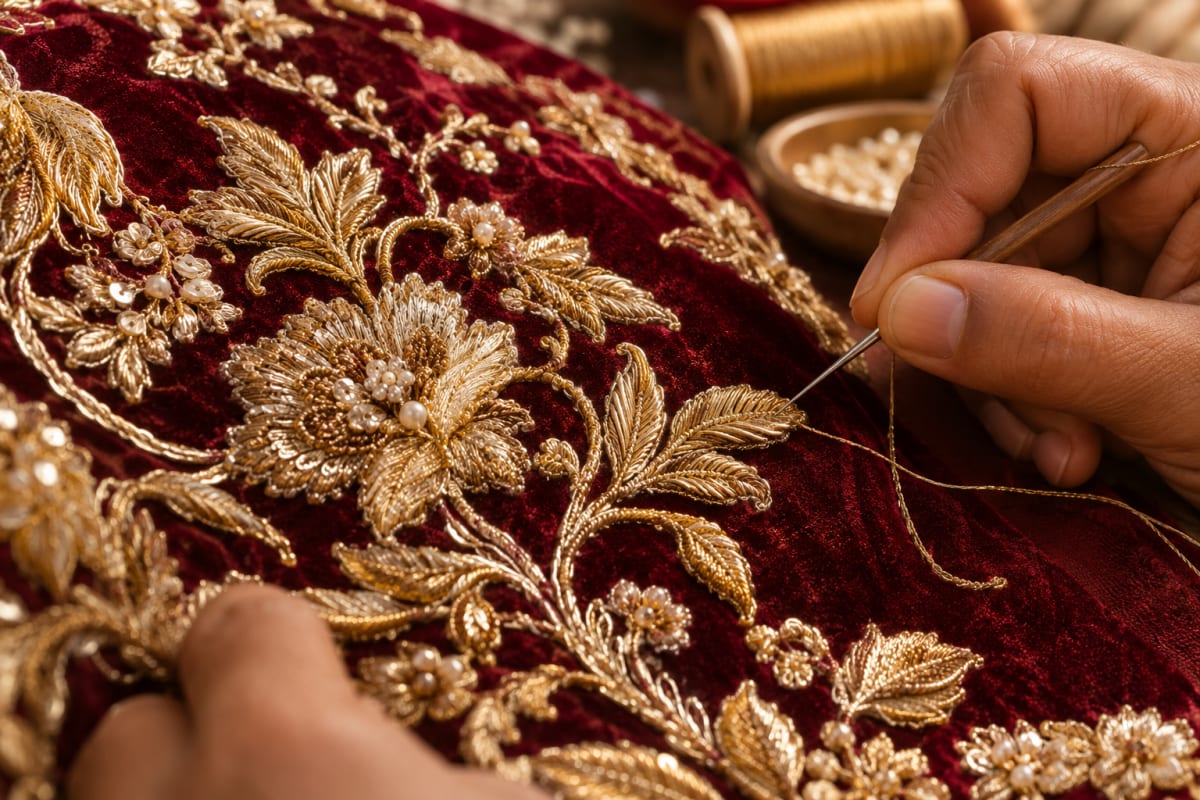
Dabka is a tightly coiled metallic wire that resembles a tiny flexible spring. Artisans cut it into suitable lengths and secure the pieces onto the fabric with thread. Those small coils form curved outlines, flower petals, leaves, and decorative borders. The surface becomes beautifully textured rather than simply flat and shiny.
On deep maroon, emerald, navy, or black velvet, gold-toned dabka creates striking contrast. On lighter bridal shades, champagne or silver-toned coils can deliver a softer, more refined finish.
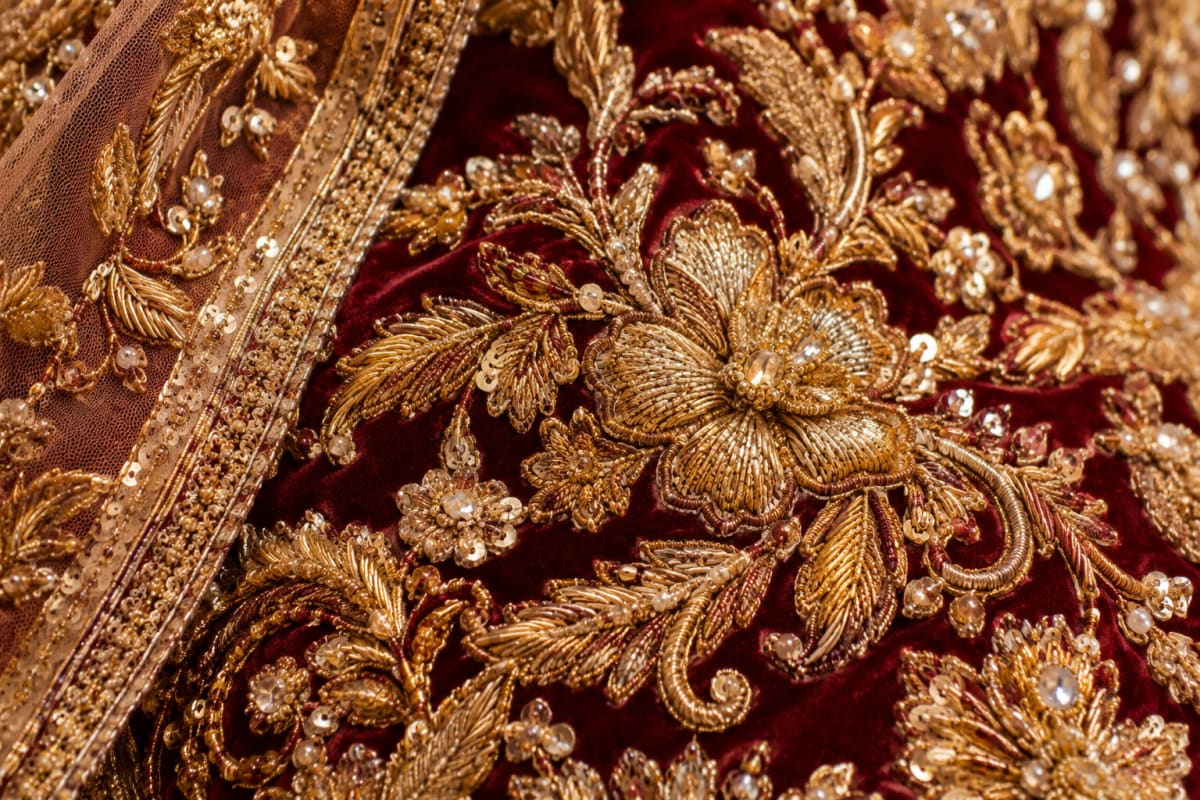
The beauty of dabka lies in its relief. It catches light from several angles, making a motif feel almost sculpted. When paired with pearls, sequins, or stones, it can create impressive detail without relying on oversized embellishments.
4. Naqshi: finely defined metallic detail
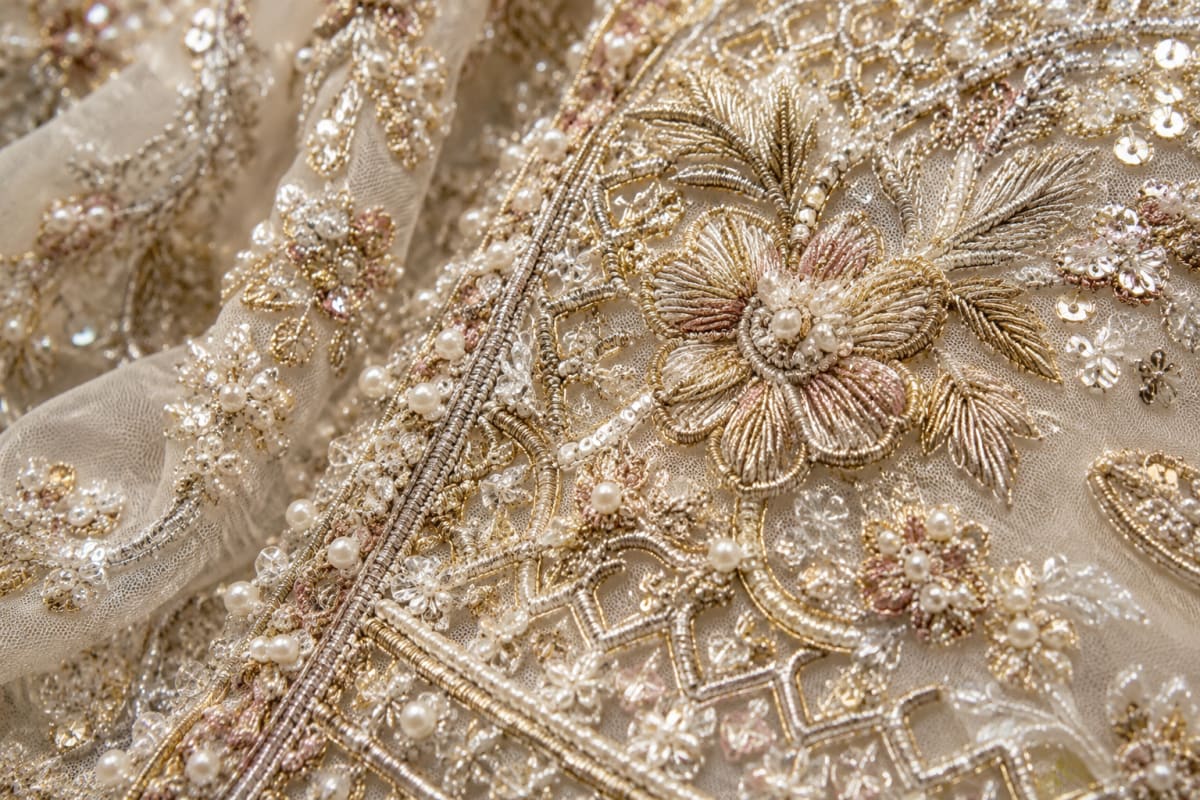
Naqshi—also written nakshi—is another form of coiled metallic element used in elaborate handwork. Its shaped or angular surface can give a distinctive glint and is especially useful for fine accents, intricate fills, and crisp decorative edges. The exact terminology can vary between workshops, so it is worth asking to see a physical sample rather than choosing by name alone.
Where dabka may provide a rounded, spring-like texture, naqshi can contribute a more sharply defined metallic finish. Together, they help a floral motif feel layered, with clear outlines and delicate internal details.
5. How artisans build the embroidery, one detail at a time
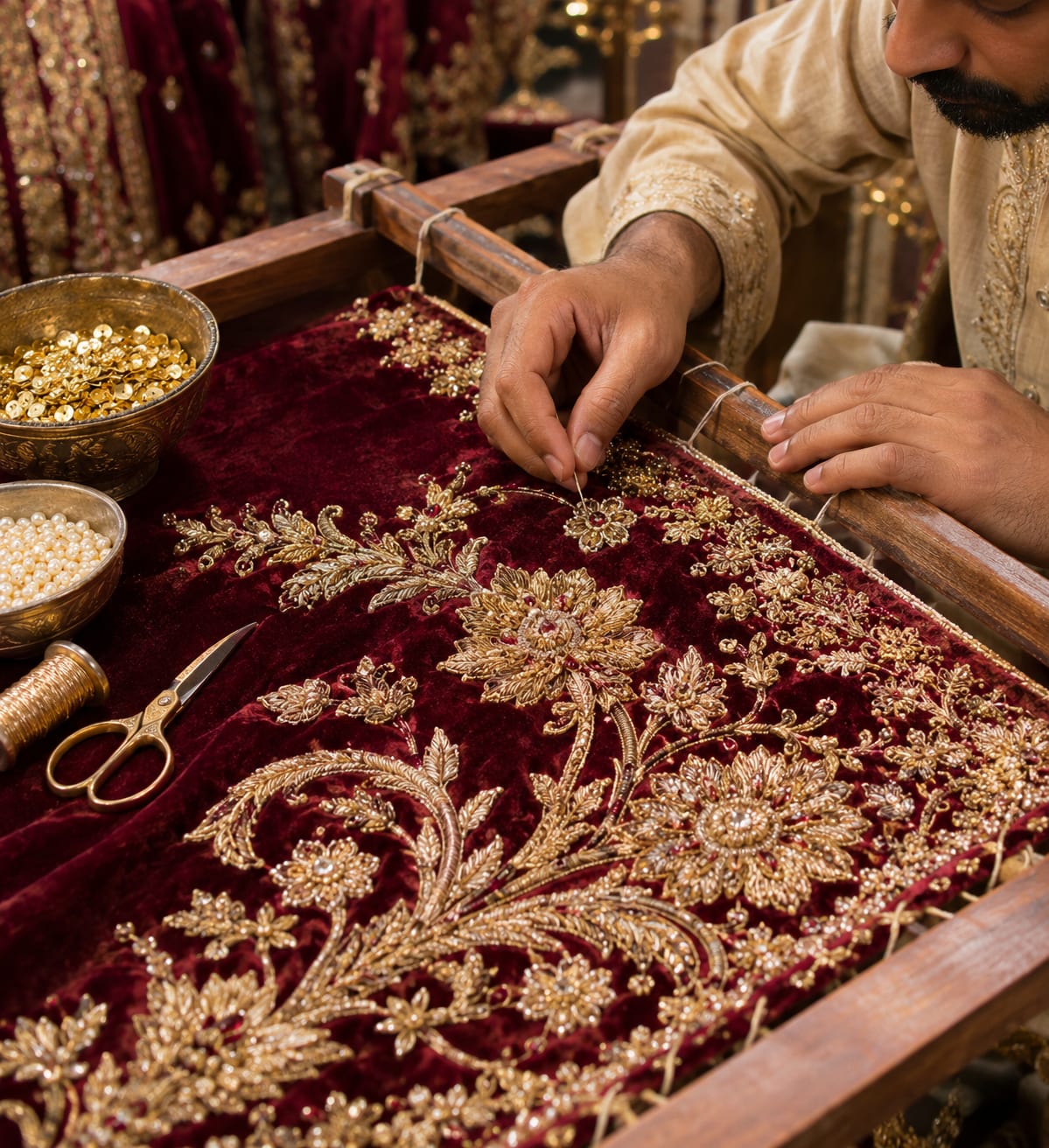
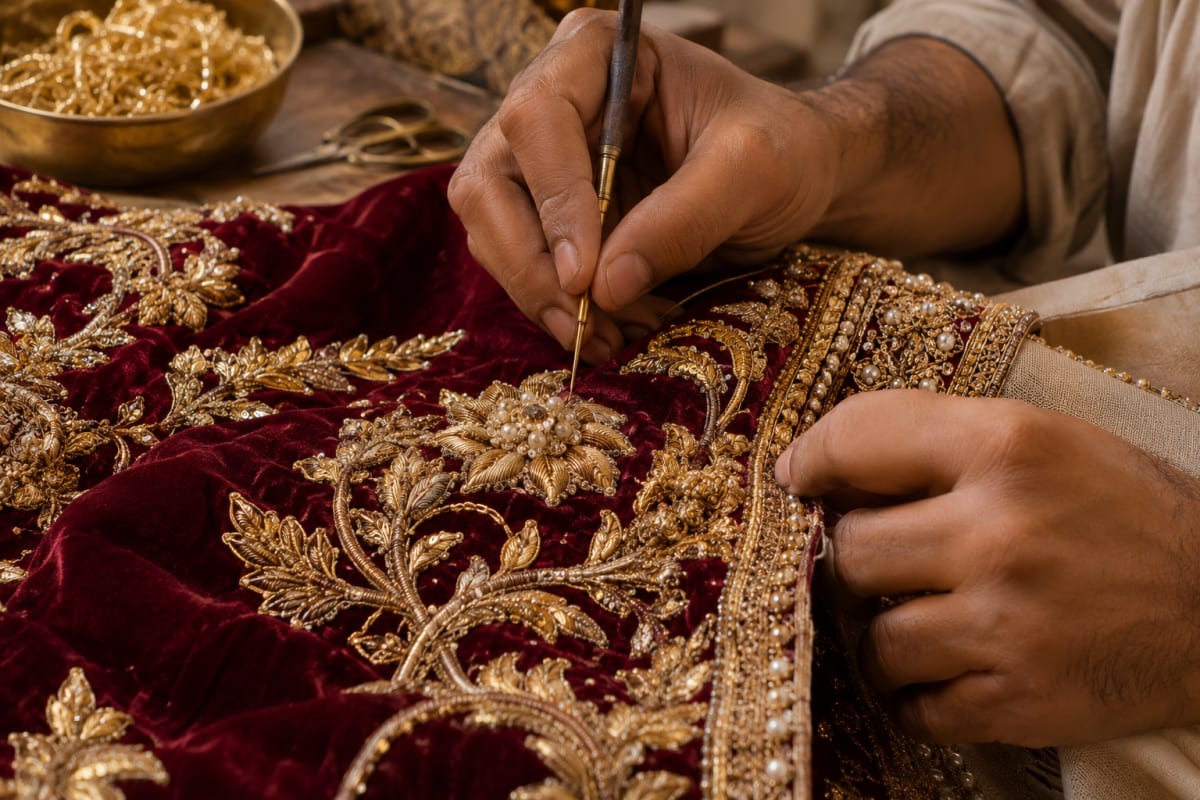
The process usually begins by transferring the approved design to the chosen fabric. The material is secured on an embroidery frame—often called an adda or karchob—so it remains taut while the artisan works. Metallic components are then positioned and attached with fine stitches. Pearls, sequins, crystals, and additional threadwork may be layered in as the design develops.
The most impressive work is not necessarily the heaviest. It is the work in which curves look intentional, motifs are balanced, thread ends are secured, and the embroidery remains comfortable against the body.
6. Zardozi vs. Dabka vs. Naqshi: a quick comparison
| Term | What it means | Visual effect |
|---|---|---|
| Zardozi | Broader tradition of metallic embroidery | Rich, ornate, often raised |
| Dabka | Tightly coiled metallic wire | Rounded, dimensional texture |
| Naqshi | Shaped metallic coil/detail | Defined edges and fine glints |
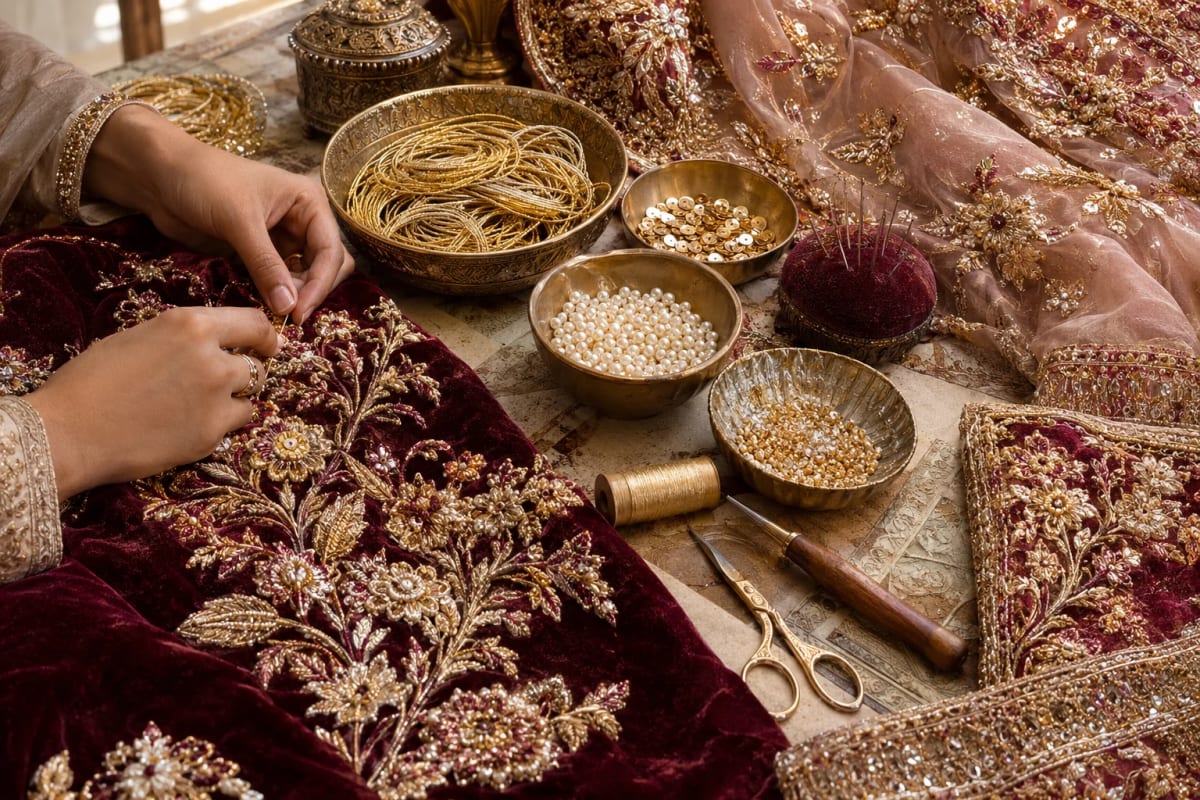
These elements are frequently combined in the same outfit. Their effect also depends on the base fabric, supporting threads, stones, density, and the skill of the artisan.
7. Choosing handwork for your bridal event
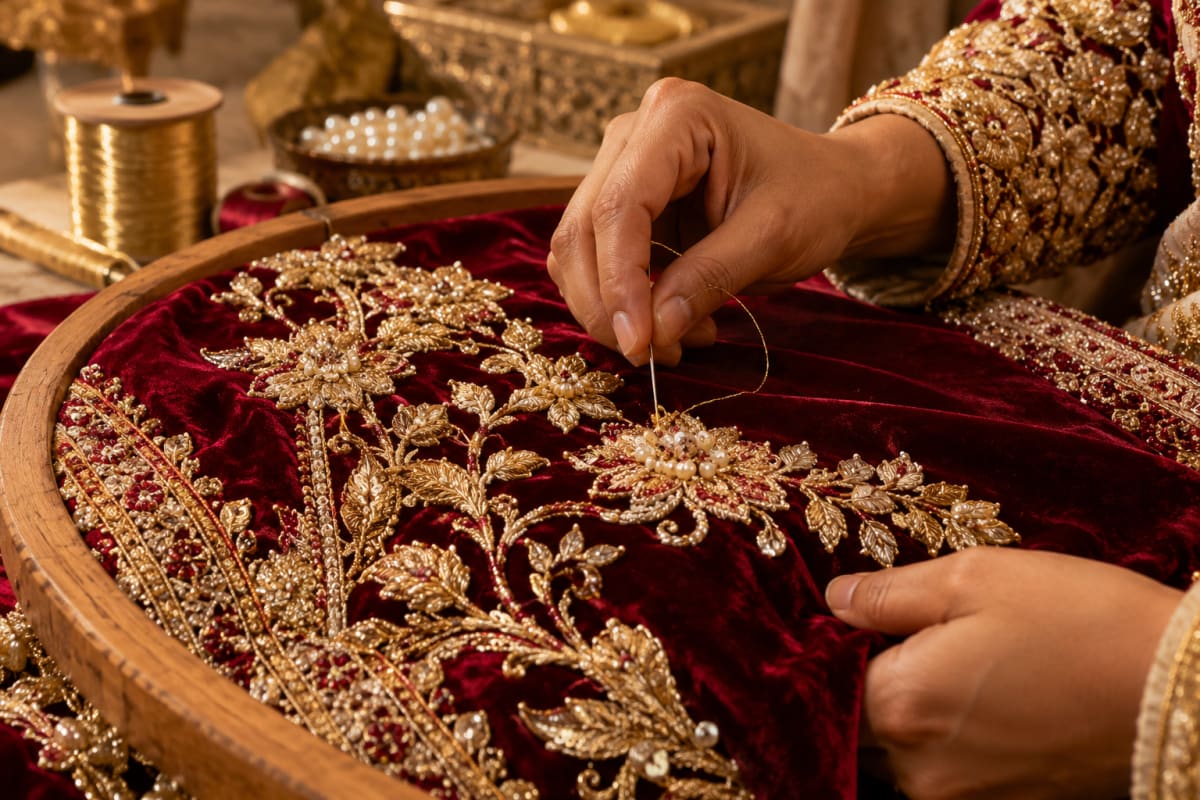
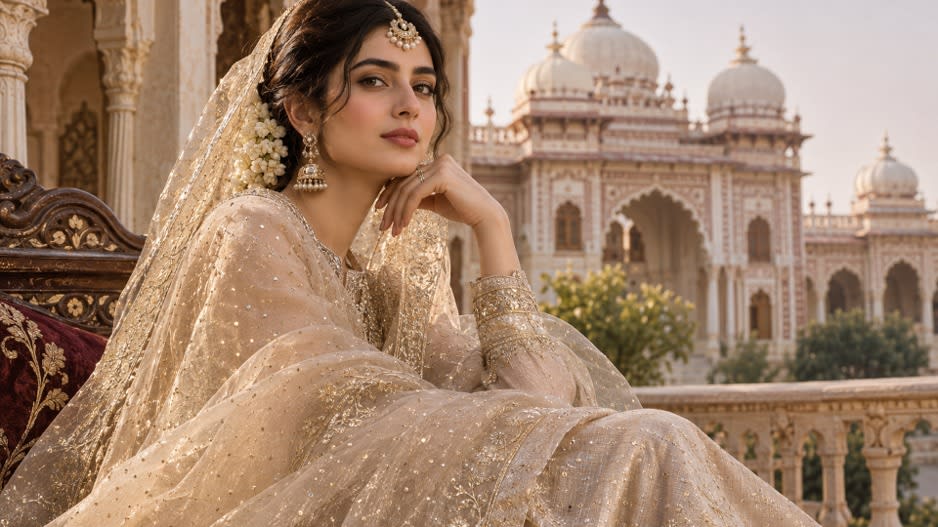
For a traditional Baraat, deep jewel tones with gold-toned zardozi, dabka, and naqshi can create a regal, ceremonial look. For a Nikkah, consider ivory, champagne, or soft blush with carefully spaced metallic motifs and pearls. For a Walima, lighter metallic accents on pastel fabrics can feel luminous and elegant without excessive weight.
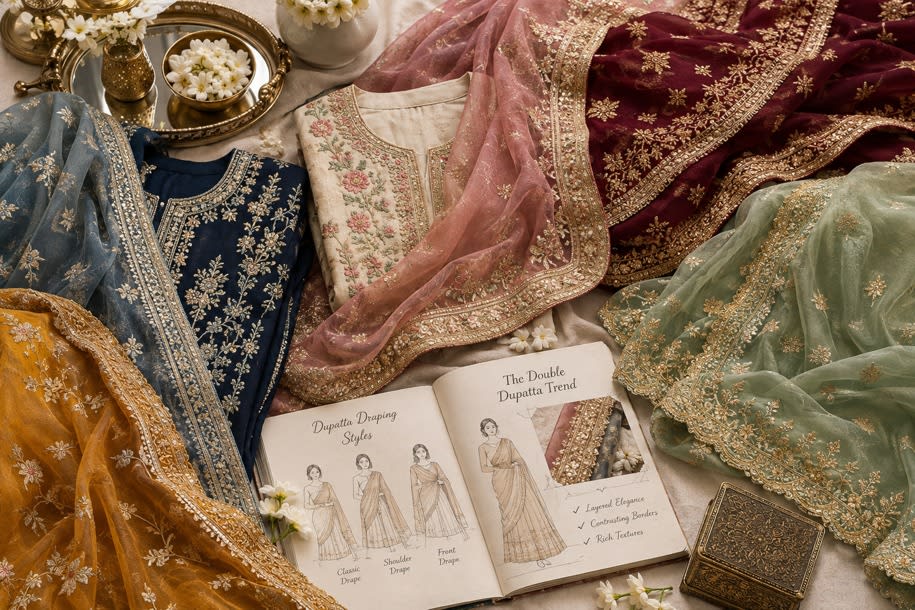
You can also customize the intensity. A heavily worked blouse with a simpler skirt, or an ornate dupatta border over a lighter ensemble, often gives the eye a clear focal point while improving comfort.
8. What makes hand embroidery valuable?
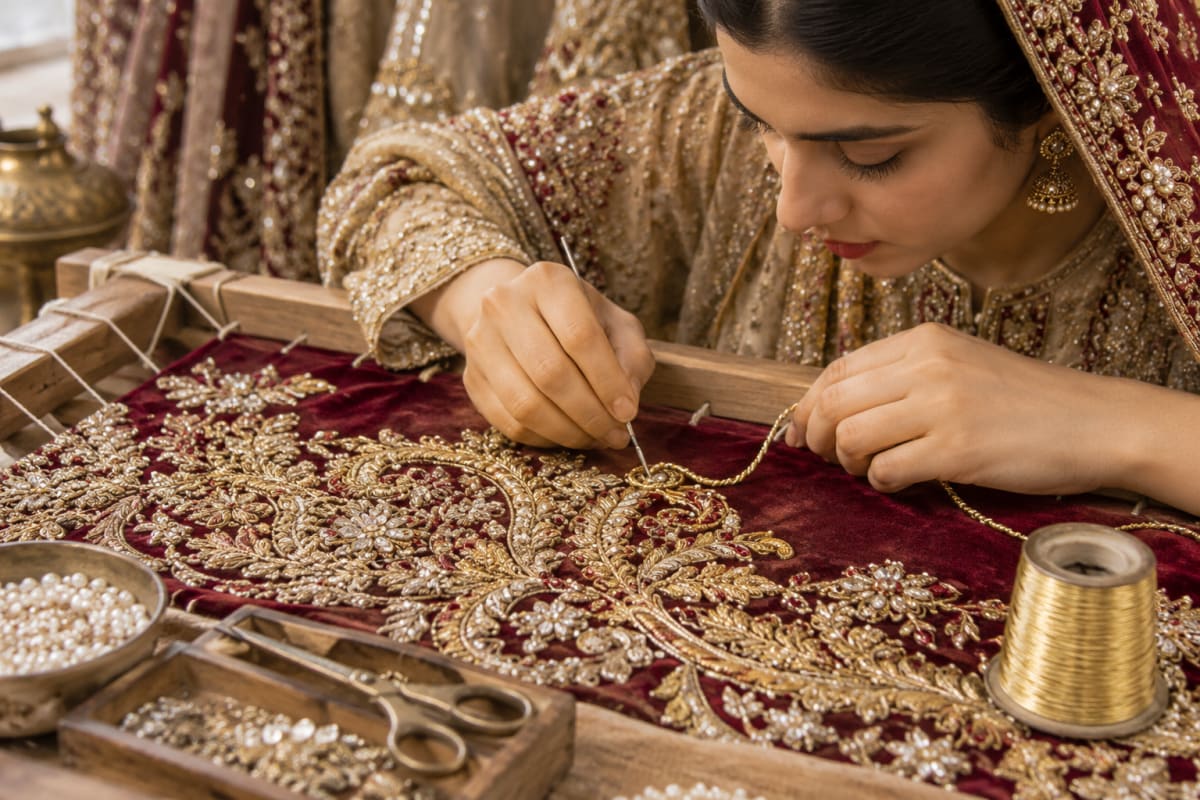
The cost of bridal handwork reflects more than the price of beads or thread. It also includes motif complexity, density, design preparation, hours of skilled stitching, material quality, finishing, and quality control. A small, elaborate panel can require more careful work than a larger, simple design.
When comparing quotations, ask which parts are hand-embroidered, where the dense work will be placed, what embellishments are included, and whether the design can be adjusted to your budget. Two dresses that look similar in photographs may have very different workmanship and weight.
9. How to inspect and care for intricate bridal work
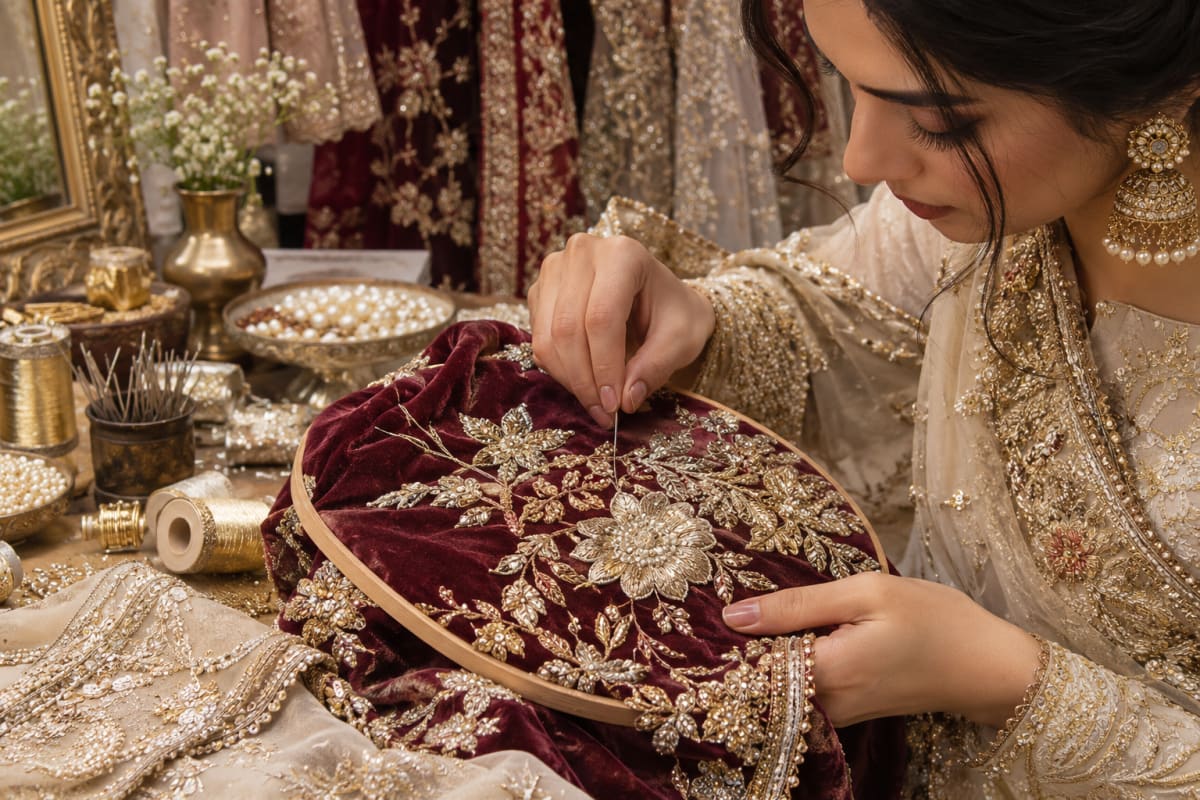
Look closely at the consistency of the motifs, the security of beads and coils, and the finish around seams and edges. Some natural variation is part of handmade craftsmanship; loose ends, sharp protrusions, or uncomfortable placement should be discussed before dispatch.
For storage, avoid crushing the embroidery. Use breathable protective wrapping, keep the outfit away from moisture and direct sunlight, and follow the maker’s fabric-specific cleaning advice. Heavily embellished garments generally benefit from a specialist cleaner familiar with bridal metalwork. Do not iron directly over metallic coils or stones.
10. Questions to ask before placing a custom bridal order
- Which parts of my outfit will feature zardozi, dabka, or naqshi?
- Can I see close-up photographs or a sample of the proposed work?
- How heavy will the finished outfit be, and can the design be made lighter?
- Can we customize the motif, metallic tone, pearls, or embroidery density?
- Will you share photographs and videos for approval before dispatch?
Final thoughts: craftsmanship makes a dress personal
The magic of Pakistani bridal couture lies in the balance between artistry and individuality. Zardozi brings the grandeur, dabka adds dimensional texture, and naqshi helps refine the smallest details. Together, they can turn a beautiful outfit into something truly memorable.
At Nayyab Collection, we believe bridal design should reflect your taste—from fabric and silhouette to the placement and intensity of handwork. Explore custom bridal possibilities at nayyab.shop and discuss the details that matter most to you.
See your design before it's stitched
Describe the piece you're imagining and our AI design studio sketches it, a starting point to refine with our artisans.