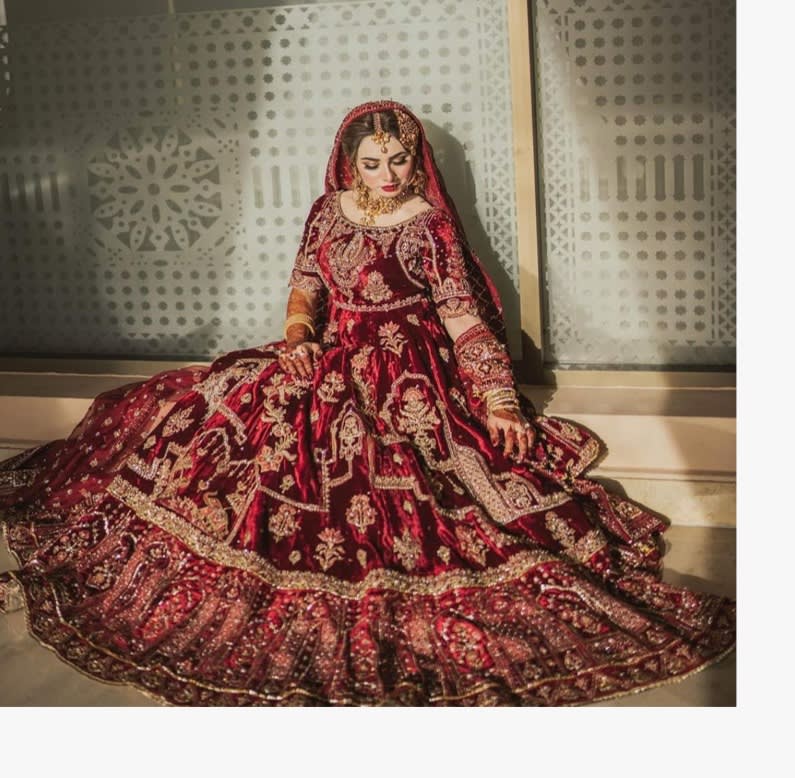
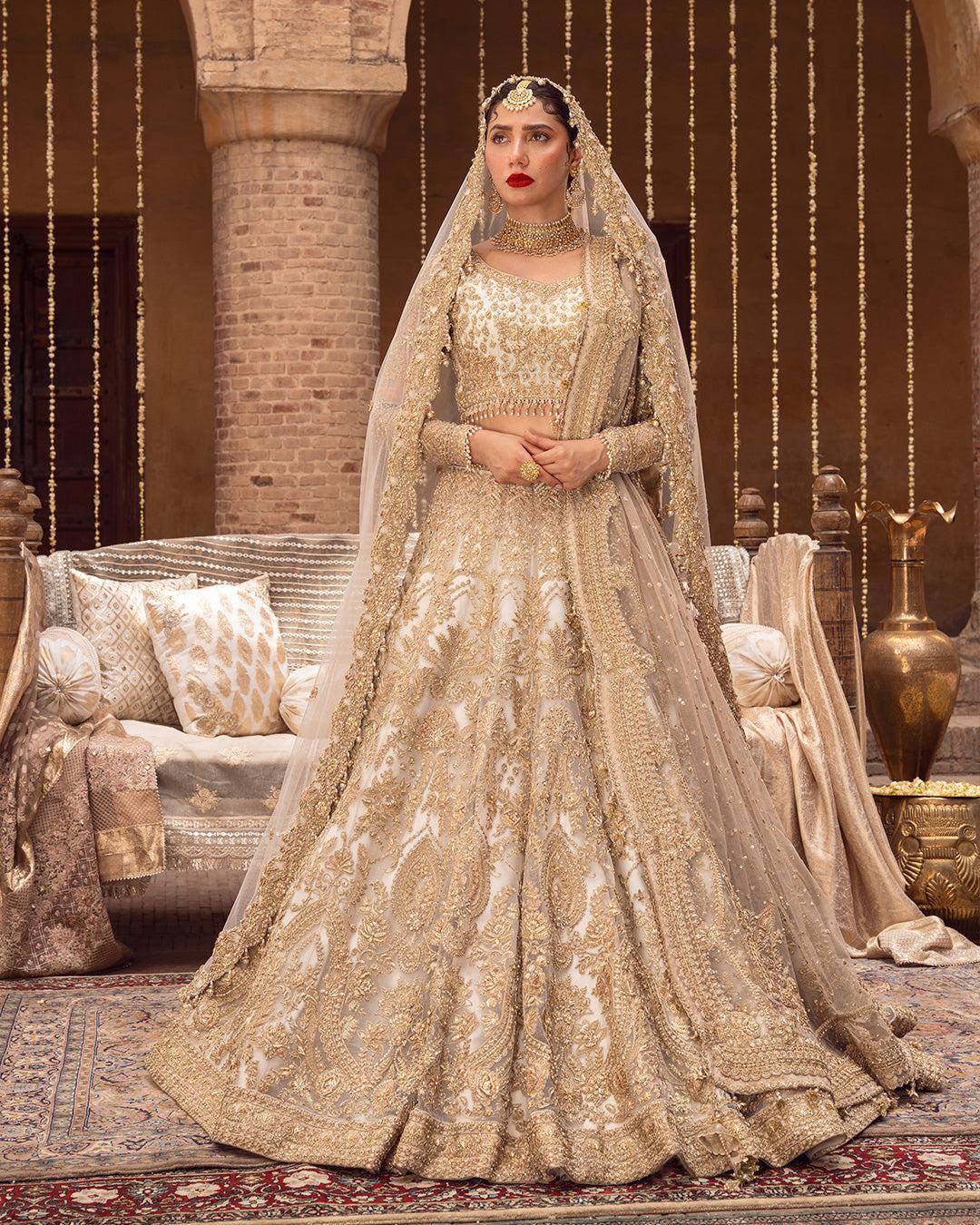
How to Choose the Perfect Nikkah Outfit:Pastels, Ivories, and Fabrics That Glow

A thoughtful guide to colour, fabric, silhouette and detail for a Nikkah look that feels beautifully bridal without feeling overdone.
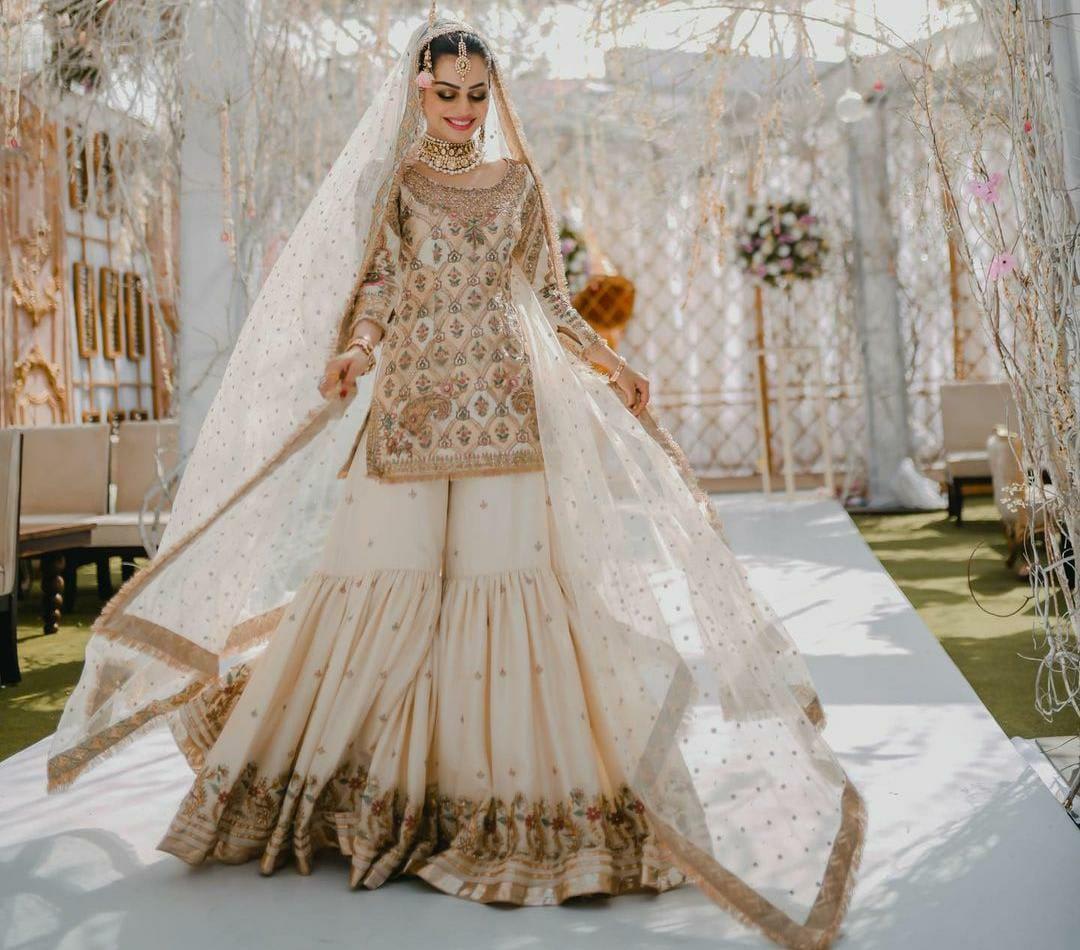
There is something especially beautiful about dressing for a Nikkah. The ceremony itself is deeply meaningful, yet its atmosphere is often quieter and more intimate than the larger wedding celebrations that surround it. That difference has shaped a bridal language of its own: softer colours, graceful silhouettes, luminous fabrics and details that reveal themselves slowly rather than demanding attention all at once.
For many brides, the hardest part is finding the balance. You may want to look unmistakably bridal, but not as heavy as your baraat look. You may love ivory but worry that it will photograph too plain. You may be drawn to pastels but wonder which shade will suit your skin tone, jewellery and venue. Then come the fabric questions: organza or raw silk? Tissue or net? A gharara, lehenga, peshwas or long shirt?
The most successful Nikkah outfits are not built around one trend. They are built around harmony. Colour, fabric, embroidery, silhouette, dupatta, jewellery and even the time of day should feel as though they belong to the same story.
Start With the Mood, Not the Colour
Before choosing ivory, blush or blue, decide how you want to feel when you see yourself dressed for the ceremony. Do you imagine something romantic and delicate? Traditional and regal? Clean and contemporary? Or richly handcrafted but still soft?
This decision matters because two brides can choose the same ivory palette and end up with completely different looks. One may wear a short shirt with a traditional gharara and a heavily bordered dupatta; another may choose a long, almost architectural peshwas with tonal embroidery. The colour is similar, but the mood is completely different.
A useful rule is to choose one element to lead the look. It might be the silhouette, an heirloom-style dupatta, intricate handwork or an unusual pastel shade. Let the remaining elements support it. When the colour, embroidery, jewellery, veil and silhouette are all trying to be the statement at once, even an expensive outfit can begin to feel busy.
Why Ivory Works So Beautifully for a Nikkah
Ivory has become a natural choice for modern Nikkah dressing because it creates softness without taking away from traditional craftsmanship. It also gives embroidery room to breathe. Gold and silver zardozi, off-white resham, pearls, sequins, crystals, gota and kamdani all behave differently against an ivory base, creating texture even when the overall palette remains restrained.
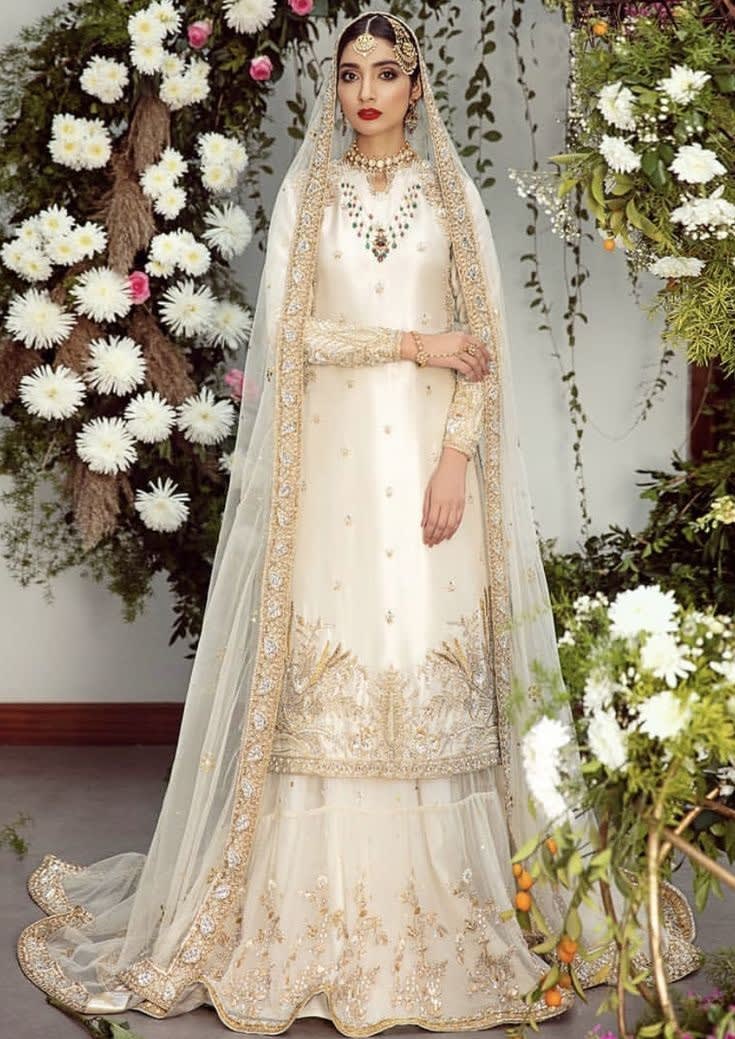
The important point is that ivory is not simply “white.” Cream, warm ivory, champagne ivory, pearl, ecru and cooler off-white can all look noticeably different against the skin. A warmer ivory often pairs beautifully with antique gold, kundan and traditional polki. A cooler ivory can look striking with silver, diamonds, crystals or emerald accents.
Current Pakistani bridal collections show how layered ivory can be. Nida Azwer’s recent bridal work combines ivory organza with gold and silver zardozi, off-white silk thread, tissue silk and soft-net veils, while Sania Maskatiya’s ivory ensembles use organza over raw silk and georgette to create depth through fabric rather than colour alone.
That is the real secret to an ivory Nikkah outfit: if the colour is quiet, the texture should do the talking.
How to Keep Ivory From Looking Flat in Photographs
An all-ivory look needs contrast, but contrast does not always mean adding another colour. You can create it through different surfaces. Pair matte raw silk with a translucent organza dupatta. Place dull-gold zardozi beside pearls. Use a tissue lining beneath a sheer layer so that light moves through the garment. Add a scalloped border or denser embroidery near the hem so the silhouette remains visible in photographs.
Tonal dressing is most beautiful when the eye can still distinguish the shirt from the dupatta, the embroidery from the base, and the jewellery from the neckline.
Pastels: Soft Colour Without Losing the Bridal Feeling
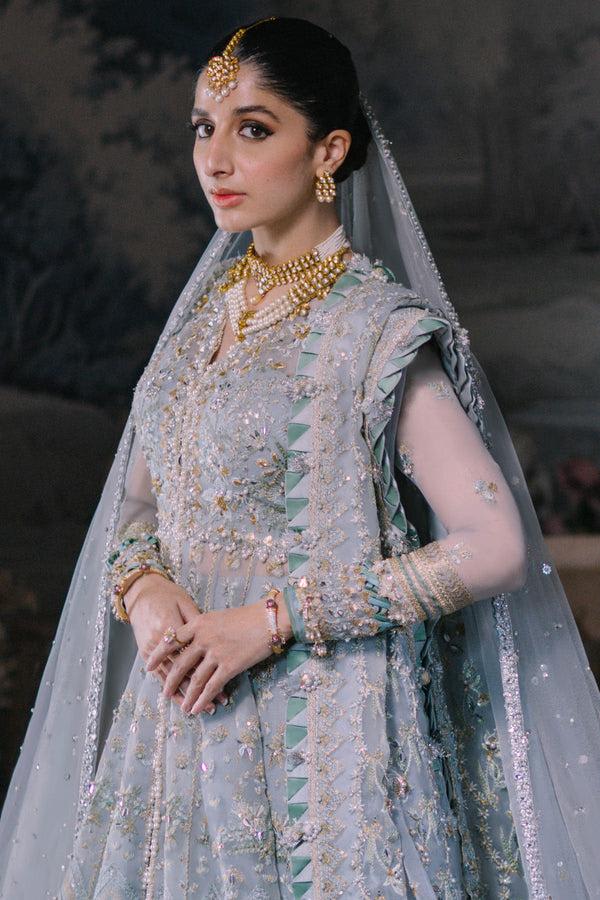
Pastels are ideal when you want softness but do not want a completely neutral outfit. They also allow you to bring personality into the look without competing with the intimacy of the ceremony.
Blush pink is romantic and forgiving, especially when paired with ivory, champagne or antique gold. Powder and ice blue feel fresh and elegant and work particularly well with silver embroidery, pearls and cool-toned stones. Sage and mint bring a calm, sophisticated quality to daytime ceremonies. Peach and dusty rose add warmth, while mauve is useful when you want a pastel that still has enough depth to hold heavier embroidery.
Recent designer collections reinforce this direction. Nida Azwer’s Maira uses ivory organza warmed with blush and pink, with gold and silver tissue, resham, sequins and zardozi. Her Opera Mauve bridal uses mauve and light blue organza with off-white threadwork and silver zardozi. Sania Maskatiya’s Orea uses a soft ice-blue raw-silk dress with an organza dupatta. The common idea is not simply “wear pastel”; it is to combine a soft colour with fabric and handwork that give it dimension.
The Most Elegant Way to Wear Pastel
You do not need to commit to one pastel from head to toe. Often the most refined combinations use ivory as the foundation and pastel as the accent.
An ivory kalidar can be warmed with blush resham flowers. A champagne shirt can be paired with a powder-blue organza dupatta. A soft-pink lehenga can sit beneath an ivory shirt and veil. A sage border can bring freshness to an otherwise neutral ensemble. Even the lining under sheer organza can introduce a quiet wash of colour.
This approach also makes the outfit easier to style with jewellery because the neutral base gives you more freedom to introduce gold, silver, pearls or coloured stones.
Choose a Pastel That Works With You
Do not choose a pastel only because it looks beautiful on a screen. Hold the actual fabric near your face in natural daylight. Warm undertones often respond well to peach, champagne, warm blush and creamy ivory, while cooler undertones may feel clearer in powder blue, mauve, cooler pinks and pearl ivory. This is a styling guide, not a strict rule: jewellery, makeup, hair colour and the exact fabric finish can completely change the result.
The same shade can also look different in silk, organza and net because each fabric reflects and absorbs light differently. Always judge the colour in the fabric you intend to wear.
The Fabrics That Create the Nikkah Glow
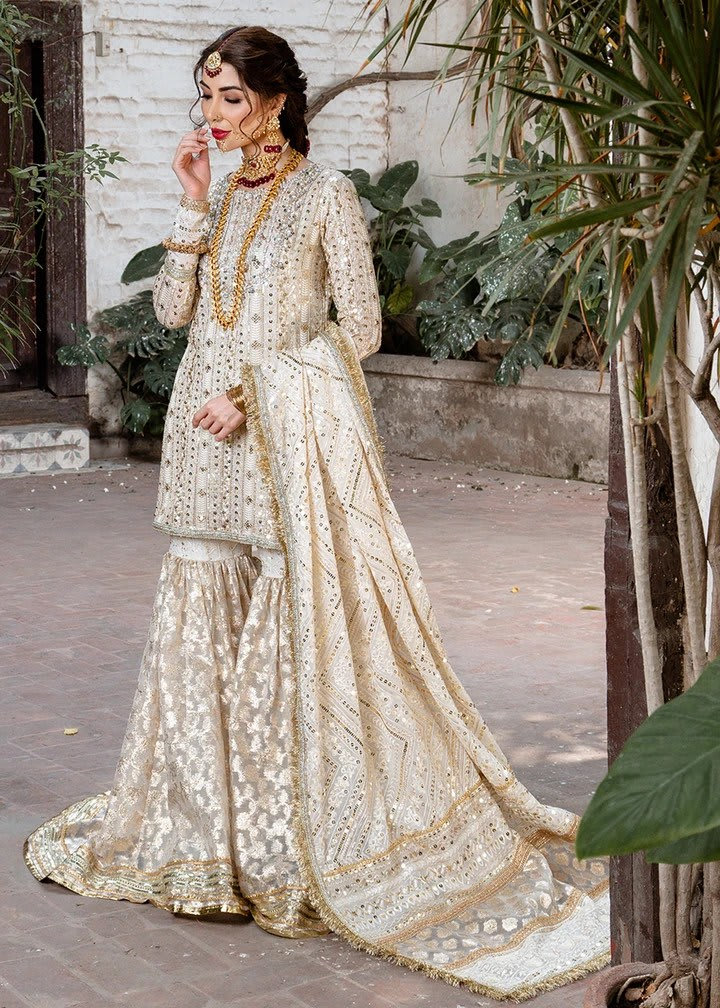
The word “glow” is often mistaken for sparkle. In bridal dressing, the most luxurious glow usually comes from the way several surfaces respond to light. A fabric can be matte, translucent, softly reflective or metallic. Combining those qualities gives an outfit depth before a single crystal is added.
Organza: Lightness With Shape
Organza is one of the strongest choices for a Nikkah because it is sheer without being completely fluid. It can hold a border, embroidery and volume while still allowing light through. It works especially well for dupattas, kalidars, lehengas, jackets and layered shirts. On ivory and pastel colours, that transparency creates a soft halo effect in daylight.
Raw Silk: Structure and Quiet Richness
Raw silk gives the outfit weight and definition. It is particularly effective for shirts, ghararas, trousers, lehengas and cholis where you want a clean silhouette. Its slight texture prevents pale colours from looking lifeless, and it provides a strong base for zardozi, aari, resham and hand embellishment.
Tissue and Metallic Silk: Controlled Luminosity
Tissue silk is useful when you want the garment itself to catch light. It can turn a gharara, lehenga or blouse into the luminous part of the outfit while the organza or net above it remains soft. The key is restraint: a glowing tissue base is often more elegant with selective embroidery than with dense sparkle everywhere.
Net: For Veils and Delicate Layers
Soft net works beautifully for a veil because it can carry scattered crystals, kamdani, sequins or a worked border without visually closing the outfit. If your main dupatta is heavy, a second, lighter net veil can give you the ceremonial bridal frame around the face without adding too much weight.
Chiffon and Georgette: Movement Without Stiffness
These fabrics are ideal when movement and comfort matter more than volume. Georgette trousers, dhaka pajamas or flowing panels can soften a structured top. Chiffon is especially useful for drapes and dupattas when you want the fabric to fall close to the body rather than stand away from it.
Build the Glow in Layers
A beautiful Nikkah outfit can be thought of in three layers of light.
The first is the base: raw silk, khaddi silk, crepe or another fabric that gives the outfit body. The second is the soft layer: organza, net or chiffon that diffuses the base and creates movement. The third is the highlight: zardozi, sequins, pearls, crystals, gota, kamdani or metallic thread that catches light in small, deliberate points.
When all three layers are equally shiny, the outfit can lose depth. When one is matte, one translucent and one reflective, every detail becomes easier to see. This is why an ivory raw-silk choli under an organza kalidar, or a tissue gharara beneath a sheer dupatta, can look more luxurious than simply adding more embellishment.
Choosing the Right Silhouette
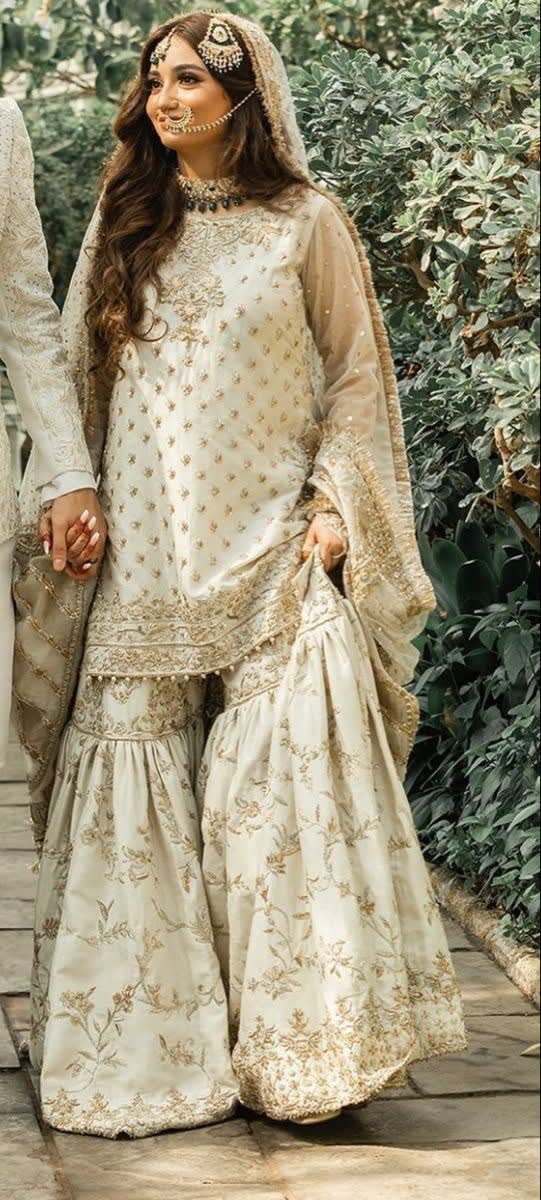
The silhouette determines how traditional, modern or dramatic the outfit feels. It also affects comfort, photography and how the dupatta sits, so it should be chosen before the embroidery becomes too fixed.
Gharara or Sharara
For a Nikkah rooted in classic Pakistani style, a gharara or sharara is difficult to beat. A shorter shirt keeps the proportions traditional and gives the lower half room to make an impact. Ivory raw silk, tissue or jamawar can work beautifully, especially with an organza dupatta. If the gharara is heavily worked, keep the shirt embroidery concentrated around the neckline, sleeves and hem so the look remains balanced.
Kalidar or Peshwas
A kalidar or peshwas creates movement and photographs beautifully from every angle. Organza gives it airiness; net gives it softness; silk underneath provides structure. This is a strong choice if you want a more regal Nikkah look without moving into the visual heaviness of a traditional red baraat lehenga.
Long Shirt With Lehenga
A long shirt over a lehenga creates a graceful vertical line and is especially effective in pastels. Keep an eye on where the embroidery becomes dense: if both the shirt hem and lehenga border are very heavy, the middle of the outfit can feel visually crowded.
Peplum With Sharara
A fitted or lightly flared peplum paired with a sharara creates a polished, formal silhouette. Zainab Chottani’s Nooreh is a useful current example of how a short, embellished peplum, embroidered sharara and organza dupatta can read as distinctly Nikkah bridal.
Contemporary Separates
For a smaller civil or home Nikkah, a long jacket, straight kurta, draped dupatta or refined palazzo can feel just as special. The bridal quality can come from handwork, fabric and jewellery rather than volume.
Your Dupatta Is Part of the Architecture of the Look
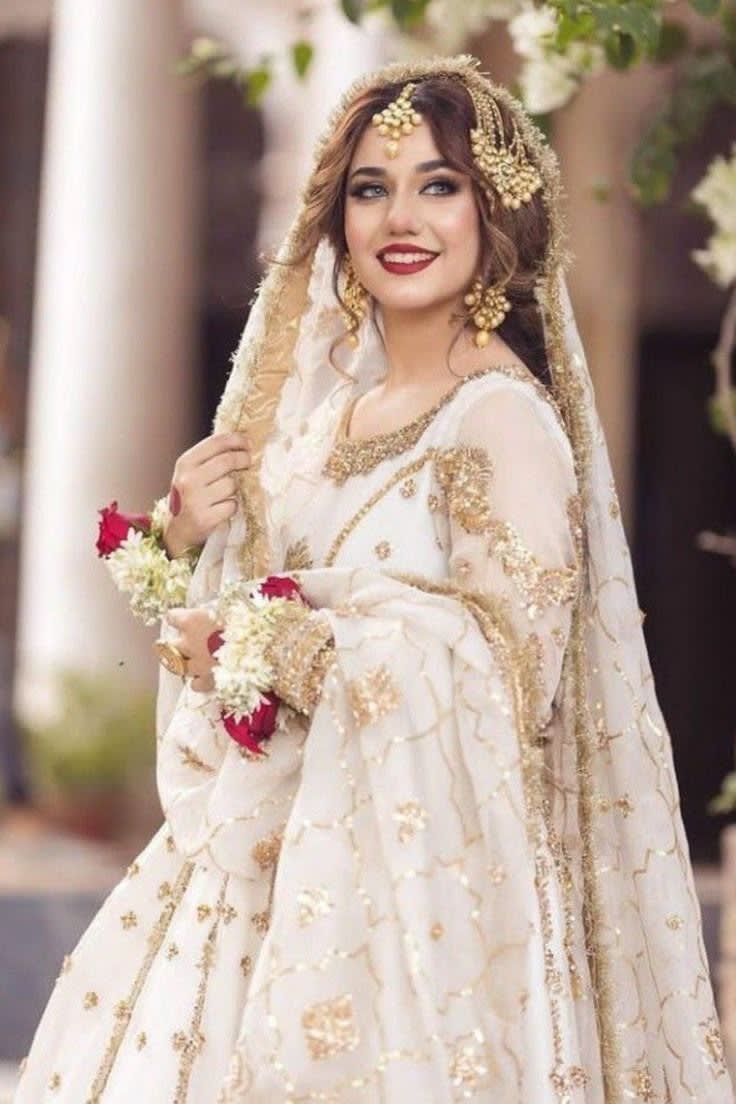
A Nikkah dupatta is not simply an accessory placed on top at the end. It affects the neckline, the jewellery, the face and the overall silhouette.
For a heavily embroidered shirt, a sheer organza or net dupatta with a worked border allows the garment underneath to remain visible. For a simpler outfit, the dupatta can carry more of the storytelling through scalloped borders, floral motifs, kamdani, sequins or a contrasting pastel edge.
Think about how you will actually wear it during the ceremony. A dupatta draped over one shoulder behaves differently from one covering the head. A long veil needs enough softness to fall naturally behind you. A heavily embellished border may look beautiful in a flat photograph but become uncomfortable when pinned around the head for several hours.
If you want two dupattas, give them separate jobs: one can provide colour and embroidery across the body, while the second acts as a light veil around the face.
Gold, Silver or Mixed Metallics?
Warm gold naturally complements cream, champagne, peach, dusty rose and warm ivory. Silver feels especially clean against pearl ivory, ice blue, lilac and mauve. But contemporary bridal work increasingly shows that you do not have to choose only one.
Mixed gold and silver zardozi can be extremely refined on an ivory base because it allows both warm and cool jewellery to sit comfortably with the outfit. The mix works best when the metals are integrated through the embroidery rather than appearing as two separate competing sections.
If you already know which jewellery you will wear, take it - or at least clear photographs of it - to your outfit consultation. The neckline and embroidery density should be planned around the jewellery rather than discovered after the dress is finished.
Daytime Nikkah vs Evening Nikkah
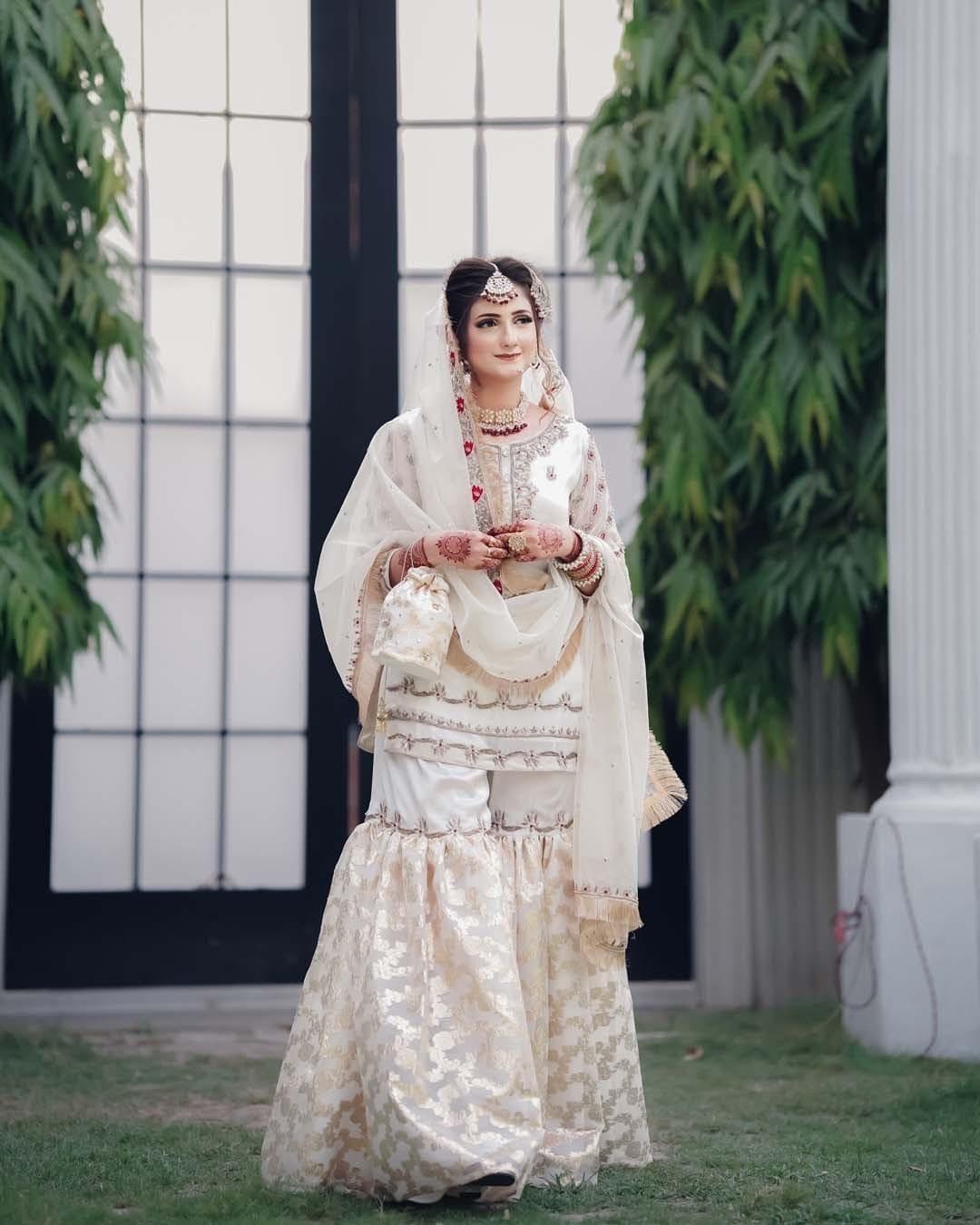
Natural daylight is generous to texture. It reveals resham, pearls, organza layers, handwork and subtle colour shifts, which means a daytime bride does not need extreme sparkle to look bridal. Ivory, blush, sage, peach, champagne and powder blue can all look particularly fresh in daylight.
Evening lighting changes the equation. Candlelight and warm indoor lights can make metallic thread, crystals, sequins and tissue fabric more noticeable. You can therefore introduce slightly deeper mauve, rose-gold tones, richer champagne or more pronounced zardozi without abandoning the soft Nikkah aesthetic.
Also consider the background. An ivory outfit against a very pale stage may need stronger borders, jewellery or a pastel accent so the bride does not visually disappear into the décor. A colourful garden or richly decorated interior may call for a calmer outfit.
Embroidery: Where to Add Detail and Where to Leave Space
More embroidery does not automatically make an outfit more bridal. Placement is often more important than quantity.
Dense work around the neckline draws attention to the face. Embellished cuffs make hand photographs beautiful. A strong hem gives a long silhouette definition. Scattered chan or small motifs across the body create light without making the garment rigid. A richly worked dupatta border frames the bride when the fabric is placed over the head.
Leaving some areas quieter also makes the handwork easier to appreciate. Think of embroidery as composition: the eye needs both detail and breathing space.
Jewellery, Makeup and the Outfit Should Speak the Same Language
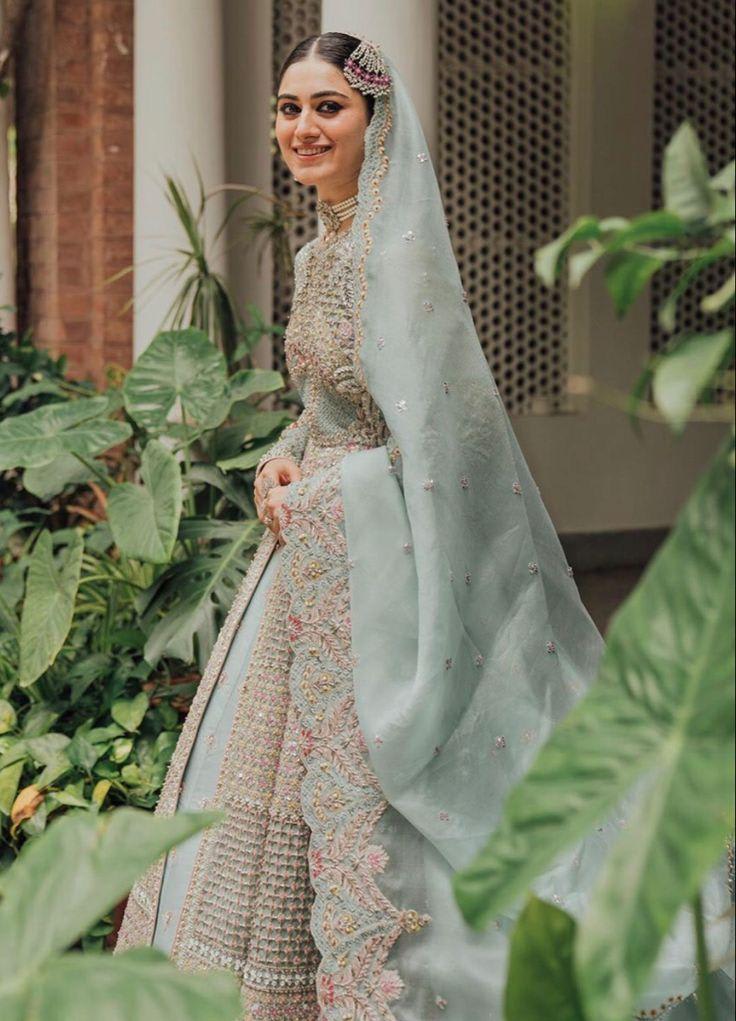
An ivory or pastel Nikkah outfit gives you considerable freedom with jewellery. Polki and kundan bring warmth and tradition. Pearls reinforce softness. Diamonds and crystals sharpen cooler pastels. Emeralds can create a striking accent against ivory without changing the dress itself.
The neckline should influence the jewellery scale. A heavily worked high neckline may need earrings and a maang tikka rather than a large necklace. A cleaner neckline gives a statement choker room to breathe.
Makeup follows the same principle. Soft clothing does not require invisible makeup, but the undertones should feel connected. Peach and champagne outfits respond beautifully to warm skin and lip tones, while mauve and ice blue can carry cooler rose, berry or neutral makeup. The aim is cohesion, not exact colour matching.
Comfort Is Not a Small Detail
You will sit for the Nikkah, stand for photographs, greet guests, move between spaces and possibly keep your dupatta over your head for a long time. An outfit that only works while standing still is not truly well designed.
Sit in the garment during your fitting. Check whether the waistband digs in, whether the neckline shifts, whether the sleeves restrict your arms and whether the dupatta border becomes painful when pinned. Walk in the exact shoes you plan to wear and check the length from the front and back.
If the outfit has heavy handwork, ask for a soft lining wherever embellishment touches the skin. If the dupatta is heavily worked, distribute its weight with hidden pins rather than letting one point carry everything. Comfort will show in your posture, expression and photographs.
A Final Checklist Before You Confirm the Outfit
• Does the colour still flatter you in natural daylight, not just under boutique lighting?
• Can you clearly see the difference between the base fabric, embroidery and dupatta in photographs?
• Is there one clear hero element, or are too many details competing for attention?
• Does the silhouette suit the venue and the way you will sit and move during the ceremony?
• Does the dupatta work with your hairstyle and head jewellery?
• Do the embroidery metals complement the jewellery you intend to wear?
• Is the outfit comfortable enough to wear for several hours?
• Will the design still feel like you when the current trend has passed?
The Best Nikkah Outfit Is the One That Feels Like You
Ivory, blush, ice blue, sage and mauve are beautiful choices, but colour alone does not create a memorable Nikkah look. The magic comes from the relationship between the shade and the fabric, the fabric and the handwork, the silhouette and the dupatta, and finally the outfit and the woman wearing it.
Choose ivory when you want craftsmanship and texture to lead. Choose pastel when colour is part of your personality. Use organza for lightness, raw silk for structure, tissue for luminosity and net for a soft bridal veil. Add metallic work where you want the light to land, and leave quieter areas where you want the eye to rest.
Most importantly, do not build your Nikkah outfit only for the photograph you will post tomorrow. Build it for the photograph you will still love years from now.
Create a Nikkah Look That Is Entirely Yours
At Nayyab Collection, we believe a bridal outfit should begin with the bride rather than with a fixed formula. Whether your vision is a classic ivory gharara, a blush lehenga, an ice-blue raw-silk ensemble, a flowing kalidar or a completely bespoke design, the most beautiful result comes from thoughtful choices and careful craftsmanship.
From the first fabric and colour selection to the final dupatta border, every detail can be shaped around your ceremony, your personal style and the way you want to remember the day.
Your Nikkah outfit is more than a beautiful dress. It becomes part of the memory of the moment you said yes.
Choose your fabric with us
Not sure between raw silk, organza or tissue? Message us and we'll recommend the right base for your design, season and budget.