Bridal · Buying Guide
Custom Bridal Couture vs. Off-the-Rack: Why Customization Matters for Your Big Day
Custom couture or off-the-rack? Compare fit, fabric, embroidery, budget and timeline to choose the right bridal outfit for your big day.
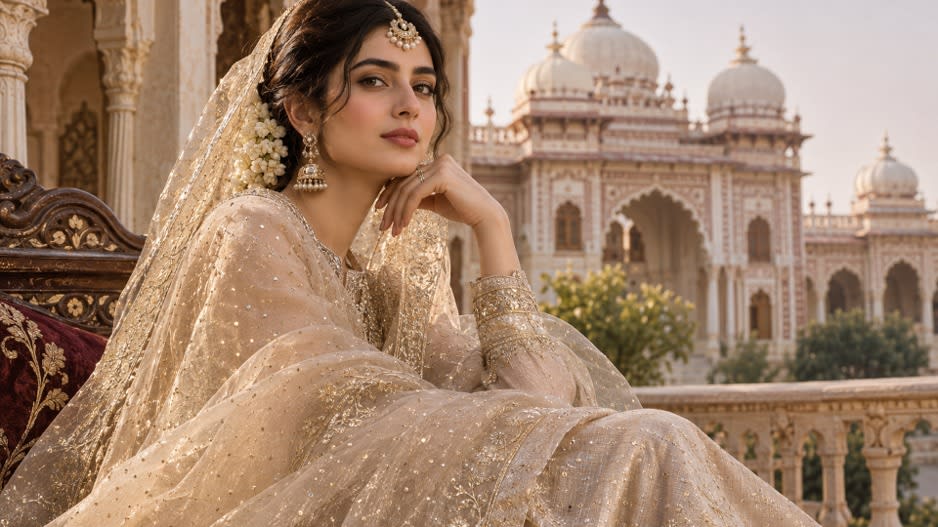
Choosing your wedding outfit is one of the most personal parts of bridal planning. Some brides picture a one-of-a-kind lehenga created from the first sketch; others discover their dream dress already hanging in a boutique. Neither choice is automatically better. The right answer depends on your style, timeline, budget and how much control you want over the finished look.
What is custom bridal couture?
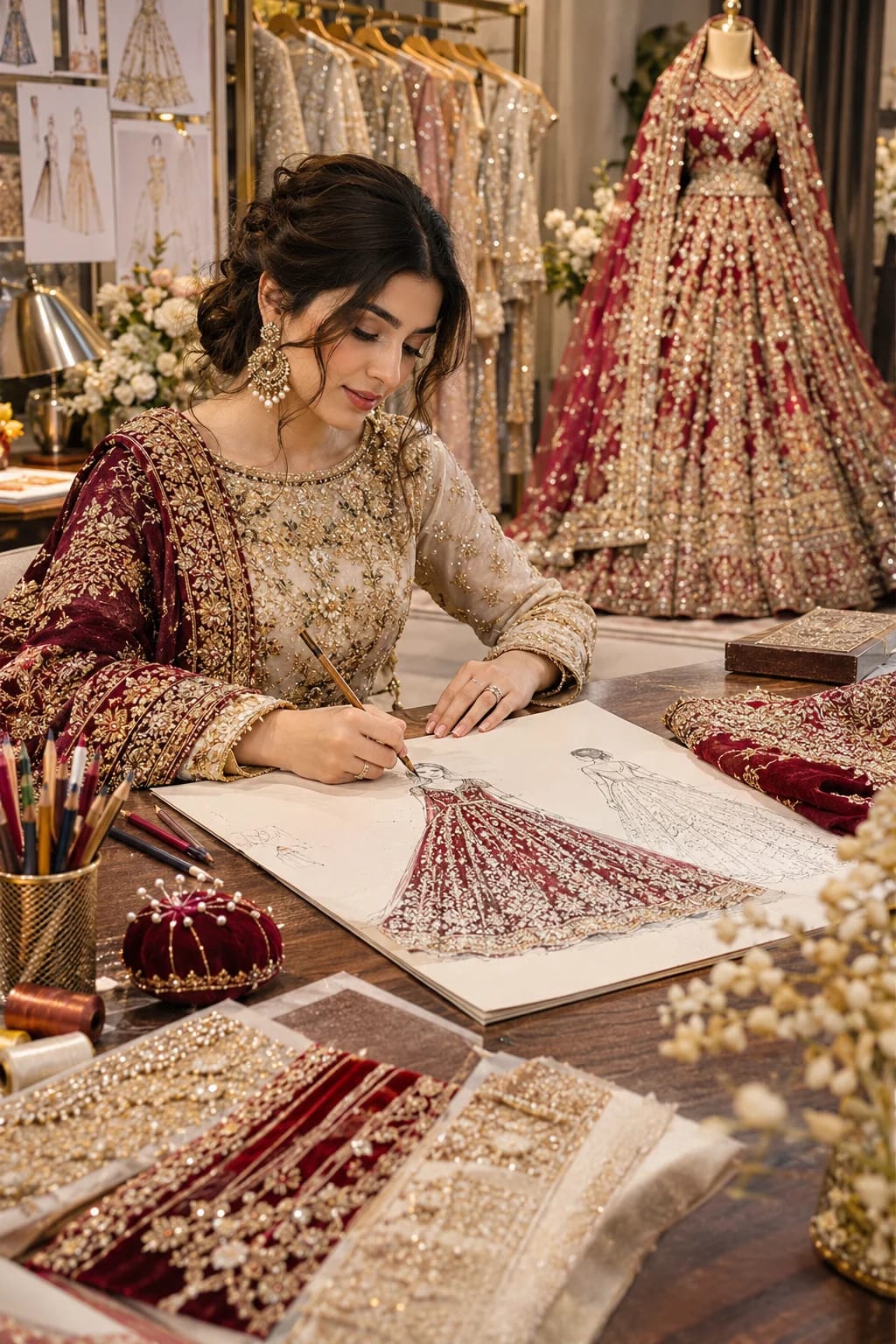
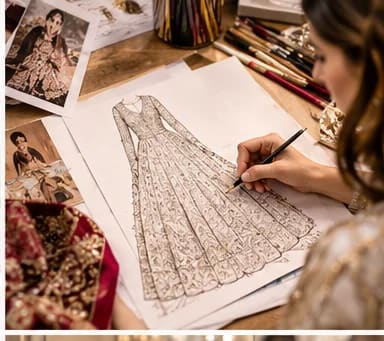
Custom bridal couture is designed around an individual bride’s brief. Depending on the atelier, you may choose the silhouette, fabric, colour, neckline, sleeves, embroidery placement, dupatta borders and finishing details. Measurements and fittings guide the construction. “Custom” can range from adapting an existing design to creating an entirely new one; ask exactly what the designer includes.
A design consultation turns personal ideas into a workable bridal sketch.
What does off-the-rack mean?
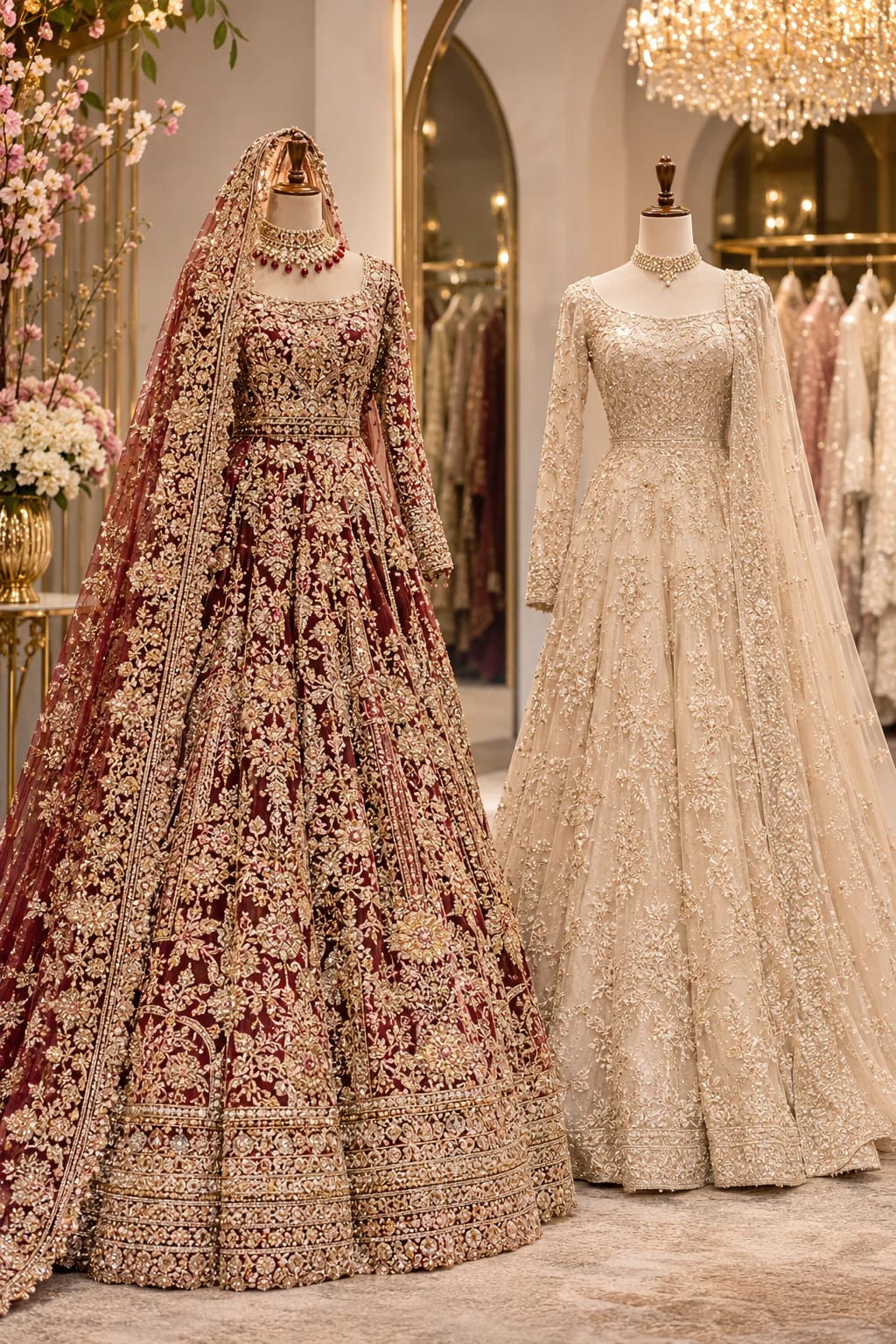
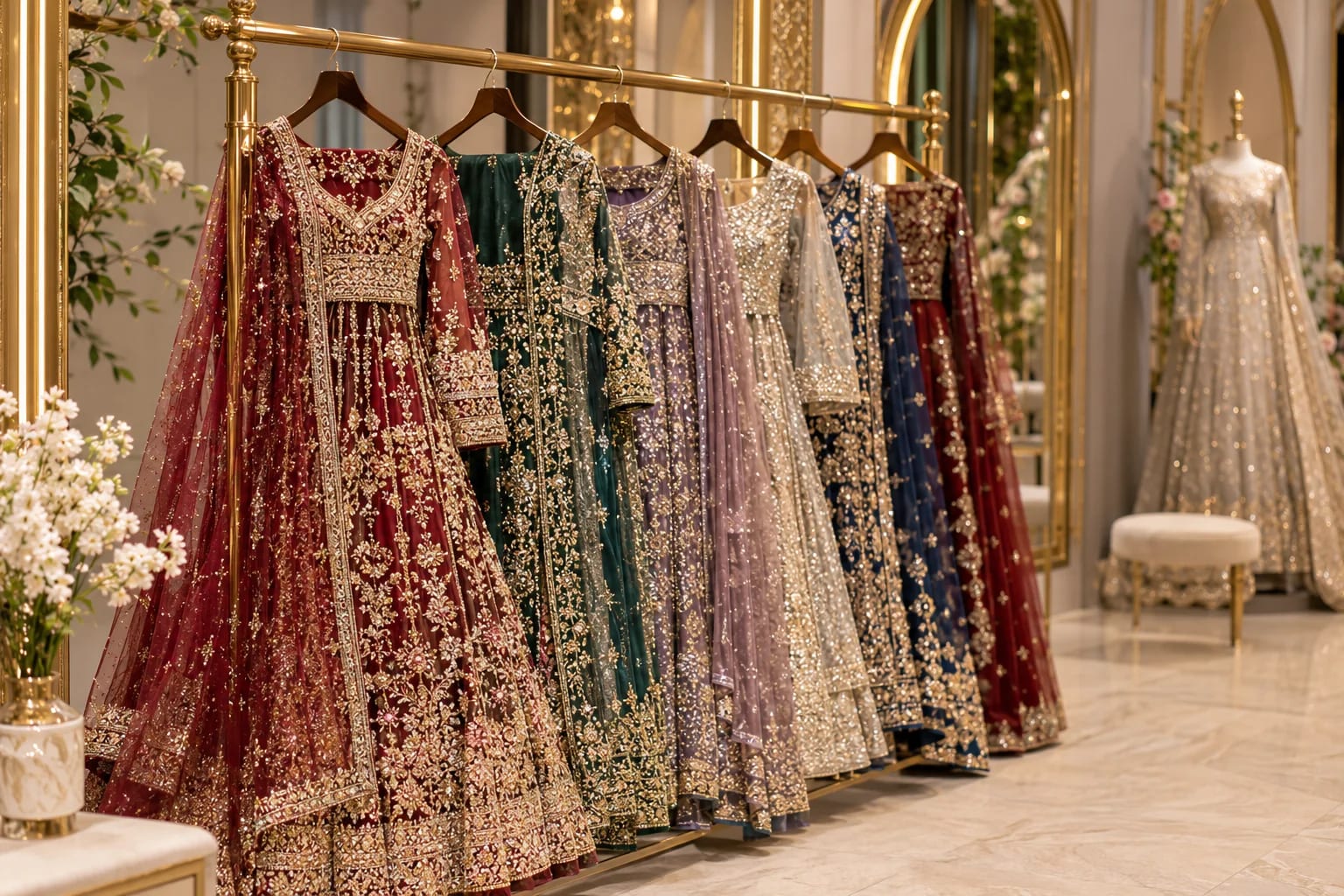
Off-the-rack bridalwear is a completed or standard-design outfit that can be purchased without commissioning a new design. It may be available immediately, or ordered in a standard size. Many boutiques offer alterations, so ready-made does not necessarily mean a poor fit. The main advantage is that you can see much of the finished result before committing.
Ready-made bridal options can be tried, compared and altered where feasible.
Custom vs. ready-made: the differences that matter
| Consideration | Custom couture | Off-the-rack |
|---|---|---|
| Design | Broad personalization, subject to feasibility | Existing design with limited changes |
| Fit | Built from measurements with fittings | Standard size, often alterable |
| Timing | Longer; depends on workmanship | Usually faster if in stock |
| Cost | Varies with design and labour | Often easier to assess upfront |
| Certainty | Requires clear approvals and progress checks | Can inspect the actual garment |
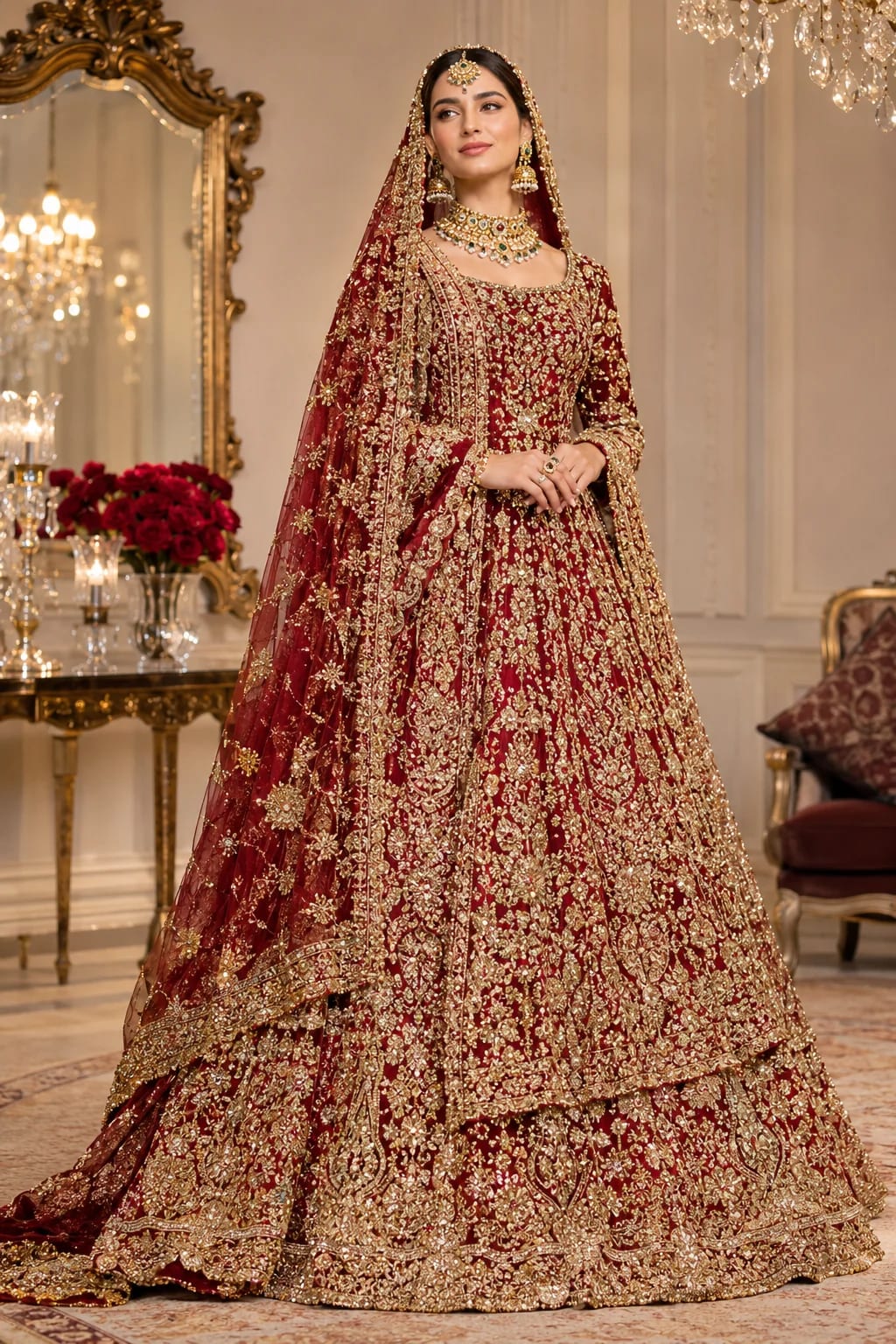
A statement bridal ensemble can be commissioned—or selected from an existing collection.
1. A silhouette that feels like you
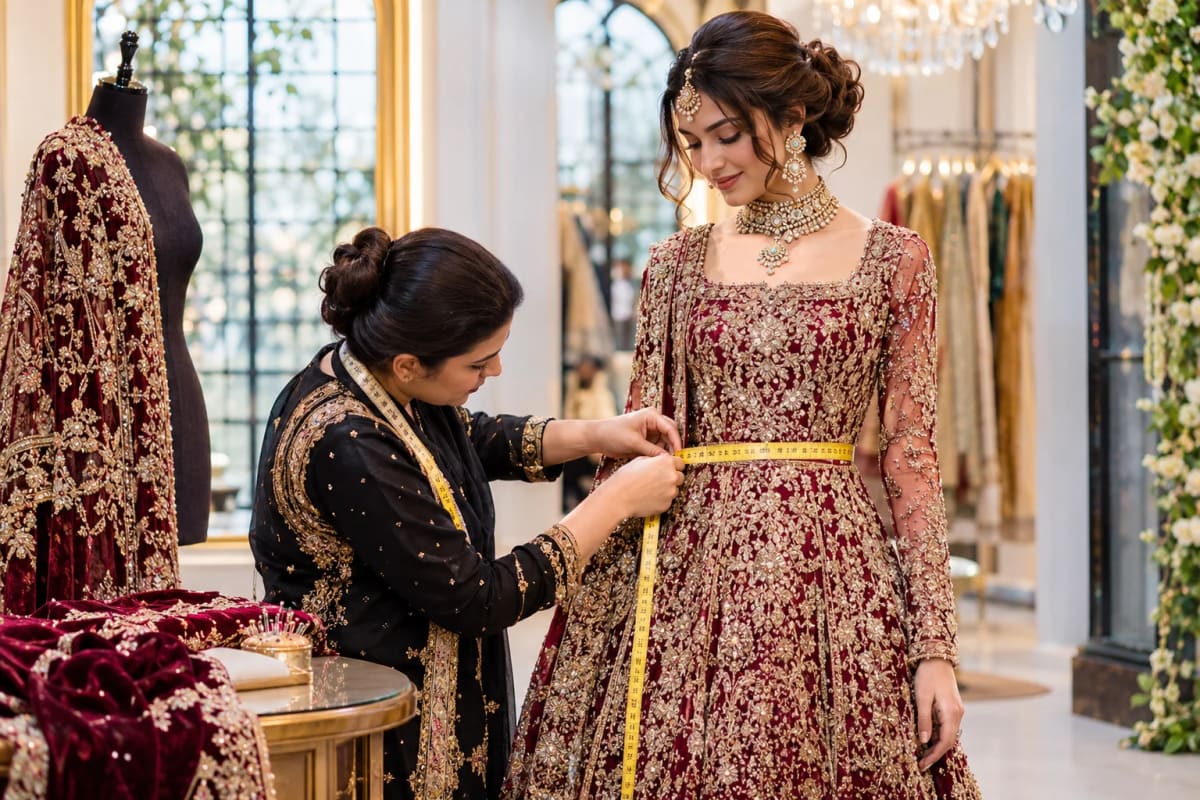
A custom outfit can accommodate a particular lehenga flare, longer shirt, modest neckline, full sleeves or a lighter dupatta. This matters when standard proportions do not suit your preferred coverage, height or comfort. Before deciding, try similar shapes and note what makes you feel confident. An excellent ready-made silhouette may need only small adjustments.
Measurements and fit decisions are central to the custom-making process.
2. Fabrics chosen for the season and setting
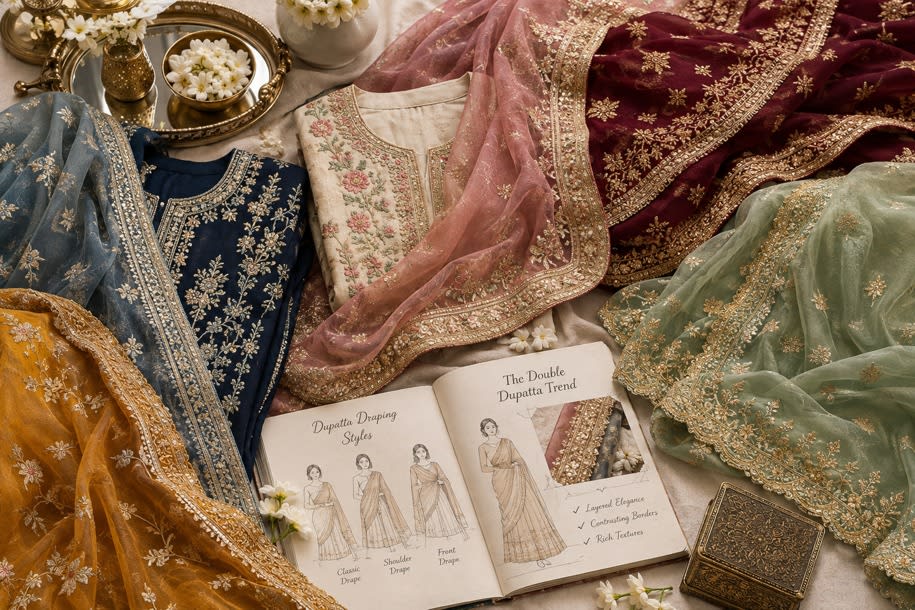
Fabric affects drape, movement, warmth and the way embroidery sits. Raw silk and other structured silks can support a defined silhouette; organza brings crisp, airy layers; chiffon creates softer movement; velvet offers a rich look for cooler celebrations. Ask for physical swatches when possible, and discuss lining, weight and how the garment will behave during a long event.
Different textile surfaces and finishes can dramatically change the finished design.
3. Embroidery that reflects your taste
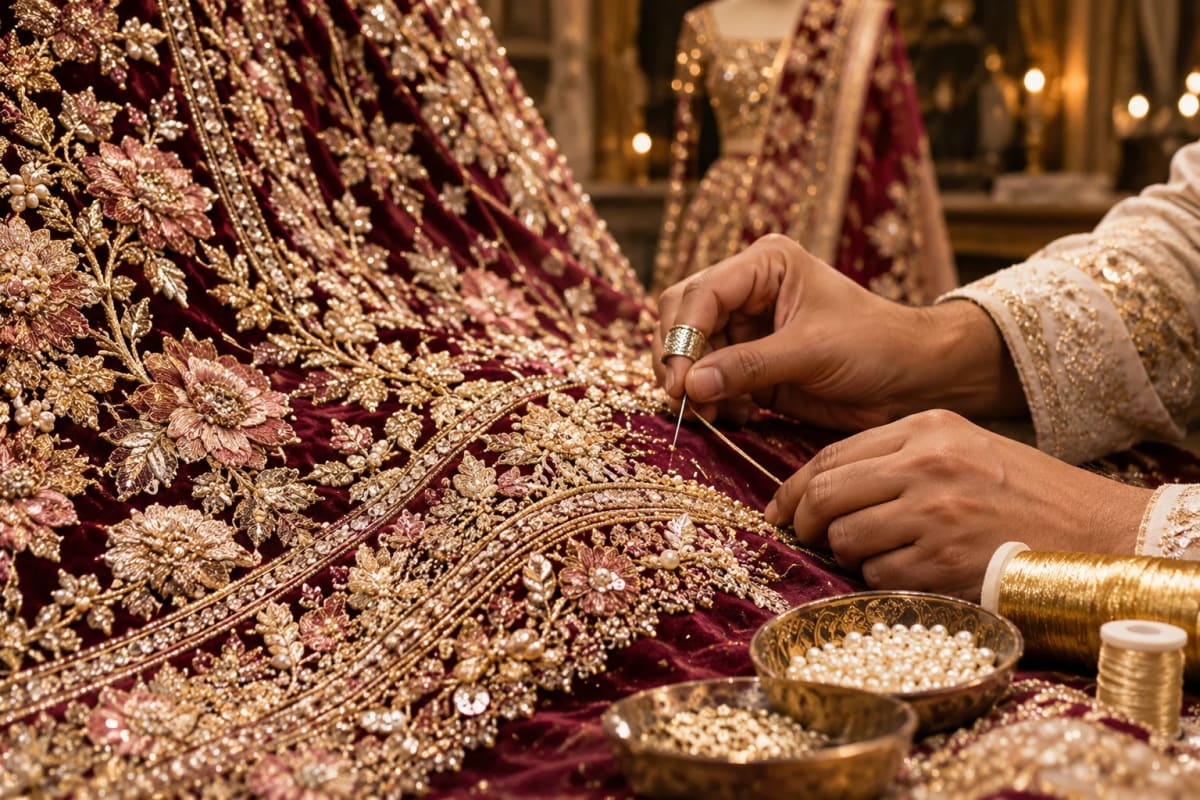
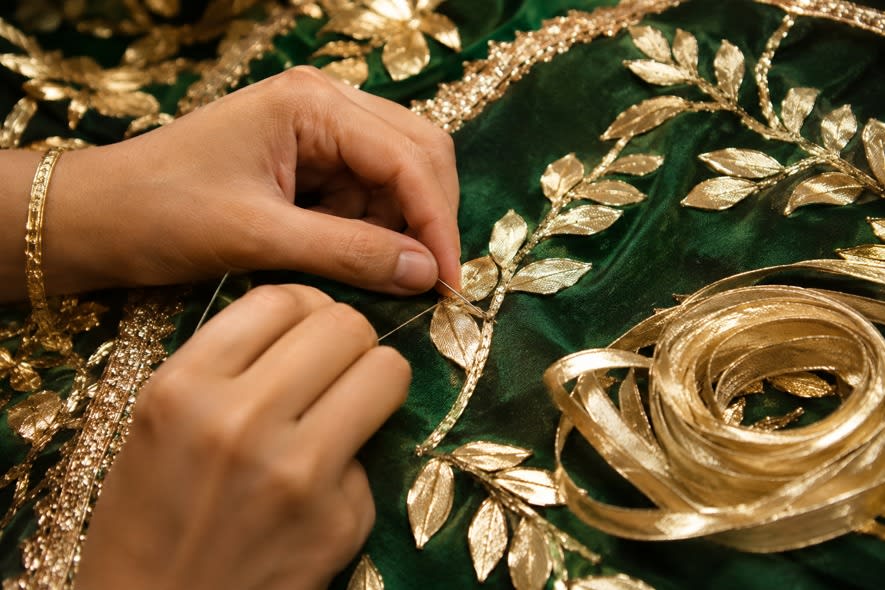
One bride may love densely worked zardozi and dabka, while another prefers delicate floral motifs with carefully placed pearls. Customization lets you choose where the decoration is concentrated—perhaps the hem, neckline, sleeves or dupatta—rather than paying for heavy embellishment everywhere. Handwork requires time, and intricate details should be approved with clear close-up references.
Detailed embellishment is one of the defining elements of traditional bridal craftsmanship.
4. Fittings and comfort are not optional
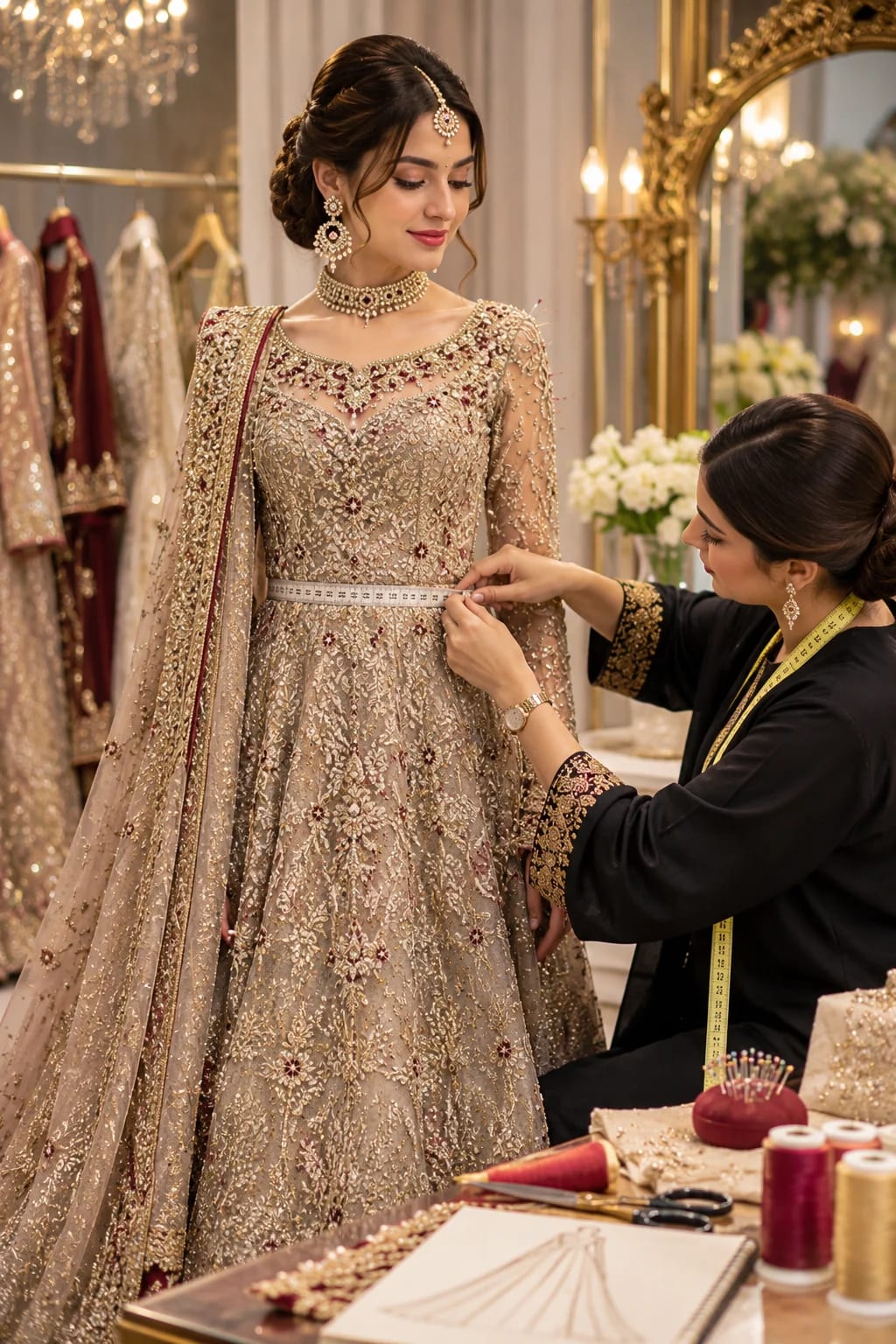
A beautiful dress must also allow you to sit, walk, greet guests and enjoy your celebration. Try the outfit with your actual shoes and jewellery. Check arm movement, shoulder fit, waist comfort, lining, hem length and how securely the dupatta sits. For overseas brides, a carefully verified measurement sheet and remote fitting discussions are especially important.
A fitting checks more than appearance: it helps prevent movement and comfort problems.
5. The value of a personal design journey
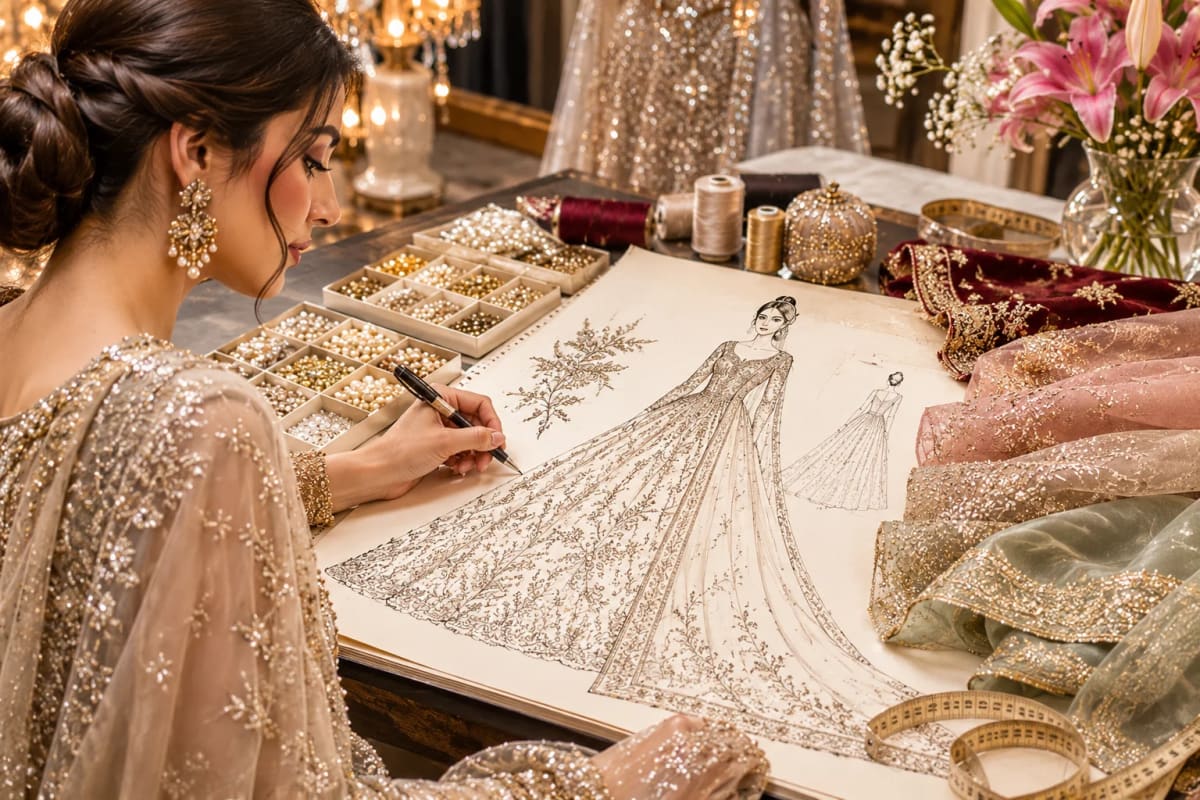
Custom couture can incorporate meaningful details: a family-inspired motif, a particular shade, embroidery echoing a treasured heirloom or a dupatta designed for a specific draping style. That emotional value is real, but it should not overshadow practical considerations. Agree on what can be changed, when design approval becomes final and whether revisions carry extra charges.
Sketches, samples and embellishment references help communicate the design vision.
6. The role of skilled tailoring
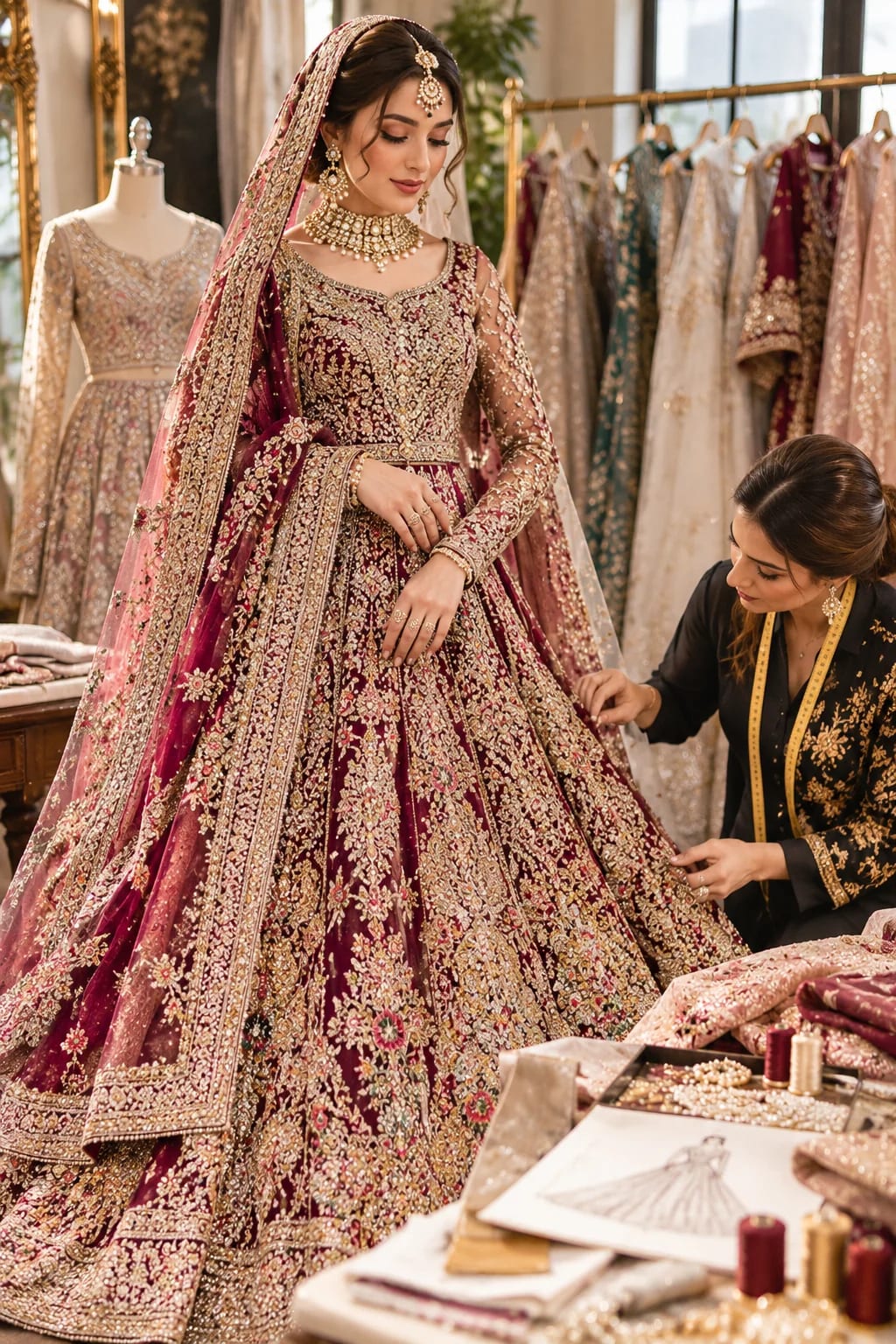
Fine tailoring is often invisible in photographs. Balanced seams, stable closures, neat finishing, suitable support and a properly managed train determine how an outfit feels over several hours. A well-altered ready-made dress can outperform poorly executed custom work, so craftsmanship matters more than the label alone.
Final hem and drape adjustments can make a substantial difference to the finished look.
7. Budget honestly—not just by the dress price
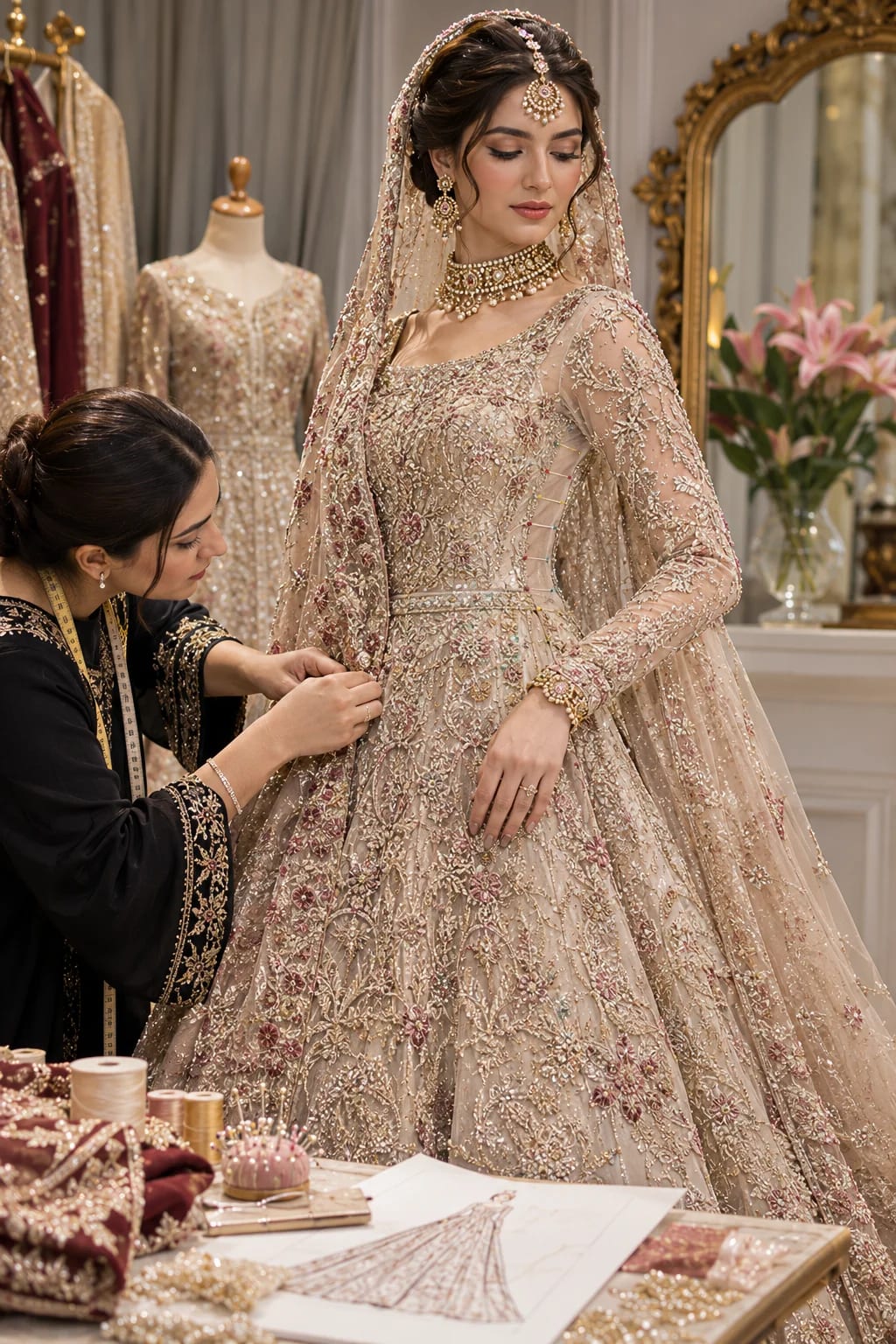
When comparing quotations, ask whether the price covers fabric, lining, embroidery, stitching, dupatta, additional sleeves, fittings, alterations, packaging and shipping. Customization may justify a higher spend when the details matter deeply to you, but it should never be framed as mandatory. Reserve a contingency for alterations and accessories, and avoid spending beyond your comfortable budget.
Fabric, detailing and tailoring choices should be considered together when budgeting.
8. Plan a realistic timeline
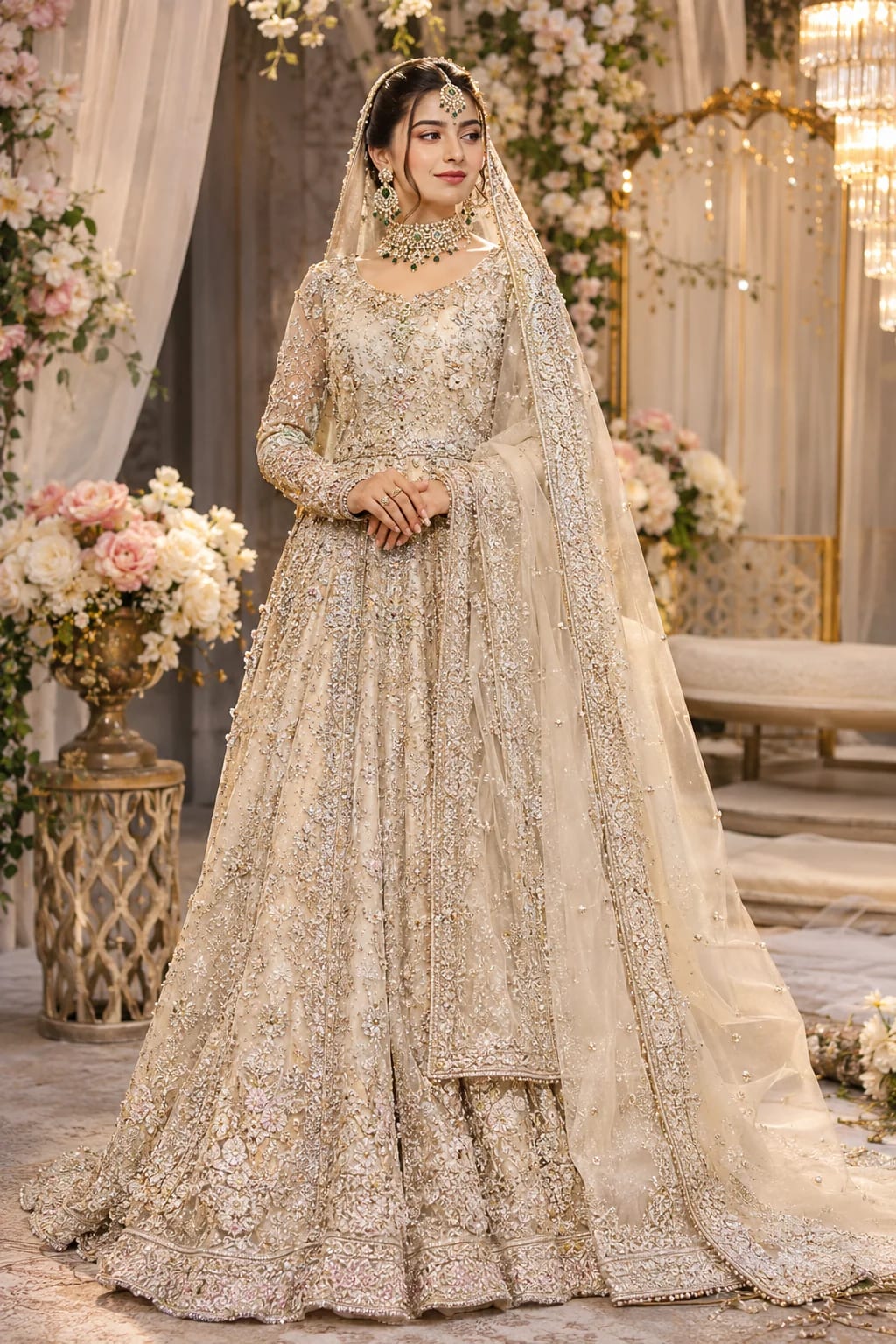
For custom bridalwear, start early enough for consultation, sketch approval, material sourcing, embroidery, stitching, fitting and delivery. Intricate handmade designs can take several months, particularly during wedding season. Ready-made outfits can be faster, but stock availability and alteration appointments still need checking. If ordering internationally, include shipping and customs delays in your plan.
A thoughtfully finished custom look takes planning, approvals and production time.
How to choose the right route for your wedding
Choose custom couture when you have a clear personal vision, unusual fit or coverage needs, a specific embroidery concept, and enough time for collaboration. Choose off-the-rack when you love an existing design, want to see the finished garment before paying, have a shorter timeline or prefer a simpler decision. A third option is made-to-measure or semi-custom: begin with a designer’s existing silhouette and personalize selected details.
Before paying a deposit, confirm the final design description, measurement responsibilities, production start date, expected delivery window, payment milestones, cancellation terms and the process for addressing defects or sizing concerns. Ask for progress photographs and final approval images when offered.
Frequently asked questions
Is custom bridal couture always more expensive?
Not always. Cost depends on fabric, handwork, complexity and the designer. A heavily embellished ready-made dress may cost more than a simpler custom design.
Can an off-the-rack lehenga be altered?
Often yes, but alterations depend on seam allowances, embroidery placement, fabric and construction. Ask a tailor before purchasing.
Can I customize only the dupatta or sleeves?
Many ateliers offer partial customization. Confirm which changes are technically possible and included in the quote.
What should an overseas bride do?
Provide verified measurements, discuss video consultations, request fabric and design confirmations, and leave time for delivery and possible local adjustments.
The Nayyab perspective
Your wedding outfit should feel unmistakably yours—whether it is made from the first sketch or discovered ready to wear. At Nayyab Collection, we celebrate thoughtful design, hand-finished detail and garments chosen with care. Explore bridal inspiration and discuss customization possibilities at nayyab.shop. The best bridal look is the one that fits your story, your celebration and your comfort.
Plan your bridal look with our designers
Book an online consultation, wherever you live. Share your wedding date, inspiration and budget; we confirm your outfit details with you before dispatch.